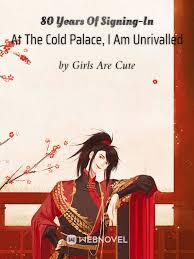
The Story in 3 Sentences
Lin Jiufeng transmigrates into the body of the Yuhua God Dynasty’s deposed Crown Prince, banished to the Cold Palace for releasing a rival nation’s holy maiden, but remains undeterred thanks to a sign-in system that grants him god-tier cultivation rewards with every location-based check-in.
His quiet accumulation of power—through signing in at the Cold Palace, imperial halls, and forbidden zones—transforms him into an unrivaled force while the world remains oblivious to his true strength.
When the very concubine he freed rises to power in her homeland and launches a war to “rescue” him, Lin Jiufeng is left bewildered, questioning whether he even needed saving as his legend begins to ripple across realms.
Why It Stands Out
1. The Ultimate Low-Key Power Fantasy
Unlike typical cultivation protagonists who seek fame or revenge, Lin Jiufeng genuinely desires solitude. His sign-in system rewards passive presence rather than action, turning isolation into the ultimate cheat. Readers experience the rare satisfaction of watching someone become invincible without ever trying to be seen—a quiet god in a world of shouting mortals.
2. A System That Feels Like Destiny, Not a Game
While many system novels treat their mechanics like video game UIs, this story integrates the sign-in feature as a natural extension of cosmic fortune. Each sign-in feels fated, not mechanical—whether it’s unlocking the Heaven Slashing Sword Skill at the Cold Palace gates or receiving the God of War Totem in the Empress Dowager’s chambers. The rewards aren’t random loot; they’re narrative milestones disguised as cultivation perks.
3. The Irony of Being “Rescued” by Your Own Mercy
The novel’s most compelling twist isn’t a battle or betrayal—it’s emotional irony. Lin Jiufeng’s single act of compassion (freeing the Heavenly Concubine) spirals into geopolitical upheaval when she conquers her own nation and invades his to “save” him. This reversal—where kindness becomes the catalyst for war, and the rescuer becomes the one needing rescue—adds a layer of philosophical depth rare in system-driven xuanhuan.
Characters That Leave a Mark
There’s Princess Yulin – the fiery, prodigious royal of the Yuhua God Dynasty who evolves from a brash noble into a strategic guardian of her realm, deeply influenced by Lin Jiufeng’s enigmatic presence and quiet mentorship.
You’ll meet Big Sister Divine Silkworm, who recognizes Lin Jiufeng’s latent divinity early on and becomes one of the few beings capable of acknowledging his true stature without demanding anything in return.
And Zhao Jinxin? They’re the one who covets the throne and sees Lin Jiufeng not as a fallen prince but as a lingering threat, embodying the paranoia of those who cling to power in a world where true strength arrives without fanfare.
The Flaws Fans Debate
The protagonist lacks emotional depth and rarely reacts with curiosity or introspection about his system, making him feel more like a vessel than a person.
The plot often repeats the same rhythm: sign in, receive reward, effortlessly overcome a new challenger—leading to narrative fatigue despite escalating power levels.
After the 80-year mark (around chapter 125), the story abandons its core premise of seclusion, shifting into conventional travel-and-conquer tropes that betray the initial appeal of quiet invincibility.
Must-Experience Arcs
Ch. 1–30: Cold Palace Genesis – Lin Jiufeng is banished but immediately unlocks the Ultimate Heaven Slashing Sword Skill by signing in at the Cold Palace gates, setting the tone for his silent rise while the court dismisses him as irrelevant.
Ch. 120–150: The Heavenly Concubine’s Rebellion – The woman he freed returns not as a grateful ally but as a conquering empress, launching a full-scale invasion to “rescue” him, forcing Lin Jiufeng to step out of shadows not to fight, but to stop a war waged in his name.
Ch. 380–420: The Curse World Confrontation – After opening a portal to a hostile realm, Lin Jiufeng defeats wave after wave of its strongest cultivators, then compels them to build a mortal-style city near the rift, showcasing his godlike authority and unique philosophy of containment over annihilation.
Killer Quotes
“Thankfully, I am able to sign-in silently in this cold palace.”
“The most powerful of cultivators can bring down a country on their own.”
“Sure enough, the soul is still a lot worse than the body. It is still very difficult for me to absorb what I signed in.”
Cultural Impact
Fans coined the term “Cold Palace Energy” to describe the vibe of quietly leveling up while everyone underestimates you—a meme widely shared in xianxia communities.
The novel sparked debates on Webnovel forums about whether “low-key overpowered” protagonists are refreshing or narratively stagnant, with threads reaching hundreds of comments.
Despite mixed critical reception, it maintained a loyal readership for its consistent updates and satisfying power progression, often recommended as a “guilty pleasure” among system-novel enthusiasts.
Final Verdict
Start Here If You Want:
A stress-free power fantasy where the hero wins by doing nothing but existing in the right place at the right time.
A system that feels woven into the world’s fabric rather than slapped on as a gimmick.
The ironic twist of being dragged into chaos by someone you helped, turning mercy into a geopolitical earthquake.
Study If You Love:
Deconstructions of the “overpowered MC” trope through passive omnipotence.
The intersection of fate, solitude, and cultivation in modern xuanhuan storytelling.
Narratives where the real conflict isn’t strength versus weakness, but visibility versus invisibility in a world obsessed with status.
Avoid If You Prefer:
Complex character psychology or moral ambiguity—the protagonist operates on a plane beyond human concerns.
Tightly plotted, cause-and-effect storytelling—this novel thrives on episodic, reward-driven pacing.
Stories that maintain their original premise throughout; the shift from seclusion to world-hopping may feel like a bait-and-switch to purists.