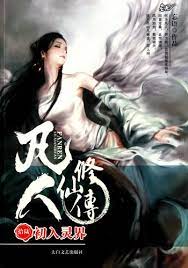
The Story in 3 Sentences
An unremarkable village youth named Han Li seizes a slim opportunity to enter the world of cultivation, beginning his journey at the modest Seven Mysteries Sect with no grand destiny or heroic ideals.
As demonic invasions, treacherous sect politics, and inter-realm voyages reshape his reality, Han Li’s path diverges from conventional heroism—he survives through caution, preparation, and relentless pragmatism rather than glory or passion.
Ultimately transcending mortal limits across thousands of years and multiple realms, he forges his own solitary road to immortality, untouched by dogma, untouched by fate, guided only by quiet resolve.
Why It Stands Out
1. The Anti-Hero Blueprint Redefined
Unlike most xianxia protagonists who blaze trails with charisma or vengeance, Han Li embodies the mortal everyman—calculating, risk-averse, and emotionally restrained. His refusal to play the hero or the rebel makes his ascent feel earned, not fated, turning cultivation into a science of survival rather than spectacle.
2. Worldbuilding Through Patience, Not Power
The novel constructs its universe layer by layer: sect hierarchies, alchemical formulas, spirit beast contracts, and spatial laws unfold organically through Han Li’s cautious exploration. There’s no info-dumping—readers learn as he learns, making the vastness of the immortal world feel lived-in and credible.
3. Immortality as a Personal Philosophy, Not a Trophy
While others chase titles or dominion, Han Li seeks only self-preservation and transcendence. His journey critiques the very notion of “destiny” in cultivation fiction, arguing that true immortality isn’t granted by heavens or bloodlines but carved through decades of solitude, discipline, and strategic retreat.
Characters That Leave a Mark
There’s Nangong Wan – Han Li’s Dao companion whose quiet strength and mastery of reincarnation laws mirror his own reserved depth; their bond evolves not through dramatic confessions but through shared decades of secluded cultivation and mutual trust forged in silence.
You’ll meet Mu Guanlan, who appears early as a fellow disciple with genuine warmth and ambition, offering a rare glimpse of normalcy and human connection in Han Li’s otherwise isolated path before fate pulls them apart.
And Lan Yao? They’re the one who emerges later as a formidable ally in higher realms, wielding profound spatial techniques and offering strategic counsel that proves invaluable during Han Li’s confrontations with ancient powers beyond the mortal plane.
The Flaws Fans Debate
Many readers criticize the protagonist’s extreme passivity, noting he avoids conflict so consistently that key emotional or narrative tensions dissolve before they can develop.
The novel introduces numerous side characters, artifacts, and sects only to abandon them without resolution, creating a sense of narrative sprawl that feels undermanaged.
Romantic elements are sparse and emotionally distant, leaving fans who expected deeper interpersonal dynamics disappointed by the clinical detachment in Han Li’s relationships.
Must-Experience Arcs
Vol. 1: The Seven Mysteries Sect – Han Li enters the cultivation world through a minor sect in the Yue State, navigating internal politics, early alchemy experiments, and the looming threat of demonic sects, all while laying the meticulous groundwork for his future survival.
Vol. 3: Invasion of the Devil Dao – As war erupts between righteous and demonic sects across Tiannan, Han Li leverages chaos to escape entanglements, acquire rare resources, and vanish into the wilderness, showcasing his signature strategy of turning others’ battles into his opportunities.
Vol. 8–11: Immortal World Arc – After losing his memories for 300 years in a foreign realm, Han Li slowly rebuilds his power, uncovers cosmic truths about reincarnation and spatial laws, and ultimately confronts primordial entities to claim his place among true immortals.
Killer Quotes
“I am different from common cultivators. I have dedicated myself to the pursuit of immortality and cannot easily involve myself with the affairs of men and demons.”
“All things in this world are transient—sects rise and fall, empires crumble, even heavens decay. Only the path walked alone remains unshaken.”
“Caution is not cowardice. Preparation is not delay. In the long river of cultivation, the one who survives is not the loudest, but the one who never runs out of time.”
Cultural Impact
The novel is widely credited with popularizing the “rational cultivator” archetype in xianxia, inspiring countless successors that prioritize strategy over swagger.
Its adaptation, “The Immortal Ascension,” amassed over 13 million fans rapidly, becoming a benchmark for how webnovel IPs can transition into mainstream visual media despite initial skepticism.
On forums like Wuxiaworld and Reddit, Han Li is meme-fied as “the ultimate introvert cultivator”—a symbol of quiet competence in a genre often dominated by explosive egos.
Final Verdict
Start Here If You Want:
A cultivation epic that rejects destiny in favor of disciplined self-reliance.
A meticulously paced journey where every pill, talisman, and escape route matters more than any battle cry.
A protagonist who wins not by overpowering the world, but by outlasting it.
Study If You Love:
Narratives that treat power systems as ecosystems governed by logic, scarcity, and consequence.
The deconstruction of heroism in fantasy, where survival is the highest virtue.
Long-form storytelling that rewards patience with layered worldbuilding and philosophical depth on mortality and transcendence.
Avoid If You Prefer:
Fast-paced action or emotionally explosive character arcs.
Protagonists who lead armies, declare love dramatically, or seek to “change the world.”
Stories where side characters have rich, ongoing roles—this is Han Li’s solitary odyssey, and everyone else orbits his quiet gravity.