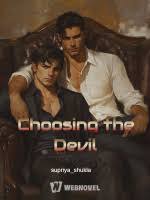
The Story in 3 Sentences
Luca Moretti, an ordinary web novel reader, transmigrates into the tragic BL novel “Bound by Fate” as its doomed protagonist, destined to be sacrificed by the hero for the greater good.
Refusing his scripted fate, Luca attempts to avoid both the hero and the villain entirely, only to find himself repeatedly drawn into the hero’s orbit, stirring unwanted emotions and sealing his vulnerability.
With no other path to survival, Luca makes a desperate pact with Salvo—the novel’s ruthless, psychopathic villain—surrendering his autonomy in exchange for protection, and stepping willingly into the devil’s den.
Why It Stands Out
1. A Villain Who Owns the Narrative
Unlike typical transmigration tales where the protagonist outsmarts fate with wit or charm, Choosing the Devil forces Luca into submission not through weakness but through stark realism—his survival hinges on aligning with true darkness. Salvo isn’t redeemed early; he’s dangerous, manipulative, and emotionally volatile, making their dynamic a high-stakes gamble rather than a romantic fantasy.
2. Emotional Brutality Wrapped in BL Tropes
The novel weaponizes BL conventions—possessiveness, forced proximity, power imbalance—not for titillation but to explore trauma, agency, and reluctant dependence. Readers expecting fluff or comedic transmigration tropes are instead met with psychological tension and moral ambiguity, especially as Luca’s internal resistance clashes with his growing emotional entanglement.
3. A Mother’s Quiet Strength in a World of Monsters
Amid mafia threats and villainous obsession, Luca’s mother emerges as a rare anchor of unconditional love and stability. Her presence—highlighted in fan reviews as deeply moving—offers emotional relief without undermining the story’s darkness, grounding Luca’s humanity when everything else tries to strip it away.
Characters That Leave a Mark
There’s Salvo – the chillingly charismatic villain whose cruelty is matched only by his obsessive fixation on Luca, treating affection like ownership and love like a transaction sealed in blood.
You’ll meet Enzo, who appears as a secondary but influential figure tied to Salvo’s world, possibly an enforcer or confidant whose loyalty tests the boundaries of morality within the mafia structure.
And Alvo? They’re the one who carries guilt over Luca’s suffering, with fan commentary suggesting a desire for Enzo to review footage and confront Alvo about his role in Luca’s pain—hinting at a complex web of accountability among Salvo’s inner circle.
The Flaws Fans Debate
Many readers express discomfort with the prolonged emotional and psychological suffering Luca endures before any meaningful shift in Salvo’s behavior, calling it excessive even for dark romance.
Some fans criticize the delayed redemption arc, noting that Salvo’s attempts to “make up for his mistakes” arrive too late to feel satisfying, leaving emotional wounds unhealed despite the happy ending.
Others lament the imbalance in agency—Luca’s choices often feel reactive rather than empowered, making his eventual peace feel granted by the villain rather than earned through his own resilience.
Must-Experience Arcs
Ch. 1–30: The Trapped Reader – Luca grapples with his transmigration, dodges the hero’s path, and slowly realizes escape is impossible, culminating in his first tense encounter with Salvo that sets the tone for their toxic dynamic.
Ch. 31–65: The Devil’s Contract – Forced into Salvo’s orbit, Luca navigates life under constant surveillance and emotional manipulation, with key moments like the auction scene (Ch. 49) exposing the commodification of his body and will.
Ch. 66–95: Fractured Redemption – Salvo begins showing remorse, Luca’s mother provides crucial emotional support, and the final chapters focus on rebuilding trust, ending not with grand gestures but quiet, hard-won coexistence.
Killer Quotes
“You’re so pretty, Salvo murmured, his wicked smile curling as he tilted Luca’s chin up as he knelt before him. Truly, you belong to me.”
“I’ll just ignore both the hero and the villain. No big deal, right? Easy.”
“Remember… you belong to me now.”
Cultural Impact
Fans frequently describe needing to “push through” intense emotional pain to reach the ending, a testament to the novel’s gripping, if harrowing, narrative pull.
The phrase “walking straight into the devil’s den” became a recurring motif in fan discussions, symbolizing the ultimate act of survival over idealism.
Reader reviews highlight the rarity of a BL story that centers maternal love as a healing force, sparking conversations about family dynamics in dark romance genres.
Final Verdict
Start Here If You Want:
A transmigration story that rejects wish-fulfillment in favor of raw survival psychology.
A villain-lead romance where love emerges not from charm but from the slow erosion of control and the fragile birth of remorse.
Emotional realism in a genre often dominated by fantasy—where trauma isn’t erased by love but negotiated alongside it.
Study If You Love:
Narratives that interrogate power, consent, and the blurred line between protector and captor in romanticized villain tropes.
The use of maternal figures as emotional counterweights to toxic masculinity in BL fiction.
Stories that challenge the “happy ending” convention by making reconciliation feel earned through pain, not plot convenience.
Avoid If You Prefer:
Light-hearted or comedic transmigration plots with minimal emotional stakes.
Heroes who remain morally pure or villains who transform too quickly into ideal partners.
Stories where the protagonist maintains consistent agency—here, Luca’s power is often symbolic, not practical, which may frustrate readers seeking empowerment arcs.
![Help, I’m in Another World and All the Men Are Are So Dangerous! [BL] – Complete Guide & Review](/images/covers/help-im-in-another-world-and-all-the-men-are-are-so-dangerous-bl.jpg)