The Story in 3 Sentences
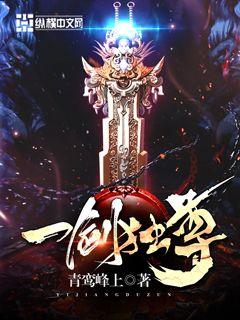
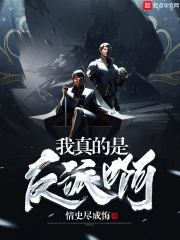
A peerless genius, shattered by love, abandons his cultivation and awakens within the body of a dissolute playboy, forced to navigate a world he once scorned .
His journey shifts from apathy to ambition as he rediscovers his power, leveraging ancient treasures and forming bonds with formidable beauties to climb back towards supremacy .
He ultimately directs his path towards standing above the heavens themselves, aiming not just for personal redemption but to become the undisputed sovereign of the entire cultivation world .
Why It Stands Out
1. The Phoenix Playboy Formula
It takes the classic trope of a fallen genius possessing a weak body and flips it by making the new vessel a wealthy, hedonistic playboy, creating immediate social tension and comedic potential amidst the high-stakes cultivation drama. The protagonist must reconcile his former disciplined, perhaps broken, self with the chaotic, indulgent life he now inhabits, turning societal weakness into a unique strategic advantage.
2. Beauty as Battlefield and Balm
The novel leans heavily into its harem tag, framing the cultivation world as one “filled with beauty” where romantic and political entanglements are as crucial as martial prowess . These relationships aren’t just fanservice; they are integral to the plot, driving conflict, providing resources, and forcing the protagonist to confront his past emotional wounds, making the path to the top a deeply personal and socially complex endeavor.
3. Unapologetic Power Fantasy Core
At its heart, it delivers a straightforward, satisfying power fantasy. The core promise is clear: witness a broken man rebuild himself from the absolute bottom, using his innate genius and newfound advantages to crush his enemies and claim ultimate power. The tagline “Ancient jade in hand, treasure in my jacket; cultivate with the beauty, live with the heavens!” perfectly encapsulates this blend of resourcefulness, romance, and ultimate aspiration .
Characters That Leave a Mark
There’s Wan Haoxiong – a figure of legendary martial skill within the Tiandu State, known as its Northern King, whose formidable presence and strict adherence to law create both obstacles and unexpected dynamics for the protagonist’s rise .
You’ll meet Wu Jinhun, a renowned and upright enforcer whose reputation for strict justice precedes him, often acting as a powerful authority figure whose path inevitably crosses with the protagonist’s, sometimes as an antagonist, sometimes as an unwilling pawn .
And Hu Xuehong? They’re the one who emerges as a significant player among the powerful families, their actions and alliances adding layers of political intrigue and high-stakes confrontation to the protagonist’s journey towards the heavens .
The Flaws Fans Debate
The protagonist and overarching story are frequently cited as being formulaic and lacking originality, failing to rise above common genre tropes .
Many female characters are criticized for having poorly developed or actively unpleasant personalities, reducing their roles to repetitive plot devices rather than compelling individuals .
The narrative structure is seen by some as monotonous, with a predictable pattern of introducing new female characters and conflicts without significant evolution in the core storytelling .
Must-Experience Arcs
Ch. 1–100: The Hidden Dragon’s Awakening – The genius awakens in the playboy’s body on Hidden Dragon Peak, confronts his lost love Mu Lian, and begins his painful, vengeful climb from rock bottom, setting the foundation for his new identity and goals .
Ch. 800–900: The Dance of Dragons and Serpents – The protagonist, now a major player, engages in complex political and martial maneuvering against established powers like Wu Jinhun and Xu Wenchuan, showcasing his strategic mind and growing influence in a world where he is no longer an insignificant pawn .
Ch. 1600–1768: Sovereign of the Mortal and Divine – In the endgame, the protagonist confronts ancient legacies and ascends towards godhood, battling for ultimate supremacy and fulfilling his destiny to stand above the heavens, resolving his core quest for power and redemption .
Killer Quotes
“Ancient jade in hand, treasure in my jacket; cultivate with the beauty, live with the heavens!”
“Wan Dong, falling in love with you is the blessing of my whole life. Not forever, just ever. Don’t escape anymore, I feel too tired to escape.”
“I can avoid without fighting, but I will never escape! I can be forbearing, but when I strike, it will be to the death!”
Cultural Impact
It has garnered a dedicated, if niche, following, evidenced by its presence on over 700 reading lists on NovelUpdates, indicating a solid fanbase within the English web novel community .
The novel is frequently mentioned alongside other popular, long-form cultivation stories, suggesting it holds a recognizable place in the genre’s landscape for readers seeking epic, multi-thousand-chapter journeys .
Its 3.0/5.0 rating on NovelUpdates, split almost evenly between 5-star and 1-star reviews, highlights its divisive nature, sparking passionate debates about its merits and flaws that keep it relevant in fan discussions .
Final Verdict
Start Here If You Want:
A classic, no-frills cultivation power fantasy where the broken genius trope gets a hedonistic twist.
To immerse yourself in a sprawling world filled with beautiful, powerful women who are central to the protagonist’s journey and conflicts.
The simple, satisfying thrill of watching an underdog systematically dismantle his enemies and climb to the absolute pinnacle of power.
Study If You Love:
Analyzing how xianxia novels utilize the “possession/rebirth” trope to explore themes of identity, loss, and second chances.
The narrative mechanics of long-form web novels, particularly how they sustain reader interest over thousands of chapters through recurring conflict patterns and character introductions.
The cultural archetype of the “peerless genius” in Chinese fantasy and how this story both adheres to and slightly subverts it by starting from a point of total abdication.
Avoid If You Prefer:
Complex, morally ambiguous protagonists; this story features a more straightforward, often calm and clever, hero on a clear path to dominance .
Deeply nuanced female characters; the harem elements often prioritize their role in the protagonist’s journey over individual depth, which can be a significant turn-off .
Innovative or tightly plotted narratives; it embraces genre conventions and can feel repetitive or predictable for readers seeking groundbreaking storytelling .