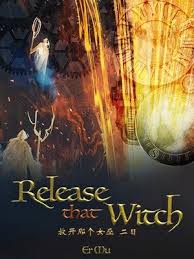
The Story in 3 Sentences
A genius teenager awakens from cryogenic sleep into a savage, walled-off apocalypse three centuries in the future, where humanity’s remnants are ruled by brutal new hierarchies and monstrous threats lurk beyond the city walls.
His journey shifts from desperate scavenger clinging to scientific knowledge to a cunning, ruthless warlord who embraces the darkness, ascending through power, betrayal, and unimaginable sacrifice to challenge the very gods of this broken world.
The story’s direction culminates in a tragic, godlike apotheosis, where his ultimate victory is poisoned by loss and betrayal, forcing him to confront the monstrous cost of his survival and the hollow crown of his dark kingdom.
Why It Stands Out
1. A Masterclass in Moral Descent
The novel doesn’t just show a character getting stronger; it meticulously charts the erosion of a soul. It stands out by making the reader complicit in the protagonist’s transformation, starting with relatable survival instincts that gradually harden into chilling, calculated cruelty. You root for his victories while recoiling from his methods, creating a uniquely uncomfortable and compelling tension that few stories dare to sustain.
2. World-Building That Breathes and Bleeds
It stands out for its grim, lived-in apocalypse. The setting isn’t just a backdrop; it’s an active, oppressive character. The societal structures within the walls feel terrifyingly plausible, a Darwinian nightmare fueled by scarce resources and ancient, half-understood technologies. The monsters outside are genuinely horrifying, but the true horror lies in the human capacity for betrayal and the systemic cruelty that flourishes in the ruins of civilization.
3. An Ending That Scorches the Soul
Where most power fantasies offer cathartic triumph, this novel delivers a finale that is devastatingly poetic and morally ambiguous. It stands out by refusing to grant its dark king a clean victory or redemption. The climax isn’t about defeating a final boss; it’s about the pyrrhic cost of ultimate power and the cruel irony of achieving everything only to lose the one thing that gave it meaning. It’s an ending that lingers, sparking endless, heated debate.
Characters That Leave a Mark
There’s Aisha – the childhood companion whose innocence and unwavering loyalty become the protagonist’s only tether to his former self, a beacon of light whose tragic fate is the catalyst for his final, most devastating descent into darkness.
You’ll meet Crimson Moon, who serves as a formidable and intelligent antagonist, a mirror reflecting the protagonist’s own ruthlessness and ambition, pushing him to his absolute limits in a deadly game of power and survival.
And Bolo? They’re the one who embodies the brutal, unyielding nature of the world itself, a relentless force of opposition whose clashes with the protagonist are visceral, personal, and instrumental in forging him into the monster he becomes.
The Flaws Fans Debate
The translation quality, particularly in later chapters, is frequently cited as a major barrier, with grammatical errors and awkward phrasing sometimes disrupting the narrative flow.
The pacing can feel uneven, with the initial setup being slow for some readers, while later power escalations might feel rushed or contrived to others.
The extreme darkness and relentless tragedy, while core to the story’s identity, are polarizing; some find it profound, while others find it emotionally exhausting or gratuitous.
Must-Experience Arcs
Ch. 1–100: The Scavenger’s Crucible – Dudian, armed only with his wits and fragmented knowledge of the old world, navigates the brutal training and deadly politics of the Scavenger Corps, learning that trust is the first luxury the apocalypse steals.
Ch. 500–800: The Ascent of the Dark Sovereign – Having shed his old skin, Dudian consolidates power, engages in large-scale warfare against both human factions and monstrous hordes, and begins his terrifying metamorphosis, embracing darker powers and colder strategies.
Ch. 1200–1280: Godhood and the Shattered Altar – Dudian achieves apotheosis, bending reality to his will and seemingly conquering all, only to have his entire empire of power and his personal salvation obliterated in a single, shocking act of betrayal at the moment of his greatest triumph.
Killer Quotes
“In the works of the most intense light, the darkness is clearly visible. In the novels of darkness, the kind light of human nature will be particularly moving.”
“He can shoot arrows from the skies, assassination would be easier since he won’t leave any trails on the ground, just sweep body up and fly away.”
“In order to find her, he is like a madman. He would not hesitate to kill thousands of people. This is his reverse scale, and it is not something that can be touched.”
Cultural Impact
It developed a fiercely dedicated, albeit niche, cult following who praised its unflinching darkness and unique take on the post-apocalyptic genre within the webnovel space.
The novel’s infamous, tragic ending became a major talking point, spawning countless online discussions and debates about its meaning and emotional impact.
Its translation saga, marked by controversy and abandonment, became a cautionary tale within the fan translation community, highlighting the fragility of access to international web fiction.
Final Verdict
Start Here If You Want:
A protagonist whose journey from sympathetic survivor to terrifying, godlike villain is executed with chilling realism and psychological depth.
A world that feels authentically broken and dangerous, where the struggle for survival exposes the absolute worst and occasionally, fleetingly, the best of human nature.
A story that prioritizes emotional and thematic impact over wish-fulfillment, offering a powerful, unforgettable, and deeply unsettling experience.
Study If You Love:
Explorations of moral ambiguity and the psychology of power, examining how extreme circumstances can corrupt even the most intelligent and initially well-intentioned individual.
Deconstructions of the “weak-to-strong” trope, where gaining power doesn’t lead to happiness but to greater isolation and moral compromise.
Narratives that use a bleak, post-apocalyptic setting as a crucible to test philosophical ideas about human nature, societal collapse, and the cost of survival.
Avoid If You Prefer:
Stories with clear-cut heroes and villains, or narratives that offer comforting, redemptive endings.
Light, fast-paced reads; this novel demands emotional investment and can be a slow, heavy burn.
Flawless prose and consistent translation quality, as these are known pain points for many readers.