The Story in 3 Sentences
A thirteen-year-old boy, Li Qiye, awakens after being imprisoned for millions of years in the body of a Dark Crow, regaining a mortal form to walk the path of cultivation once more.
He joins the declining Cleansing Incense Ancient Sect and begins an unstoppable ascent, wielding ancient knowledge, supreme techniques, and unshakable will to dominate every realm he enters.
His journey spans thousands of chapters across the Nine Worlds, the Tenth World, and beyond, culminating in a final confrontation that redefines the very nature of heaven, fate, and immortality.
Why It Stands Out
1. The Omniscient Underdog Who Was Never Under
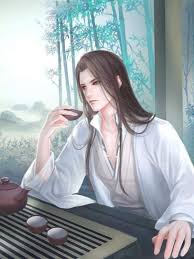
Li Qiye isn’t your typical rising cultivator—he’s a primordial architect of empires, a silent hand behind immortal lineages, and a being who has already lived through every possible triumph and tragedy. His “rebirth” isn’t about growth but execution, turning the xianxia trope of struggle into a masterclass in inevitability. Readers don’t watch him become powerful; they watch the world finally catch up to what he’s always been.
2. Worldbuilding as a Living Archive
Emperor’s Domination treats its universe like a layered palimpsest—each sect, ruin, scripture, and bloodline carries echoes of forgotten eras. Unlike many web novels that introduce new powers arbitrarily, here every technique, relic, or realm ties back to a meticulously chronicled history. The Nine Worlds aren’t just settings; they’re archives of fallen emperors, lost daos, and cyclical cosmic resets, making exploration feel like archaeology with stakes.
3. The Anti-Romance of Detachment
While most xianxia novels drape their protagonists in harem fantasies, Emperor’s Domination subverts this by making Li Qiye emotionally indifferent. He’s seen countless peerless beauties rise and fall over eons; romance isn’t absent—it’s irrelevant. This deliberate emotional austerity sharpens the focus on ambition, legacy, and the cold calculus of power, offering a rare protagonist whose heart isn’t swayed by affection but fixed on cosmic dominion.
Characters That Leave a Mark
There’s Mei Suyao – a world-renowned genius of the Eternal River School, bearer of the rare Immortal Soulbone, and one of the few deemed worthy to contend for the Heaven’s Will in her generation. Her path intertwines with Li Qiye not as a lover but as a rival whose brilliance earns even his quiet acknowledgment.
You’ll meet Chi Xiaodie, who begins as the proud princess of the Lion’s Roar Country and later becomes Li Qiye’s maid, not through submission but through earned loyalty. Her journey from noble arrogance to devoted disciple reflects the novel’s theme that true strength is forged through humility and perseverance.
And Min Ren? They’re the one who rose from obscurity under Li Qiye’s hidden guidance to become an Immortal Emperor, founder of the Cleansing Incense Ancient Sect, and a peerless youth who trespassed into Forbidden Burials to carve his name into history. Though long gone by the main timeline, his legacy pulses through every chapter like a ghost in the foundation.
The Flaws Fans Debate
The repetitive “arrogant young master gets humiliated” formula grows stale over thousands of chapters, turning early satisfaction into predictable monotony.
Li Qiye’s static personality—wise, aloof, and unchanging—offers no emotional arc, making his victories feel hollow to readers who crave internal conflict or growth.
The sheer scale of the novel (6831+ chapters) leads to bloated pacing, with entire arcs feeling like filler despite the grand lore, testing even the most dedicated fans’ patience.
Must-Experience Arcs
Ch. 1–1727: Nine Worlds Arc – Li Qiye traverses nine interconnected realms, each with unique cultivation systems, ancient sects, and buried secrets. From the Mortal Emperor World to the Heaven Spirit World, he reawakens dormant legacies, defeats prodigies, and lays the groundwork for his ultimate return to supremacy.
Ch. 1706–2000: Heaven’s Will Arc – As the cosmic mandate begins to coalesce, Li Qiye orchestrates the rise of new emperors while confronting old foes who seek to claim heaven’s authority. This arc crystallizes the philosophical core of the novel: that fate is not given but seized by those who understand the machinery of existence.
Ch. 6718–6831: Heaven Realm Final Arc – In the endgame, Li Qiye transcends all previous limits, confronting the architects of cosmic order and dismantling the very concept of heaven itself. It’s not just a battle of power but of ideology—proving that true domination lies not in ruling the world, but in rewriting its rules.
Killer Quotes
“If there are gods in this world, then I am the lord of the gods. If there are immortals in this world, then I am the king of the immortals.”
“Killing one is a sin, killing hundreds makes one a hero, killing tens of thousands makes one a king, and killing millions makes one an emperor.”
“Eighty thousand Buddhas are nothing more than statues and the gods up in the firmaments are mere floating duckweeds.”
Cultural Impact
The phrase “ten million years ago, Li Qiye planted a bamboo” became a viral meme symbolizing patience as the ultimate form of power in xianxia communities.
Fans on Wuxiaworld and Reddit often cite Emperor’s Domination as the gold standard for “unbeatable MC” stories, sparking endless debates about power scaling and lore depth.
Its translator earned near-legendary status among English readers for maintaining consistency and clarity across thousands of dense, lore-heavy chapters—a rare feat in web novel localization.
Final Verdict
Start Here If You Want:
A protagonist who never falters, never doubts, and never loses—pure wish-fulfillment wrapped in ancient robes and cosmic ambition.
A cultivation epic that treats history like a weapon and knowledge like a birthright, where every chapter feels like uncovering a lost chapter of the universe’s operating manual.
A story that rejects emotional drama in favor of philosophical dominance, where the greatest victory isn’t love or friendship, but the silence that follows when all opposition has been erased.
Study If You Love:
The structural mechanics of xianxia worldbuilding—how myth, lineage, and scripture can be woven into a self-sustaining cosmology.
Narratives that explore power not as personal growth but as historical inevitability, where the hero is less a character and more a force of nature.
The literary tension between omniscience and action—how a being who knows everything chooses to act, and what that says about free will in a deterministic universe.
Avoid If You Prefer:
Character-driven stories with emotional vulnerability, romantic subplots, or moral ambiguity.
Tightly paced narratives—this novel is a marathon, not a sprint, and demands tolerance for repetition and exposition.
Stories where the protagonist learns from failure; here, failure is a tool for others, never for Li Qiye.