The Story in 3 Sentences
An ordinary man named Adam awakens to a hidden world where gods and supernatural forces manipulate mortal reality behind a metaphysical Veil, shattering his illusion of normalcy and thrusting him into a brutal awakening.
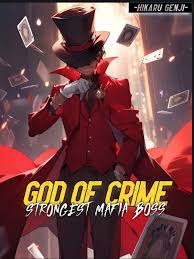
Embracing the creed that knowledge is power, Adam builds a criminal empire rooted in occult truths, strategic violence, and systemic control, rising from obscurity to become the feared God of Crime.
His journey escalates into a cosmic confrontation where mafia politics, divine conspiracies, and existential warfare converge, forcing him to redefine power, loyalty, and the very nature of truth itself.
Why It Stands Out
1. Veil-Piercing Power Fantasy
Unlike typical isekai or system novels where power comes from game-like interfaces or reincarnation perks, God of Crime roots its protagonist’s ascent in epistemic rebellion—Adam doesn’t just gain strength; he weaponizes forbidden knowledge. The Veil isn’t just worldbuilding; it’s the central antagonist, a lie maintained by gods to keep humanity docile. This philosophical underpinning elevates the mafia boss trope into a metaphysical insurgency.
2. Genre Fusion Done Right
Blending action, fantasy, harem, and mecha elements could easily collapse into tonal chaos, but the novel threads them through Adam’s criminal empire as a unifying structure. Mecha units serve as elite enforcers, supernatural beings populate his syndicate, and romantic subplots emerge from alliances with powerful female figures—all orbiting his core mission: dismantling divine deception. The result feels less like a patchwork and more like a layered underworld ecosystem.
3. The Anti-Ignorance Ethos
While many power fantasies glorify domination, this story frames ignorance itself as the ultimate enemy. Adam’s empire isn’t built for wealth or lust alone—it’s a fortress of truth in a world engineered for delusion. This moral inversion resonates with readers tired of hollow edginess; here, becoming a mafia boss is framed as an act of intellectual and spiritual defiance.
Characters That Leave a Mark
There’s Lilith – a mysterious and lethal figure tied to ancient supernatural forces, whose allegiance to Adam evolves from strategic necessity to something far more complex, often serving as both his sharpest blade and his most unsettling mirror.
You’ll meet Natasha Antonovna Nikitina, who stands as the undisputed top student in her domain before being drawn into Adam’s orbit; as a golden-haired werewolf with disciplined ferocity, she embodies the fusion of elite academia and primal power that defines the novel’s elite class.
And Piaget Freud, also known as Medusa? They’re the one who bridges psychoanalytic symbolism with mythic horror, using psychological manipulation and petrifying abilities to enforce Adam’s will—proving that in this world, even Freudian theory can be weaponized.
The Flaws Fans Debate
Some readers criticize the harem elements as underdeveloped, with romantic interactions occasionally feeling transactional or repetitive rather than emotionally resonant.
The pacing in the middle arcs—particularly around chapters 200 to 350—draws complaints for meandering through power displays and side conflicts without advancing the core metaphysical plot.
A vocal segment of the fanbase argues that the promised “strongest mafia boss” concept gets diluted by escalating supernatural and mecha elements, shifting focus away from grounded crime drama toward cosmic-scale battles that feel tonally disconnected from the early chapters.
Must-Experience Arcs
Ch. 1–30: The Veil Shatters – Adam’s mundane life implodes on October 31st when he witnesses a supernatural execution, leading to his recruitment into a hidden war; this arc establishes the rules of the Veil, introduces Natasha, and sets his criminal philosophy in motion.
Ch. 250–300: Empire of Sin – Adam consolidates power across global syndicates while confronting rival factions infused with divine backing; Piaget Freud’s true identity as Medusa is revealed during a psychological siege that tests the loyalty of his inner circle.
Ch. 500–539: Final Reckoning – With the Veil collapsing and gods descending, Adam orchestrates a last gambit that merges mafia strategy with apocalyptic warfare; Lilith’s ultimate choice and Natasha’s sacrifice culminate in a finale that redefines what it means to be a “god of crime.”
Killer Quotes
“Ignorance may be bliss—but knowledge is power.”
“The Veil doesn’t hide monsters. It hides the fact that we were never meant to see them.”
“A mafia boss doesn’t rule with fear alone. He rules because he knows what others are forbidden to understand.”
Cultural Impact
The novel’s alternate title “Midnight Prince: Empire of Sin” sparked a viral TikTok trend with over 16 million posts, blending mafia aesthetics with occult symbolism.
Fans on Webnovel and Novelhall consistently rank it among the top R18 fantasy novels for its bold fusion of intellectual themes and explicit content, with over 3 million readers tracked on major platforms.
Its protagonist Adam Gospel became a meme archetype for “the guy who sees through the matrix and builds a crime syndicate instead of joining the rebellion,” inspiring fan art, roleplay communities, and crossover discussions with works like Lord of the Mysteries.
Final Verdict
Start Here If You Want:
A power fantasy where intellect trumps brute force and criminality becomes a form of enlightenment.
A genre-blending saga that turns mafia tropes into metaphysical warfare without losing narrative cohesion.
A completed 541-chapter epic with a definitive ending—rare in the webnovel space—where the protagonist’s arc reaches a philosophically satisfying climax.
Study If You Love:
Narratives that interrogate the relationship between truth, power, and systemic control through speculative fiction.
The evolution of the antihero in digital literature, especially how webnovels reframe traditional villain roles as necessary disruptors.
The integration of psychoanalytic and mythological references into action-driven plots, where figures like Medusa and Freud aren’t just names but functional narrative devices.
Avoid If You Prefer:
Stories with minimal romantic or harem subplots, as these are woven throughout the protagonist’s alliances.
Grounded crime dramas without supernatural or sci-fi elements—the mecha and divine warfare aspects dominate the second half.
Tightly paced narratives; the novel indulges in worldbuilding tangents and power displays that may feel excessive to readers seeking lean storytelling.