The Story in 3 Sentences
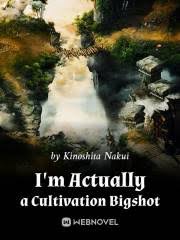
A mortal named Li Nianfan descends into a cultivation world convinced he has no talent for the Dao, seeking only a quiet life of farming and poetry in his humble mountain cottage.
Unbeknownst to him, his every casual word, simple meal, and offhand remark carries the weight of cosmic truth, causing legendary cultivators and ancient beasts to interpret his mundane actions as profound enlightenment and bow before his unknowing divinity.
As his reputation as a hidden supreme expert grows uncontrollably, the entire cultivation world reshapes itself around his peaceful existence, turning his quest for solitude into an epic comedy of cosmic misunderstandings.
Why It Stands Out
1. The Ultimate Irony Engine
This novel weaponizes dramatic irony like no other, crafting a narrative where the gap between what the protagonist believes and what the audience (and every other character) knows becomes the primary source of both humor and philosophical depth. Li Nianfan’s genuine desire for a simple life clashes spectacularly with the reality of his godlike presence, creating endless scenarios where his attempts to avoid attention only amplify his legend.
2. Slice-of-Life Meets Cosmic Power Fantasy
It masterfully blends the cozy, slow-paced aesthetics of slice-of-life with the grand, world-shaking stakes of high xianxia. The story finds its magic not in epic battles, but in the quiet moments—a shared meal, a game of chess, a stroll through the garden—that inadvertently rewrite the laws of reality for everyone else. This unique fusion offers a refreshing antidote to the typical power-climbing grind.
3. A Satirical Love Letter to Cultivation Tropes
The novel functions as both a celebration and a gentle parody of the genre. It takes every familiar xianxia element—the aloof sect master, the ancient beast seeking enlightenment, the desperate cultivator chasing a glimpse of the Dao—and flips them on their head by placing them in service to a man who just wants to tend his vegetables. The result is a story that feels both comfortingly familiar and brilliantly subversive.
Characters That Leave a Mark
There’s Luo Shiyu – a proud and powerful young master who becomes one of the first to witness Li Nianfan’s “miracles,” quickly transforming from a skeptical observer into a devoted follower convinced the mortal is a peerless expert in disguise.
You’ll meet Xiao Bai, who is a nine-tailed fox spirit that adopts the role of Li Nianfan’s teacher and housekeeper, her immense cultivation power and ancient wisdom utterly humbled by his unintentional displays of cosmic insight.
And Fire Phoenix? They’re the one who is a primordial phoenix sovereign whose fiery pride is repeatedly melted by Li Nianfan’s simple kindness, leading her to pledge unwavering loyalty to the man she believes is the ultimate Dao ancestor.
The Flaws Fans Debate
The repetitive nature of the misunderstanding gag can wear thin for some readers, especially past the 600-chapter mark, where the formula begins to feel predictable.
Critics point to the machine translation quality of the official English release, which can make the prose clunky and occasionally obscure the novel’s intended humor and nuance.
Some fans argue that the large cast of side characters, while charming, often lack deep individual development, serving more as vehicles for the central joke than as fully realized people.
Must-Experience Arcs
Ch. 1–100: The Humble Cottage Arc – Li Nianfan settles into his mountain home, and his first interactions with local cultivators—like Luo Shiyu and the nine-tailed fox Xiao Bai—set the entire premise in motion as his ordinary life is mistaken for supreme cultivation.
Ch. 400–600: The Heavenly Feast Arc – Li Nianfan’s cooking becomes a legendary event that draws the most powerful beings from across the realms, turning a simple dinner into a cosmic gathering where every dish is interpreted as a divine revelation of the Dao.
Ch. 800–995: The Merit Saint’s Legacy Arc – As the truth of Li Nianfan’s past begins to surface, the cultivation world faces its greatest crisis, forcing his unwitting disciples and followers to protect their master’s peaceful existence against threats that could unravel reality itself.
Killer Quotes
“I am the master of my own fate.”
“These are the motivational quotes I ate.”
Cultural Impact
The novel has become a staple reference in online xianxia communities for the “unwitting god” trope, with fans often joking about their own mundane actions being misinterpreted as profound wisdom.
Its unique blend of comedy and cultivation has inspired numerous fan artworks and memes, particularly depicting legendary beasts like the Fire Phoenix acting like devoted pets.
The series’ popularity has led to a successful manhwa adaptation, further cementing its place in the mainstream of translated Eastern fantasy web novels.
Final Verdict
Start Here If You Want:
A hilarious and heartwarming escape from typical power fantasies, where the strongest character in the universe just wants to enjoy his morning tea in peace.
A fresh take on the cultivation genre that prioritizes wit, irony, and cozy moments over relentless combat and scheming.
A story that celebrates the idea that true power can be found in simplicity, humility, and the quiet joys of everyday life.
Study If You Love:
Narratives that explore the gap between perception and reality, using dramatic irony as a core structural and thematic device.
The deconstruction and reassembly of genre tropes, particularly within the context of Eastern fantasy and xianxia literature.
Stories that use comedy not just for laughs, but as a vehicle for philosophical commentary on fame, power, and the nature of enlightenment.
Avoid If You Prefer:
Fast-paced, action-driven plots with clear-cut heroes and villains engaged in constant conflict.
Stories where the protagonist is self-aware and actively drives the narrative forward with a defined goal.
Novels with tightly edited prose and a concise, non-repetitive structure, as this web novel’s length and translation quality can be a barrier for some readers.