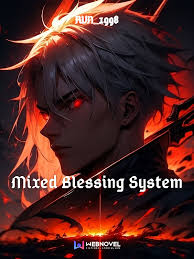
The Story in 3 Sentences
Lothur Ritter dies on Earth and awakens in a perilous cultivation world, inheriting a broken body, a failing marriage to Viktoria Frost, and a cryptic system that offers power at a steep cost.
His journey shifts from mere survival to unraveling the truth behind the Lost Tree, the system’s origins, and his own mysterious selection, all while navigating political intrigue, demonic threats, and fractured loyalties.
As he ascends through trials—forging alliances, creating artificial beings, and confronting cosmic forces—Lothur steers toward a finale that questions whether blessings are ever truly free, or always mixed with sacrifice.
Why It Stands Out
1. A Western Name in an Eastern Framework
Unlike most xianxia-inspired web novels, Mixed Blessing System ditches Chinese nomenclature for Western-style names and settings—Peters City, the Frost family, Seraphim Church—creating a unique hybrid that feels both familiar and refreshingly distinct without losing genre essence.
2. The System as a Narrative Question, Not Just a Tool
Rather than treating the cultivation system as a passive cheat device, the novel interrogates its motives, reliability, and moral weight, turning Lothur’s dependency into a psychological and philosophical tension that deepens the plot beyond power progression.
3. Emotional Complexity Amidst Harem Tropes
While featuring a harem structure, the story invests in emotional nuance—Viktoria’s pride and vulnerability, Annaliese’s quiet devotion, Elke’s inventive brilliance—making relationships feel layered rather than purely transactional, a rarity in the genre.
Characters That Leave a Mark
There’s Viktoria Frost – the frost-hearted heiress of the Frost family whose initial disdain for Lothur evolves into fierce loyalty and love, challenging her own ideals of strength and status.
You’ll meet Annaliese, who stands by Lothur with unwavering support and grace, her presence a calming counterbalance to the chaos of cultivation wars and divine conspiracies.
And Elke? They’re the one who brings ingenuity and heart to the group, crafting inventions and strategies that often turn the tide in battles, embodying the novel’s theme that intellect can rival raw power.
The Flaws Fans Debate
Some readers criticize the inconsistent terminology, such as using “organization” for “clan” or sprinkling modern terms like “alpha” and “beta,” which disrupts immersion in the fantasy setting.
A recurring complaint targets the slow progression in the middle arcs, with one reviewer noting that after the Three Great Lakes arc, the story “kinda became mid/generic in some aspects within the cultivation genre.”
Others point to the protagonist’s perceived passivity early on—wanting only to build a company and live peacefully despite looming existential threats—as a narrative misstep that delays meaningful stakes.
Must-Experience Arcs
Ch. 1–70: Frost Family Tensions – Lothur navigates his precarious position as Viktoria’s disgraced husband, uncovering family secrets and surviving assassination attempts while the system’s first trials test his resolve.
Ch. 200–350: Three Great Lakes Campaign – Political maneuvering, demonic incursions, and Lothur’s growing reputation culminate in a large-scale conflict that reshapes regional power dynamics and introduces key allies like Elke and Annaliese more deeply.
Ch. 850–890: Seraphim Church Endgame – The final confrontation unfolds at the Church’s headquarters, where Lothur must decide the fate of his creations, confront the truth of the Lost Tree, and choose between transcendence or humanity.
Killer Quotes
“Every blessing demands a price; the only question is whether you’re willing to pay it before or after you’ve used it.”
“Strength isn’t measured by how high you climb, but by how many times you refuse to let the world bury you.”
“You think power is freedom? No. Power is just the cage with better walls.”
Cultural Impact
Fans on Webnovel repeatedly call it “This is Gold” in reviews, a meme-like refrain signaling high regard despite its niche status.
The novel sparked discussions about Westernized xianxia, with readers debating whether its fusion of European aesthetics and Eastern cultivation mechanics sets a new trend or feels tonally disjointed.
Its completed status and 891+ chapters have made it a reference point for readers seeking full, self-contained cultivation epics rather than ongoing serials.
Final Verdict
Start Here If You Want:
A completed cultivation epic with a Western twist and psychological depth.
A protagonist whose growth is tied to moral ambiguity, not just combat levels.
A harem done with emotional texture rather than pure fan service.
Study If You Love:
Narratives that interrogate the “system” trope instead of glorifying it.
Worldbuilding that blends religious institutions like the Seraphim Church with traditional xianxia cosmology.
Character dynamics where loyalty is earned through shared trauma, not just plot convenience.
Avoid If You Prefer:
Fast-paced power escalation without philosophical detours.
Strictly traditional Chinese-inspired settings and naming conventions.
Stories that avoid romantic subplots or harem structures entirely.