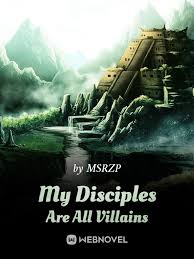
The Story in 3 Sentences
Lu Zhou awakens in the body of a legendary, ancient villainous patriarch who once ruled through fear, only to discover he has lost all his cultivation and must now manage nine disciples who are themselves infamous evildoers across the land.
A subtle but profound shift occurs as Lu Zhou, despite lacking power, begins influencing his disciples not through force but through wisdom, compassion, and unexpected moral clarity, turning their villainous natures toward something resembling righteousness.
The story arcs toward redemption—not just of the disciples, but of the very concept of villainy itself—as Lu Zhou navigates political intrigue, ancient sect rivalries, and cosmic threats while holding together a fractured family of former monsters.
Why It Stands Out
1. The Villain Mentor Paradox
Instead of playing the ruthless overlord the world expects, Lu Zhou subverts the xianxia trope by becoming a moral compass wrapped in a feared reputation. His authority stems not from power but from presence, making every interaction with his disciples a quiet battle of philosophy over brute strength.
2. Disciples as Mirrors, Not Minions
Each disciple reflects a different shade of corruption—pride, betrayal, nihilism, obsession—and their gradual transformation feels earned because the narrative treats them as complex individuals rather than plot devices. Their loyalty isn’t bought; it’s reawakened through consistent, patient guidance.
3. Comedy Born from Contradiction
The humor arises naturally from the absurdity of a powerless master commanding world-shaking villains who still bow to him out of habit, fear, or buried respect. Scenes where disciples argue over who’s more devoted while plotting his assassination (then canceling it last minute) blend tension and levity masterfully.
Characters That Leave a Mark
There’s Yu Zhenghai – the eldest disciple and leader of the Nether Sect, a man so dominant in combat and charisma that he claims no rival has ever made him bow… except his Master, whose mere existence humbles him without a word.
You’ll meet Si Wuya, who once declared, “We can’t eat or sleep in peace as long as the Master is not dead!”—a seventh disciple whose razor-sharp intellect and cold pragmatism slowly crack under the weight of Lu Zhou’s unwavering kindness.
And Ye Tianxin? They’re the one who betrayed her master due to a tragic misunderstanding tied to her imperial past, only to be captured not for punishment but for reconciliation, embodying the novel’s core theme: even the deepest wounds can heal with truth and time.
The Flaws Fans Debate
Many readers criticize the abrupt moral pivot of both Lu Zhou and his disciples, arguing that centuries of villainy shouldn’t dissolve within weeks of gentle mentorship without deeper psychological exploration.
The system mechanic—initially presented as a lifeline—fades into irrelevance as the story progresses, creating inconsistency in how the protagonist overcomes challenges, sometimes relying on it, other times ignoring it entirely.
World-building remains shallow despite 1800+ chapters; major realms, sect hierarchies, and cultivation ranks are named but rarely contextualized, leaving the setting feeling like a backdrop rather than a living universe.
Must-Experience Arcs
Ch. 1–120: The Hollow Patriarch Arc – Lu Zhou, stripped of power, must bluff, bargain, and outthink his own disciples while surviving assassination attempts and uncovering why the previous soul vanished.
Ch. 400–650: The Golden Lotus Captivity Plan – Political machinations escalate as the Divine Court and foreign powers target Lu Zhou’s sect; disciples reunite under duress, revealing hidden loyalties and fractures.
Ch. 1500–1834: Reunion and Eternal Life – After traversing higher realms and confronting cosmic entities, Lu Zhou and his disciples face their final test: choosing between immortality and humanity, culminating in a bittersweet farewell that honors their journey.
Killer Quotes
“I’ve never had a rival in my life, and no one but Master can make me bow my head.”
“We can’t eat or sleep in peace as long as the Master is not dead!”
“I’ll remember what Master said and be a good person.”
Cultural Impact
Fans frequently meme the disciples’ whiplash-inducing loyalty shifts, with posts like “When your evil disciple cancels your murder because you smiled at him” going viral on Xianxia forums.
The novel sparked renewed interest in “mentor-as-protagonist” stories, influencing titles like Master of Untold Daos and becoming a staple recommendation in “underrated cultivation” lists.
Despite mixed critical reception, its 4.54-star rating on Webnovel and completion at 1834+ chapters cemented its status as a commercially successful, if divisive, entry in the genre.
Final Verdict
Start Here If You Want:
A hilarious yet heartfelt twist on the villain protagonist where power isn’t reclaimed through bloodshed but rebuilt through trust.
A dysfunctional found family of terrifyingly powerful disciples whose banter and growth carry the story more than battles.
A cultivation novel that dares to ask whether evil is a choice or a consequence—and answers with quiet redemption.
Study If You Love:
Narrative subversion of xianxia tropes, especially the deconstruction of absolute evil and the redefinition of mastery beyond martial prowess.
Character-driven arcs in ensemble casts, where each supporting figure undergoes meaningful, individualized transformation.
The intersection of Eastern moral philosophy and fantasy, using cultivation as a metaphor for personal evolution rather than mere power escalation.
Avoid If You Prefer:
Gritty, consistent villain protagonists who stay true to their dark roots without sudden moral conversions.
Deep, intricate world-building with detailed cosmology, political systems, and cultivation mechanics.
Stories where systems or game-like mechanics remain central and logically integrated throughout the plot.