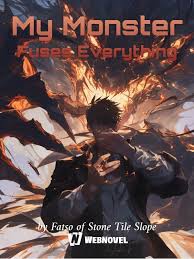
The Story in 3 Sentences
Apocalypse strikes without warning as a mysterious fog blankets the world, forcing survivors to perform desperate rituals just to cling to life while grotesque monsters rise from the ruins of civilization.
Su Han gains the rare ability to fuse and evolve contracted monsters, turning the tide against the horrors by weaponizing the very creatures that threaten humanity’s extinction.
As he builds a stronghold with trusted allies and uncovers the truth behind the Book of Blood Spirit, Su Han’s journey shifts from mere survival toward reshaping a broken world through calculated power and strategic alliances.
Why It Stands Out
1. Contract Your Dead Loved Ones – Then Weaponize Them
Instead of generic elemental powers or martial arts breakthroughs, survivors must kill and contract monsters—often former friends, family, or pets—to stay alive. This chilling mechanic forces emotional and moral dilemmas into every battle, making survival feel personal and haunting rather than just tactical.
2. Fusion Is Evolution, Not Just Power Scaling
Su Han’s unique ability isn’t just about collecting stronger monsters; it’s about fusing them into terrifying new forms with layered traits. A spider monster might absorb eyeball flesh to gain sensory dominance, or a scorpion demon could merge with crystalline growths for armor—each fusion is a creative act of biological engineering that keeps progression fresh and unpredictable.
3. A Calm, Strategic Protagonist in a World of Chaos
Unlike the typical rage-fueled or emotionally volatile apocalypse leads, Su Han remains eerily composed. He prioritizes logic over heroism, builds systems over speeches, and treats his group as assets to be optimized—not burdens to be saved. This grounded approach makes his victories feel earned and his worldbuilding more immersive.
Characters That Leave a Mark
There’s Yan Meiyu – the sharp-eyed strategist who manages logistics and diplomacy, turning scavenged ruins into a functioning base while quietly proving her worth beyond combat.
You’ll meet Gan Xinglei, who commands his own flesh corpse with brutal efficiency and never questions Su Han’s orders, embodying the disciplined soldier archetype without slipping into mindless loyalty.
And Zhu Xiong? They’re the one who handles settlement security and resource distribution with a no-nonsense attitude, often acting as the stabilizing force when new survivors threaten internal order.
The Flaws Fans Debate
The English translation suffers from inconsistent monster and ability names, sometimes using the same term for both evolved envoys and wild beasts, which creates confusion during critical battles.
Some readers criticize the lack of deep worldbuilding outside the immediate city, leaving global context—like whether other nations survived or how the fog originated—vague even late into the story.
A portion of the fanbase finds the supporting cast underdeveloped beyond their utility, with personalities that flatten into functional roles rather than evolving alongside the plot.
Must-Experience Arcs
Ch. 1–20: The Fog Descends – Su Han survives the initial apocalypse, contracts his first Angel Envoy, and fuses it with a spider monster to clear his apartment building, establishing the core mechanics of monster fusion and survival hierarchy.
Ch. 97–124: Hospital of Flesh – The team ventures into a ruined hospital teeming with mutated corpses and a Glutton-class monster, where Su Han experiments with multi-stage fusions using crystals and eyeball biomass, showcasing the system’s strategic depth.
Ch. 587–620: The Black-Gold Monarch – In the late game, Su Han confronts metal-based horrors and forges the Black Rider by fusing the Black-Gold Monarch with elite envoys, signaling his shift from survivor to warlord capable of reshaping regional power structures.
Killer Quotes
“Use monsters to fight monsters.”
“To survive, you must become more terrifying than the horror itself.”
“Strength isn’t given—it’s fused from sacrifice, strategy, and the will to outlast the abyss.”
Cultural Impact
The novel sparked fan discussions comparing its monster-fusion system to games like Pokémon fused with The Last of Us’ emotional weight.
Readers on Webnovel consistently rate it above 4.1, praising its fresh take on apocalypse tropes despite translation flaws.
Memes about “contracting your ex as a monster” and “fusing your landlord into a meat shield” circulated in Chinese webnovel communities, highlighting its darkly humorous appeal.
Final Verdict
Start Here If You Want:
A tightly paced apocalypse story where power comes from grotesque innovation, not just training or luck.
A protagonist who thinks like a general and acts like a predator, avoiding both savior complexes and edgy nihilism.
Horror that feels visceral—eyeball cities, flesh corridors, and whispering meat walls—without relying on jump scares or gore for its tension.
Study If You Love:
Narratives that blend biological horror with strategic resource management, echoing themes from Lovecraft and post-collapse sci-fi.
Power systems with clear rules and meaningful trade-offs, where every fusion carries risk and reward.
The slow emergence of societal structures in chaos, as Su Han’s base evolves from shelter to sovereign territory.
Avoid If You Prefer:
Deep romantic subplots or character-driven emotional arcs—this is survival-first storytelling.
Polished, literary prose; the translation prioritizes speed over elegance, which may frustrate purists.
Expansive geopolitical worldbuilding—focus stays intensely local, with global mysteries left largely unresolved.