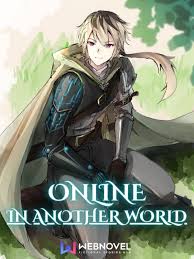
The Story in 3 Sentences
A terminally ill young man named Ethan Bellrose, cursed by a body that cannot endure the real world, chooses to abandon his life entirely by logging into “Reincarnation Online,” a virtual reality system promising a second chance in a fantasy realm.
He awakens as Emilio Dragonheart, reborn as an infant into a vividly realized world called Arcadius, where he must navigate childhood, family bonds, and the slow unfurling of a mysterious Dragonheart System that hints at deeper truths beneath the game’s surface.
What begins as an escape evolves into a profound journey through darkness, glory, and moral ambiguity, challenging whether this new life is merely code or something far more real.
Why It Stands Out
1. A World That Breathes Like a Living Organism
The world-building in “Online In Another World” doesn’t just decorate the story—it pulses with internal logic, history, and consequence. Every city, guild, and magical tradition feels researched and rooted, not slapped together for plot convenience. Readers note how the setting avoids the trap of generic isekai backdrops by layering cultural nuance, economic systems, and political tension that evolve alongside the protagonist.
2. Action as Character Expression
Fights aren’t just flashy—they’re extensions of personality. Whether it’s a duelist’s precise footwork or a mage’s chaotic spellcasting, combat reveals who characters truly are. The author’s attention to tactical detail and choreography makes every clash immersive, allowing readers to visualize sequences with cinematic clarity. This approach elevates battles from spectacle to storytelling.
3. The Lingering Question of Reality
Unlike many VR or reincarnation tales that treat the game world as disposable fantasy, this novel constantly interrogates its own premise. Is Arcadius a simulation, a parallel dimension, or something else entirely? Even hundreds of chapters in, the narrative preserves this ambiguity, inviting readers to sit with the discomfort of not knowing—a rare and compelling philosophical tension.
Characters That Leave a Mark
There’s Lord Aldric Dragonheart – Emilio’s stern but deeply devoted father, whose quiet strength and unwavering belief in his son shape Emilio’s moral compass from infancy through adolescence.
You’ll meet Lady Seraphina Dragonheart, who balances maternal warmth with a warrior’s resolve, offering both comfort and challenge as Emilio grows into his powers and responsibilities.
And Liliana? They’re the one who tried to assassinate Emilio for coin in the early chapters, only to be spared due to his stubborn compassion—setting off a complex, morally gray dynamic that fans still debate.
The Flaws Fans Debate
Some readers criticize the protagonist’s excessive leniency, particularly his refusal to retaliate against clear threats like Liliana, calling it naive or inconsistent with the story’s otherwise gritty tone.
The pacing, while stable, is undeniably slow—early chapters linger on mundane childhood moments that, while character-building, may test the patience of readers seeking faster progression.
A recurring critique is the density of “major events” occurring before Emilio even reaches the Adventurers Guild, making the world feel artificially stacked with drama rather than organically unfolding.
Must-Experience Arcs
Ch. 1–25: Infant Rebirth – Emilio’s earliest days in Arcadius, where he navigates infancy with adult awareness, forms his first bonds with the Dragonheart family, and receives cryptic guidance from the Dragonheart System.
Ch. 120–180: The Crimson Trials – A brutal tournament arc that tests Emilio’s growth, introduces key rivals and allies, and reveals the first cracks in the illusion of Arcadius as a mere game world.
Ch. 360–420: The Plague of Regret – A late-game descent into moral ambiguity, where past choices return with devastating consequences, forcing Emilio to confront the cost of his mercy and the true nature of his existence.
Killer Quotes
“Mercy isn’t weakness—it’s the hardest strength to wield.”
“In a world built on code, the only thing that feels real is the pain of choosing right over easy.”
“Even dragons were once hatchlings who feared the sky.”
Cultural Impact
Fans frequently compare it to “Mushoku Tensei” but emphasize how it diverges into its own identity after the first major arc, earning respect for originality within a saturated genre.
The phrase “Is it real or just a game?” became a recurring meme in Webnovel comment sections, symbolizing the novel’s central philosophical tension.
Its consistent 4.78/5 rating across hundreds of reviews on Webnovel reflects a dedicated, vocal fanbase that actively defends its slow-burn approach against mainstream isekai trends.
Final Verdict
Start Here If You Want:
A reincarnation story that treats its virtual world with emotional and philosophical weight, not just as a playground.
A protagonist whose kindness is both his greatest strength and most debated flaw.
Lush, immersive action sequences that serve character development, not just spectacle.
Study If You Love:
Narratives that blur the line between simulation and reality, inviting existential reflection.
Slow-burn character arcs where childhood development matters as much as endgame power.
World-building that integrates magic, politics, and culture into a cohesive, evolving ecosystem.
Avoid If You Prefer:
Fast-paced, loot-driven MMO-style progression with clear game mechanics.
Morally unambiguous heroes who dispatch enemies without hesitation.
Stories that resolve their central mysteries early, preferring certainty over lingering doubt.