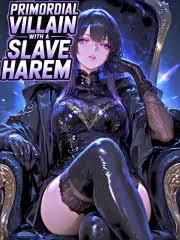
The Story in 3 Sentences
Quinlan, an ordinary office worker, is abruptly transmigrated into the perilous fantasy realm of Thalorind as a powerless level 1 Commoner, armed only with his intellect and a mysterious gift tied to his arrival.
Forced to navigate a brutal world where betrayal is common, he leverages the societal presence of collared slaves to build a loyal inner circle, joining a criminal syndicate to claw his way upward through cunning, combat, and calculated ruthlessness.
As his influence expands, Quinlan evolves from a survivalist outsider into a formidable primordial-level villain who reshapes power structures while maintaining a complex moral code that spares innocents but shows no mercy to enemies.
Why It Stands Out
1. A Villain Who Won’t Torture Puppies
Unlike edgy antagonists who revel in senseless cruelty, Quinlan operates with a pragmatic moral compass—he avoids harming civilians and won’t slaughter for sport, yet remains unapologetically greedy, opportunistic, and willing to burn cities if it serves his strategic goals. This nuanced antiheroism makes him compelling rather than cartoonish.
2. Harem with Heart, Not Just Heat
Every woman in Quinlan’s orbit receives meaningful development, screen time, and emotional weight. From initial slaves to high-born allies, none are reduced to disposable tropes. The author explicitly rejects “catch-them-all” harem bloat, focusing instead on layered personalities and evolving relationships that feel earned over 750+ chapters.
3. Slice-of-Life Meets Savage Strategy
The narrative masterfully blends downtime moments—shared meals, quiet conversations, domestic warmth—with high-stakes political maneuvering, dungeon raids, and war planning. This rhythm prevents fatigue, grounding Quinlan’s ascent in human connection even as he commands armies and reshapes continents.
Characters That Leave a Mark
There’s Seraphina – a graceful yet fiercely loyal companion whose poise masks a traumatic past and unwavering devotion to Quinlan’s cause, evolving from a tentative ally into a pillar of his inner council.
You’ll meet Lilith, who storms into the story with wild, untamed energy as a demon queen or succubus figure, challenging Quinlan’s control while gradually revealing vulnerability beneath her ferocity and becoming a key emotional and tactical asset.
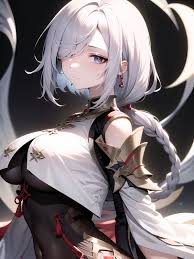
And Shallan? They’re the one who wields magic with a smirk and sharp wit, often deploying gales or illusions in battle while serving as both strategist and confidante, her confidence never overshadowing her genuine care for the group’s safety.
The Flaws Fans Debate
The early chapters suffer from awkward prose and a protagonist who feels overly reserved or inconsistent in tone, a flaw the author openly admits stemmed from inexperience during his debut writing phase.
Some readers criticize repetitive storytelling, where the same event is described twice—once from Quinlan’s perspective and again from a heroine’s—slowing pacing and inflating chapter count without adding new information.
Long cultivation arcs and extended domestic sequences, such as a 20-chapter stretch revisiting Quinlan’s “mothers,” are seen by critics as excessive filler that risks losing momentum despite containing occasional plot-critical details.
Must-Experience Arcs
Ch. 1–100: The Commoner’s Gambit – Stripped of everything, Quinlan survives Thalorind’s brutal streets by exploiting loopholes in the slave collar system, forming his first bonds and joining a criminal faction to gain leverage in a world that sees him as expendable.
Ch. 400–550: Blood Moon Rebellion – Tensions within his growing harem and organization erupt when enslaved allies nearly revolt, forcing Quinlan to confront the ethics of his control and redefine loyalty beyond magical compulsion, marking his shift from opportunist to leader.
Ch. 900–1100: Primordial Ascension – After mastering ancient curses and primal energy, Quinlan challenges world-spanning powers, culminating in a universal announcement that reshapes reality’s hierarchy and positions him not as a conqueror, but as a new axis of order in a fractured realm.
Killer Quotes
“I want to be my own boss. I want to answer to no one.”
“Good people don’t become villains by choice—they’re forged by a world that gives them no other path.”
“Power isn’t taken with apologies. It’s seized, held, and never returned.”
Cultural Impact
Fans have turned the author’s phrase “bumpy beginning” into a meme and rallying cry, celebrating those who persisted past early roughness to discover the story’s depth .
The novel’s consistent daily updates and direct author-reader engagement on Webnovel and Discord have fostered a dedicated community that actively debates harem dynamics, power scaling, and moral boundaries.
Despite its R18 tag, the story is frequently recommended as a “thinking villain” harem—a subversion of typical power fantasies—earning praise for balancing smut with substantive character arcs and world-building.
Final Verdict
Start Here If You Want:
A morally gray protagonist who grows from zero to primordial without losing his human contradictions.
A harem where every woman feels real, remembered, and irreplaceable—not just decorative.
A dark fantasy that mixes political intrigue, cultivation progression, and intimate slice-of-life moments into a surprisingly cohesive whole.
Study If You Love:
Narratives that interrogate how systems of power corrupt or transform individuals, especially through the lens of slavery, loyalty, and consent in a fantasy context.
The evolution of antiheroes in webnovel culture, particularly how modern villains blend pragmatism with selective empathy to avoid edgelord clichés.
Structural storytelling that alternates high-octane action with quiet character development, creating emotional resonance amid epic scale.
Avoid If You Prefer:
Stories that avoid slavery or non-consensual dynamics entirely, as the premise hinges on collared companions—even if later relationships become mutual.
Fast-paced power escalation; Quinlan’s rise is deliberate, with long stretches focused on relationship-building or strategic planning over constant combat.
Tight, minimalist prose—early chapters feature clunky first-person present tense that improves over time but may deter grammar-sensitive readers.