The Story in 3 Sentences
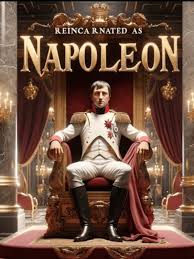
A modern man named Adrian is accidentally killed by the Goddess of Fate and reborn in an alternate 18th-century Europe as Napoleon Bonaparte, armed with future knowledge but constrained by the era’s social and political realities.
His journey quickly diverges from history as he attempts to reshape Europe with modern technology and strategic foresight, only to be psychologically shackled by the presence of another reincarnated soul—Ciela—who becomes his wife and unwitting emotional gatekeeper.
What begins as a bold reimagining of Napoleonic ambition gradually unravels into a narrative hamstrung by contrived romance, inconsistent worldbuilding, and a protagonist who hides his greatest strengths out of fear of losing love rather than wielding them to conquer fate.
Why It Stands Out
1. The Emperor’s Paradox
Unlike typical transmigration tales where the protagonist leverages modern knowledge with ruthless efficiency, this novel traps its hero in a self-imposed cage of secrecy. His fear of exposing his origins to Ciela leads to absurd scenarios where he credits her for inventions like black powder rifles, turning what should be a power fantasy into a tragicomedy of misplaced loyalty and emotional fragility.
2. Alternate History With Emotional Baggage
While many alternate history fictions focus on military conquest or technological revolution, Reincarnated as Napoleon insists on weaving intimate personal drama into grand geopolitical shifts. The result is a strange hybrid where treaty negotiations and battlefield strategies are constantly interrupted by domestic anxieties, creating a dissonant but oddly human portrayal of power.
3. The Collapse of Internal Logic
The novel’s most defining trait isn’t its ambition but its unraveling coherence. Once Ciela enters the story, the foundational premise—that Adrian’s reincarnation is a unique cosmic accident—shatters. Readers are left questioning why only two people retain memories, why no one else questions Napoleon’s anachronistic ideas, and why the world bends so conveniently to his unchallenged authority, making the setting feel less like history and more like a poorly coded simulation.
Characters That Leave a Mark
There’s Ciela – the reincarnated woman whose presence derails the entire narrative logic, yet paradoxically becomes the emotional anchor of Napoleon’s life, pushing him to suppress his true self out of fear she’ll reject him if she learns he’s also from the future.
You’ll meet Marshal Jean Lannes, who stands among Napoleon’s most loyal military commanders, embodying the fierce camaraderie and battlefield brilliance that defined the real Grande Armée, even as the story layers him with fictionalized devotion to the emperor’s altered destiny.
And Fouche? They’re the one who serves as Minister of Police, navigating the shadowy corridors of state surveillance and political intrigue with cold pragmatism, often acting as the grounded counterweight to Napoleon’s increasingly erratic technological gambits.
The Flaws Fans Debate
The introduction of Ciela as a second reincarnated character breaks the story’s internal logic, since her ordinary death offers no justification for memory retention, unlike Adrian’s divine accident.
The protagonist’s refusal to deploy advanced technology openly—out of romantic insecurity—undermines the core appeal of the transmigration genre, where knowledge is power.
Historical immersion is repeatedly shattered by modern slang, naive decision-making, and unrealistic political outcomes, such as receiving massive funding for steam locomotives without scrutiny.
Must-Experience Arcs
Ch. 2–40: Rise from Obscurity – Napoleon navigates his childhood and early military career in revolutionary France, using subtle hints of future knowledge to gain favor while avoiding suspicion, culminating in his role during the Flight to Varennes.
Ch. 99–150: The Peace of Leoben and Empire Building – After securing early victories, Napoleon negotiates treaties, reorganizes French infrastructure, and begins assembling his marshals, all while Ciela’s influence grows and complicates his technological ambitions.
Ch. 400–438: The Final Reign – In the twilight of his rule, Napoleon reflects on his legacy, surrounded by loyal marshals like Ney, Davout, and Murat, as the world he reshaped teeters between admiration and exhaustion, ending not with conquest but quiet resignation.
Killer Quotes
“Power is not in the cannon, but in the mind that dares to imagine what the cannon could become.”
“To rule is to choose between truth and peace—and I have chosen peace too often.”
“History does not remember the man who hid his light to please a single heart.”
Cultural Impact
Fans coined the phrase “Don’t read past Ciela” as a warning to new readers, turning her introduction into a meme symbolizing narrative collapse.
The novel sparked heated debates on Webnovel forums about the ethics of “romantic sabotage” in power-fantasy stories, with many arguing that love should empower, not neuter, the protagonist.
Despite its flaws, it gained a cult following among Napoleon enthusiasts who appreciated the attempt to humanize the emperor, even if through flawed fiction.
Final Verdict
Start Here If You Want:
A transmigration story that starts with explosive historical potential and a clever twist on Napoleon’s legacy.
A romance that dramatically alters the trajectory of world events—not through alliance, but through emotional paralysis.
An unconventional take on power where the greatest enemy isn’t coalition armies, but the fear of being truly known.
Study If You Love:
Narratives that unintentionally critique their own genre by exposing the fragility of “chosen one” tropes when burdened by human vulnerability.
The tension between historical authenticity and speculative fiction, especially when modern psychology invades 18th-century minds.
How fan backlash can become part of a work’s identity, with Ciela’s reception serving as a case study in character-driven narrative failure.
Avoid If You Prefer:
Consistent worldbuilding where rules of reincarnation aren’t bent for romantic convenience.
Protagonists who act with strategic maturity rather than mood swings and naive trust.
Historical fiction that respects the complexity of real-world logistics, economics, and social dynamics instead of hand-waving them with “golden finger” solutions.