The Story in 3 Sentences
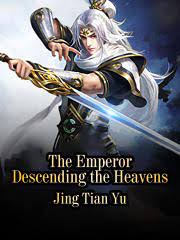
An immortal emperor, having cultivated for a millennium in a fantastical realm, shatters the void to return to his point of origin, forever altering the mundane world he left behind.
His re-entry ignites a chain reaction, forcing ancient, hidden powers like the Heavenly Imperial Palace and the Sea of Immortals to reveal themselves, dragging the entire world into a new, chaotic cultivation era.
The narrative hurtles towards a cataclysmic confrontation where the emperor’s undying legend is tested against the unveiled, universe-shaking secrets of the Nine Heavens and the Ancient Desolation of Immortals.
Why It Stands Out
1. The Undying Emperor’s Homecoming
It flips the script by starting with an overpowered protagonist returning, not striving. The story isn’t about gaining power but managing its consequences, the weight of immortality, and the shockwaves his mere presence sends through a world unprepared for true divinity. His return is the inciting incident, the big bang for the entire plot.
2. A World Built on Buried Secrets
The novel excels in its worldbuilding, presenting a reality where the true, terrifying scale of existence—from the Void Flows to the Ancient Realm of Heavens—has been deliberately concealed. The thrill lies in the gradual, often violent, unearthing of these cosmic truths, making every revelation feel monumental and dangerous.
3. Ruthless Majesty in a Modern Context
The protagonist’s “ruthless” nature isn’t just for show; it’s a necessary tool for navigating a world where ancient powers operate by brutal, forgotten rules. His interactions, whether with old enemies or new allies, are charged with the tension of absolute power meeting modern fragility, creating a unique and compelling dynamic.
Characters That Leave a Mark
There’s Luo Yixian Zun – a figure of immense authority whose mere gaze can shake immortals, representing the old guard’s power and gravitas.
You’ll meet Lu Ming, who witnesses terrifying events and tries to flee, embodying the shock and helplessness of those caught in the emperor’s wake.
And Qin Yu? They’re the one who navigates complex situations with a knowing smile, suggesting a deep understanding of the hidden currents and politics at play.
The Flaws Fans Debate
The protagonist’s overwhelming power from the start can make conflicts feel predetermined, reducing suspense.
The pacing can be uneven, with long stretches of world exposition followed by sudden, intense action.
Some readers find the sheer scale and number of cosmic realms and concepts overwhelming or underdeveloped, feeling more like a list than a lived-in world.
Must-Experience Arcs
Ch. 1–100: Return of the Emperor – The protagonist descends back to Earth, makes a formidable debut, and begins to stir the stagnant waters of the hidden cultivation world, setting his immortal legend in motion.
Ch. 500–700: Secrets of the Heavenly Palace – The narrative delves deep into the mysteries of the Heavenly Imperial Palace as it opens, forcing alliances and revealing ancient truths that reshape the power dynamics among sects and immortals.
Ch. 1000–1177: Confronting the Nine Heavens – The final arc escalates to a cosmic scale as the emperor and his allies confront the ultimate powers residing in the Divine Realm of the Nine Heavens, culminating in a battle that decides the fate of all realms.
Killer Quotes
“Even in death, I still serve.”
“It is better to die for the Emperor than to live for yourself.”
“For what are our lives unless they are in His service?”
Cultural Impact
The novel’s title and concept of an emperor “descending” have become shorthand in fan circles for overpowered protagonists returning to their roots.
Its depiction of vast, hidden cosmic realms has inspired numerous fan theories and wikis attempting to map its complex cosmology.
Despite its niche status, it maintains a dedicated, if small, international readership drawn to its specific brand of high-stakes, return-of-the-god-king fantasy.
Final Verdict
Start Here If You Want:
A power fantasy where the hero is already at the top and the story is about the fallout.
Epic, large-scale worldbuilding with ancient secrets and cosmic realms.
A ruthless, decisive protagonist who reshapes the world by his will.
Study If You Love:
Exploring the narrative challenges and opportunities of starting with an omnipotent main character.
The tropes and evolution of the “returning immortal” subgenre within Xuanhuan.
How worldbuilding can be used as the primary driver of plot and conflict in fantasy literature.
Avoid If You Prefer:
Stories where the protagonist earns their power through a gradual, challenging journey.
Tightly focused, character-driven narratives over sprawling, world-centric epics.
Plots with high stakes derived from the protagonist’s vulnerability rather than their invincibility.