The Story in 3 Sentences
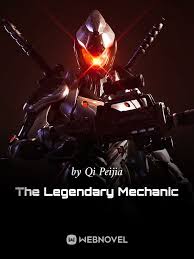
A professional power-leveler named Han Xiao dies during a routine job and wakes up inside the very virtual reality game he once played—except now it’s a living, breathing universe, and he’s been reborn as an NPC with full memory of his past life .
Armed with insider knowledge of game mechanics, hidden quests, and future events, he rapidly builds influence, crafts advanced technology, and establishes the Black Star Army to prepare for the arrival of real players who will reshape the world .
As his power grows, so does his detachment from the world’s reality, leading him to treat its inhabitants as tools or obstacles rather than people, blurring the line between strategic genius and psychological unraveling .
Why It Stands Out
1. The Gamer’s God Complex, Weaponized
Unlike typical isekai protagonists who stumble through new worlds with awe or humility, Han Xiao enters with cold calculation. He doesn’t adapt—he exploits. Every system, every faction, every character becomes a variable in his grand equation. This isn’t wish fulfillment; it’s simulation theory turned into a war doctrine, where knowledge isn’t power—it’s absolute control .
2. A Sci-Fi Sandbox with Real Stakes
While many game-lit novels treat their worlds as playgrounds, The Legendary Mechanic insists on consequences. The game’s lore is treated as cosmology, its mechanics as physics. When Han Xiao builds mechs or fleets, he doesn’t just summon them—he reverse-engineers, prototypes, and iterates. The novel blends engineering detail with cosmic ambition, making every upgrade feel earned and every battle a test of intellect over brute force .
3. The Slow Erosion of Empathy
What begins as a clever underdog story gradually reveals a darker core: the protagonist’s growing inability to see NPCs as real beings. The narrative doesn’t shy from this. In fact, it leans into the discomfort, forcing readers to question whether Han Xiao’s victories are triumphs or tragedies. This moral ambiguity—rare in power-fantasy genres—elevates the story beyond entertainment into psychological commentary .
Characters That Leave a Mark
There’s Sylvia – the first NPC disciple Han Xiao takes under his wing, a talented mechanic once burdened by resentment toward him for her father’s fate, who evolves into a key administrator of the Black Star Army and a rare voice of grounded humanity amid escalating chaos .
You’ll meet Aroshia, who emerges as a loyal and capable operative within the Black Star ranks, contributing not just through combat prowess but through unwavering dedication that contrasts with the protagonist’s increasing emotional distance .
And Nero? They’re the one who represents the next generation shaped by Han Xiao’s legacy—a child born only because Black Star resolved the crises of Planet Aquamarine, symbolizing both hope and the unintended consequences of playing god in a living world .
The Flaws Fans Debate
Many readers argue that Han Xiao’s descent into god-complex territory undermines the story’s early promise, transforming a strategic genius into an emotionally detached figure who rationalizes cruelty as efficiency .
Critics point out that the novel often frames military and governmental figures as incompetent or arrogant solely to justify the protagonist’s unilateral actions, creating a skewed moral landscape that ignores real-world institutional logic .
Some fans feel the narrative fails to reconcile its central contradiction: if the game world is truly real and its inhabitants sentient, then Han Xiao’s treatment of them as expendable assets crosses into psychopathy—but the story rarely holds him accountable for it .
Must-Experience Arcs
Ch. 1–400: The Rebirth and Rise – Han Xiao awakens in the pre-beta world of Galaxy, uses his foreknowledge to secure early advantages, crafts his first mechs, and begins assembling the foundations of the Black Star Army while evading or manipulating early factions .
Ch. 401–900: The Player Influx and Empire Building – As real players enter the game, Han Xiao shifts from solo operator to faction leader, engaging in large-scale conflicts, technological arms races, and political maneuvering that redefine the game’s power structure .
Ch. 901–1463: The Cosmic Reckoning – With his empire secure, Han Xiao confronts existential threats beyond the game’s original scope, including ancient civilizations, cosmic entities, and the blurred boundary between simulation and reality, culminating in a finale that questions the nature of fate and free will .
Killer Quotes
“My fate is not for the heavens to decide; if the heavens want to erase me, then I will erase the heavens!”
“It’s back! Everything is back! It’s this feeling! The excitement of a mechanic!”
“I hope you’re willing to stop one day and look at the scenery along the way. This universe has an end no matter how enormous it is.”
Cultural Impact
The Legendary Mechanic is frequently cited as a gateway novel for Western readers entering the Chinese game-lit and sci-fi xianxia space, praised for its unique blend of strategy, engineering, and cosmic scale .
Fan communities on Reddit and Discord actively debate Han Xiao’s morality, with memes contrasting “Black Star the Hero” versus “Black Star the Tyrant,” reflecting the novel’s polarizing psychological depth .
Despite being a translation, it maintains a dedicated English-speaking fanbase that produces detailed wikis, character analyses, and timeline maps, underscoring its narrative complexity and world-building richness .
Final Verdict
Start Here If You Want:
A cerebral power fantasy where brains consistently beat brawn, and every victory is built on foresight, not luck.
A sci-fi epic that treats game mechanics as real-world physics, making technology feel both magical and plausible.
A morally gray journey that challenges the reader to question whether winning at all costs is still winning.
Study If You Love:
Narratives that explore the psychological toll of absolute knowledge and control in simulated realities.
World-building that integrates engineering, military strategy, and cosmic philosophy into a cohesive system.
Stories where the protagonist’s greatest enemy isn’t a villain—but their own detachment from humanity.
Avoid If You Prefer:
Clear moral binaries or heroes who remain empathetic throughout their rise to power.
Stories that respect institutional authority or portray military/government structures as competent.
Narratives that avoid psychological complexity or the slow corrosion of a character’s humanity.