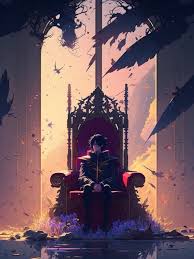
The Story in 3 Sentences
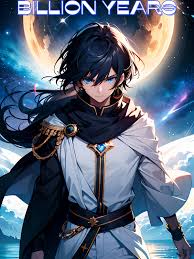
Athan, a sixteen-year-old boy from Earth, dies pointlessly only to awaken in another world inside the corpse of a boy who shares his name and face, carrying with him a mysterious black whirlpool fused to his soul.
He embraces a path of self-imposed hardship to grow stronger, unaware that the very power meant to elevate him is cursed with amplified misfortune, setting him on a collision course with a fate far darker than death.
From this crucible of suffering and cosmic anomaly, the legend of the Void Emperor is forged—not as a savior, but as a force that reshapes reality itself.
Why It Stands Out
1. A Soul Cursed by Destiny, Not Blessed
Unlike typical reincarnation tales where the protagonist receives divine favor or cheat skills, Athan’s transmigration is tainted—his soul was never meant to survive death, and its unnatural persistence warps fortune itself around him. This inversion of the “chosen one” trope injects existential tension into every victory, as growth comes hand-in-hand with escalating doom.
2. Power Rooted in Paradox, Not Just Progression
The black whirlpool within Athan isn’t just a power source—it’s a narrative device that blurs the line between blessing and curse. While it grants strength, it also attracts calamity, forcing the protagonist to navigate a world where every gain risks catastrophic loss. This creates a cultivation journey defined not by linear ascension but by precarious balance.
3. Emotional Depth Beneath the Harem Surface
Despite its R18 and harem tags, the story weaves genuine emotional stakes into Athan’s relationships. His past trauma—bullying, familial rejection, and a meaningless death—makes his search for belonging feel earned, not indulgent. The romance elements serve his healing arc rather than existing as mere fan service.
Characters That Leave a Mark
There’s Tiana – the Crimson Goddess of Void, whose title hints at dominion over the same abyssal forces that haunt Athan, suggesting a mirrored destiny or perhaps a rivalrous bond forged in cosmic chaos.
You’ll meet Avelia, who carries the epithet “Space Princess of Terror Void,” implying both royal lineage and a fearsome connection to the void—potentially positioning her as either a key ally or a tragic figure caught in the same metaphysical storm as the protagonist.
And Sen? They’re the one who bears the name “The Inferno of Divine Melverous Wisps,” a title that evokes both destructive fire and ethereal mystery, marking them as a wildcard whose allegiance or philosophy could challenge Athan’s understanding of power and purpose.
The Flaws Fans Debate
Some readers note that character names are occasionally misspelled, even for central figures, which disrupts immersion in a story with such a large cast.
Critics argue that certain female characters in the harem lack narrative agency—introduced with personal conflicts that resolve too quickly without meaningfully altering Athan’s trajectory or worldview.
While the power system is praised for its uniqueness, the sheer scale of cosmic stakes in later chapters risks overshadowing the intimate emotional core that grounded the early story.
Must-Experience Arcs
Ch. 1–20: The Unwilling Rebirth – Athan awakens in a dead body, discovers the black whirlpool within his soul, and endures rejection from his new family while testing the limits of his cursed power in a hostile academy setting.
Ch. 200–250: The Crimson Eclipse – Confronting Tiana during a celestial anomaly, Athan learns that void energy responds to emotional trauma, forcing him to relive his Earth death to unlock a new tier of control, at great psychological cost.
Ch. 780–817: The Emperor’s Silence – In the final chapters, Athan transcends mortal form to become the Void Emperor not through triumph, but sacrifice, erasing his own identity to stabilize the collapsing multiverse—a conclusion that reframes his entire journey as preparation for self-annihilation.
Killer Quotes
“Strength isn’t given to those who deserve it. It’s stolen by those who refuse to die meaningless.”
“The void doesn’t consume light. It reveals how fragile light truly is.”
“You call it misfortune. I call it the price of remembering who I was before the world tried to erase me.”
Cultural Impact
With over 8 million readers on Webnovel, the series sparked fan art of Tiana and Avelia long before their full backstories were revealed, turning epithets into icons.
The phrase “smooth sailing second life” from the synopsis became an ironic meme among fans, used to describe any situation that starts hopeful but descends into chaos.
Its blend of cosmic horror and xianxia tropes inspired a wave of “cursed transmigration” stories across Webnovel and Royal Road, shifting trends away from pure power fantasies.
Final Verdict
Start Here If You Want:
A reincarnation story where the second life is harder than the first, not easier.
A protagonist whose power is inseparable from his trauma, making every battle psychological as much as physical.
A harem that feels emotionally integrated rather than mechanically tacked on, with each relationship reflecting a facet of Athan’s fractured self.
Study If You Love:
Narratives that weaponize the “isekai cheat” trope by making the protagonist’s advantage inherently unstable.
The intersection of cosmic metaphysics and personal identity in cultivation fiction.
Stories where the climax isn’t about winning, but about choosing what to erase—and what to preserve—when becoming a god.
Avoid If You Prefer:
Consistently polished prose; the author admits to occasional spelling and continuity errors.
Traditional cultivation arcs with clear sect hierarchies and tournament arcs; this leans heavily into abstract, reality-bending conflict.
Harem dynamics where female characters exist solely for romantic validation; here, their roles are mythic and often tragic, which may frustrate readers seeking lighthearted romance.