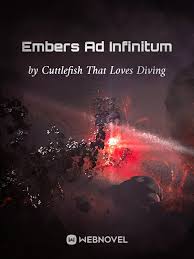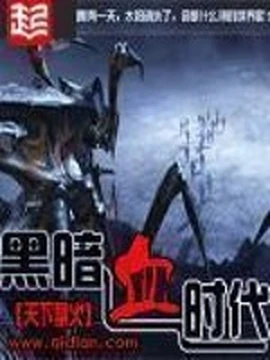
The Story in 3 Sentences
An ordinary office worker, Chu Yun Sheng, deciphers his family’s ancient book to learn of an impending global darkness, a prophecy met with ridicule until the sun vanishes, plunging Earth into a bloody, chaotic apocalypse.
His desperate quest for survival and scattered map pieces is constantly derailed by his own impulsive heroism and the relentless, manipulative schemes of alien forces, turning his journey into a gauntlet of loss and betrayal where every alliance crumbles.
Ultimately, stripped of family and hope, his path narrows from salvation to a singular, all-consuming vendetta against the cosmic entities that orchestrated humanity’s suffering, a fight waged across dimensions with no promise of victory.
Why It Stands Out
1. A Symphony of Suffering
The novel stands out for its unflinching commitment to tragedy, crafting a world where hope is a liability and kindness is punished. It doesn’t just depict an apocalypse; it dissects the psychological erosion of its protagonist, Chu Yun Sheng, as he transforms from a cautious skeptic into a hollowed-out engine of revenge. The narrative thrives on subverting power fantasy tropes, ensuring the protagonist’s immense power from the ancient book is perpetually overshadowed by greater, more terrifying forces, making his victories feel pyrrhic and his struggles profoundly human in their futility.
2. The Anti-Hero’s Labyrinth
It carves its niche by presenting a protagonist whose defining trait is his lack of control. Chu Yun Sheng is not a master strategist but a man perpetually reacting, stumbling from one catastrophic scenario to the next, often due to his own poorly thought-out decisions. This lack of agency, far from being a flaw in the writing for its fans, is the core appeal, creating a unique tension where the reader experiences the world’s crushing weight alongside him. The story becomes a sprawling, unpredictable labyrinth where plot threads dangle and new, more terrifying threats emerge just as old ones seem resolved.
3. Cosmic Horror Meets Xuanhuan
The novel uniquely blends the intimate, gritty horror of a societal collapse with the vast, incomprehensible scale of cosmic sci-fi and xuanhuan cultivation. Ancient Chinese philosophies and cultivation techniques clash with alien biologies and interstellar politics, creating a setting that is both deeply personal and terrifyingly grand. This fusion allows for a narrative that explores human nature under extreme duress while simultaneously posing existential questions about humanity’s place in a universe teeming with hostile, superior life, making the darkness feel both immediate and infinite.
Characters That Leave a Mark
There’s Yu Xiaohai – Chu Yun Sheng’s ill-fated colleague, whose random, brutal murder at the hands of opportunistic thugs becomes the catalyst that derails the protagonist’s initial mission and ignites his first, all-consuming quest for vengeance, setting a precedent for the story’s brutal cost of empathy.
You’ll meet Diao Dingguo, who embodies the treacherous nature of the new world; saved by Chu Yun Sheng, he repays the debt with betrayal, attempting to kill his savior, thus cementing the harsh lesson that trust is a luxury that gets you killed in the Dark Blood Age.
And Gan Ziqiang? They’re the one who pulled the trigger on Yu Xiaohai, a faceless thug whose single, selfish act of violence against a random victim sends shockwaves through the protagonist’s life, demonstrating how insignificant actions in a chaotic world can have monumental, tragic consequences.
The Flaws Fans Debate
The protagonist’s intelligence and decision-making are frequently criticized as inconsistent, often acting against his stated self-preservation instincts and making bafflingly public displays of his powers.
The plot is notorious for its meandering nature, with countless subplots introduced only to be abandoned, and the central quest for the map pieces feeling perpetually sidelined for hundreds of chapters.
The repetitive cycle of betrayal and the protagonist’s apparent inability to learn from past mistakes, particularly regarding trusting authority figures who consistently double-cross him, frustrates many readers.
Must-Experience Arcs
Ch. 1–50: The Descent into Darkness – Chu Yun Sheng’s futile attempts to warn the world, his secret preparations, and the terrifying, world-altering moment the sun disappears, forcing him to navigate the initial, brutal chaos of societal collapse.
Ch. 200–500: The City of Shadows and Betrayal – After gaining some power, Chu Yun Sheng enters a fortified human city, only to find it a den of corruption; his decision to leave his family in its care, despite knowing its cruelty, leads directly to their demise, marking his transformation from protector to avenger.
Ch. 1000–1500: The Cosmic Chessboard – Chu Yun Sheng, now a seasoned survivor, is drawn into the larger interstellar conflict, realizing he is a pawn in a game played by ancient alien civilizations, forcing him to confront enemies whose power and motives dwarf his own personal vendetta.
Cultural Impact
It has cultivated a dedicated, niche fanbase that passionately defends its complex, if flawed, narrative and psychological depth, often debating its merits long after reading.
The novel is frequently cited in discussions about the most tragic or “rational” protagonists in the xianxia/xuanhuan genre, known for its subversion of typical power fantasy elements.
Its sprawling, 1700+ chapter length and reputation for being a “masterpiece” hidden behind a poor initial impression and translation issues have made it a legendary, if divisive, title within the web novel community.
Final Verdict
Start Here If You Want:
A protagonist whose journey is defined by loss and reactive struggle, not triumphant conquest.
A post-apocalyptic world that feels genuinely terrifying and morally complex, where no one is truly safe.
A story that blends sci-fi, horror, and xuanhuan elements into a unique, if sometimes unwieldy, cosmic narrative.
Study If You Love:
Deconstructions of the power fantasy genre and the psychological toll of constant survival.
Narratives that prioritize atmosphere and world-building over tight, linear plotting.
Exploring themes of human nature, betrayal, and the search for meaning in a seemingly indifferent or hostile universe.
Avoid If You Prefer:
A competent, strategically brilliant protagonist who is always several steps ahead.
Tightly plotted stories with clear, resolved arcs and minimal loose ends.
Uplifting tales of triumph or stories where kindness and heroism are consistently rewarded.