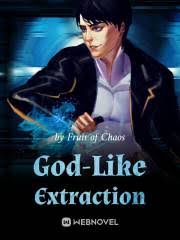
The Story in 3 Sentences
An ordinary young man named Su Jingxing awakens in a chaotic cultivation world armed with a unique “God-Like Extraction” system that lets him loot abilities, skills, and powers from corpses—but only if he acts before they vanish or turn into dangerous undead.
His journey shifts from scavenging mundane remains to confronting legendary entities, ancient clans, and cosmic threats, all while navigating a society where power is everything and secrecy is survival.
Driven not by glory but by quiet resolve and relentless labor, Su Jingxing climbs from obscurity to become a hidden apex force, reshaping the world’s balance without ever seeking the spotlight.
Why It Stands Out
1. The Anti-OP OP Protagonist
Unlike typical system-novel leads who absorb powers instantly and dominate with ease, Su Jingxing’s extraction comes with severe limitations—skills are often one-time use, beast corpses yield trivial boons, and mastering looted techniques demands decades inside a time-dilation practice space. This restraint makes his strength feel earned, not handed, subverting the genre’s excesses while still delivering satisfying progression.
2. Labor as Power Philosophy
The novel’s most original refrain—“this invincible power of mine all came from physical labor”—turns cultivation tropes on their head. Instead of divine bloodlines or fated encounters, Su Jingxing’s ascent is framed as the result of grueling, repetitive work: corpse collecting, meticulous investigation, and endless training. It’s a blue-collar fantasy in a genre obsessed with destiny.
3. Stealth Worldbuilding Through Mechanics
Rather than info-dumping lore, the world reveals itself through the rules of extraction: corpses must be cremated quickly to prevent zombification, high-tier remains are rare and guarded, and societal structures revolve around controlling death itself. The setting emerges organically from systemic constraints, making the universe feel lived-in despite sparse descriptive prose.
Characters That Leave a Mark
There’s Gu Bo – the seasoned investigator who mentors Su Jingxing in corpse forensics, offering rare moments of grounded wisdom amid the supernatural chaos.
You’ll meet Ouyang Feihu, whose death becomes one of Su Jingxing’s earliest pivotal extractions, symbolizing the thin line between enemy and opportunity in this ruthless world.
And Golden Chen? They’re the one who represents the old aristocratic order—proud, powerful, and ultimately unprepared for a self-made anomaly like Su Jingxing who operates outside lineage and legacy.
The Flaws Fans Debate
The prose is consistently sparse, with minimal environmental description or emotional interiority, making scenes feel functional rather than immersive.
Side characters lack depth and development, often serving only as extraction targets or plot devices rather than fully realized individuals.
The power system’s limitations—while refreshing to some—frustrate readers expecting the promised “god-like” dominance, leading to accusations of bait-and-switch based on the title.
Must-Experience Arcs
Ch. 1–30: Corpse Collector’s Dawn – Su Jingxing begins as a lowly corpse handler in a decaying city, learning the extraction system’s rules while surviving street-level threats and bureaucratic intrigue.
Ch. 180–220: The Golden Bloodline Confrontation – Clashing with the influential Golden Family Clan, Su Jingxing leverages time-dilated training and carefully hoarded one-time skills to outmaneuver a lineage that believes blood dictates destiny.
Ch. 580–629: The Final Silence – In the endgame, Su Jingxing faces cosmic-tier entities born from the world’s collapsed rituals, using not raw power but layered preparations, misdirection, and the cumulative weight of thousands of years spent in practice space to secure a quiet victory.
Killer Quotes
“You may not believe me, but this invincible power of mine all came from physical labor.”
“Discovered the corpse of an ordinary human, loot to receive Super-strength Pill, extract?”
“Starting from a corpse on the far end, Gu Bo pointed at its wound and explained the nuances in a low voice.”
Cultural Impact
Despite mixed critical reception, God-Like Extraction gained traction among readers tired of overpowered MCs who win through narrative convenience rather than effort.
Fan communities frequently debate whether the novel is “underrated realism” or “underwritten mediocrity,” fueling niche but passionate discussions on cultivation forums.
Its title became a meme shorthand for system novels that promise godhood but deliver grind—often cited in “bait title” roundups alongside other “Supreme” or “God” prefixed works that underdeliver on hype.
Final Verdict
Start Here If You Want:
A cultivation story where power is built through sweat, not fate.
A system novel that questions the genre’s obsession with instant dominance.
A quiet, methodical protagonist who wins by preparation, not proclamation.
Study If You Love:
Narratives that reframe labor as heroism in fantastical contexts.
Worlds where magic systems double as social commentary on resource control and mortality.
Subversions of the “lone genius” trope in favor of disciplined, incremental mastery.
Avoid If You Prefer:
Richly described settings and emotionally expressive characters.
Fast-paced action with immediate payoff from power acquisition.
Traditional heroic arcs with clear moral stakes and romantic subplots.