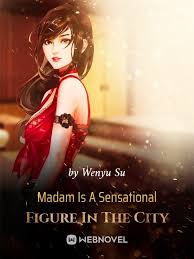
The Story in 3 Sentences
Gu Mang enters a marriage of convenience with the powerful and aloof CEO Lu Guixin, pretending to be an ignorant and ill-tempered woman while concealing her true identity as a genius with mastery in law, hacking, medicine, and more.
Her husband, believing her to be helpless, fiercely warns others not to bully her, unaware that she is secretly pulling strings behind the scenes to dismantle enemies and protect those she cares about.
As layers of her hidden personas are gradually exposed—from forensic expert to elite designer to courtroom prodigy—their relationship evolves from mutual deception into genuine love built on awe, respect, and hard-won trust.
Why It Stands Out
1. The Ultimate Reverse-Power Fantasy
Unlike typical damsel-in-distress tropes, Gu Mang weaponizes society’s underestimation of her. Her “weakness” is her camouflage, and every time someone mocks her ignorance, readers know a reckoning is coming. This constant subversion of expectations fuels addictive chapter-to-chapter momentum, turning routine social slights into setups for spectacular, satisfying payoffs.
2. Multifaceted Mastery Without Overexplanation
The novel never gets bogged down justifying how one woman can be a hacker, lawyer, doctor, and fashion icon. Instead, it leans into the urban fantasy logic of webnovels: brilliance is innate, and competence is its own reward. This approach keeps the pacing brisk and the wish-fulfillment potent, trusting readers to enjoy the spectacle rather than demand realism.
3. Romance Built on Irony, Not Just Chemistry
The heart of the story isn’t just love—it’s dramatic irony. Lu Guixin’s protective declarations (“My wife knows nothing”) echo through scenes where Gu Mang is actively outmaneuvering global syndicates or rewriting legal codes. Their bond deepens not through confessions, but through near-misses and quiet realizations, making their eventual mutual acknowledgment feel earned and emotionally resonant.
Characters That Leave a Mark
There’s Yang Tianming – a sharp-witted ally whose loyalty to Gu Mang transcends professional boundaries, often serving as her bridge to high-stakes academic and legal circles while harboring unspoken admiration for her brilliance.
You’ll meet Professor Yang, who repeatedly tries to recruit Gu Mang into elite competitions and research teams, only to be politely but firmly rebuffed; his persistent awe highlights just how extraordinary her hidden talents truly are.
And Qin Yaozhi? They’re the one who oscillates between rival and reluctant admirer, initially underestimating Gu Mang but gradually forced to confront her overwhelming competence in design, intellect, and social influence.
The Flaws Fans Debate
Some readers find the repetitive “exposure arc” formula tiresome—Gu Mang is underestimated, she reveals a new skill, onlookers are shocked, and Lu Guixin grows more suspicious—repeated across dozens of chapters with minimal variation.
Critics note that side characters often exist only to trigger Gu Mang’s next reveal, lacking independent motivations or development beyond serving the protagonist’s narrative needs.
A segment of the audience feels the romance lacks depth in its middle sections, as emotional intimacy stalls while the plot cycles through new arenas for Gu Mang’s hidden talents to shine.
Must-Experience Arcs
Ch. 1–80: The Marriage of Convenience – Gu Mang agrees to a fake marriage with CEO Lu Guixin to escape an arranged union, immediately facing scorn from his family and society, while secretly using her hacking skills to neutralize early threats and establish her foothold.
Ch. 150–250: The Designer’s Gambit – When mocked for her fashion sense, Gu Mang unveils herself as an anonymous world-renowned designer, dismantling a rival brand in a single night and forcing the industry to kneel, all while maintaining her “clueless wife” facade at home.
Ch. 700–800: The Forensic Reckoning – As a mysterious serial case grips the city, Gu Mang steps in as a chief forensic doctor, solving impossible puzzles and exposing corrupt officials, culminating in a courtroom showdown where her legal genius finally cracks Lu Guixin’s certainty about who his wife really is.
Killer Quotes
“My wife knows nothing at all and has a bad temper. You’d better not bully her.”
“When the world sees weakness, I see opportunity.”
“Let them talk. Their noise is the soundtrack to my silence—and my victory.”
Cultural Impact
The line “My wife knows nothing” became a viral meme across Webnovel and NovelFull comment sections, often pasted ironically whenever a female character outsmarts her opponents.
Readers frequently refer to Gu Mang as the “queen of hidden OP wives,” placing her alongside iconic webnovel heroines like Chu Feng’s mother or Ye Fan’s wife in fan tier lists.
The novel’s 1100+ chapter run and consistent top-10 placement in Webnovel’s Urban Romance category demonstrate its staying power in a saturated genre, with fans praising its reliable, bingeable structure.
Final Verdict
Start Here If You Want:
A guilt-free, high-satisfaction power fantasy where the underestimated woman dominates every room without raising her voice.
A romance where love grows through layers of mystery, not just meet-cutes or melodrama.
Fast-paced, episodic storytelling that rewards loyalty with constant reveals and escalating stakes.
Study If You Love:
The evolution of the “hidden identity” trope in modern Chinese webnovels and how it reflects shifting gender dynamics in urban fantasy.
Narratives that use irony as a structural device, where dramatic tension stems from what characters don’t know versus what readers do.
The balance between wish fulfillment and character consistency—Gu Mang never loses her core restraint, even as her powers expand.
Avoid If You Prefer:
Slow-burn realism or grounded character development; this is a stylized, trope-driven fantasy.
Stories where side characters have complex arcs; here, they mostly serve the protagonist’s journey.
Plots that avoid repetition; the exposure-reaction cycle is central to the novel’s rhythm and may feel formulaic over 1100 chapters.