The Story in 3 Sentences
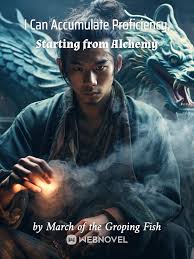
Han Yi awakens in a ruthless cultivation world as a lowly outer sect disciple with no talent or backing, facing imminent expulsion unless he proves his worth.
A mysterious Skill Panel grants him the ability to accumulate proficiency in every craft he practices—alchemy, formations, talismans, and martial arts—turning relentless repetition into mastery.
Choosing a quiet, methodical path of self-improvement over flashy confrontations, he climbs the ranks through economic influence and technical precision, reshaping his fate one refined skill at a time.
Why It Stands Out
1. The Grind as Glory
Instead of relying on sudden power-ups or inherited legacies, Han Yi’s journey celebrates the quiet dignity of consistent effort. His Skill Panel doesn’t hand him power—it quantifies his labor, turning every failed pill and misdrawn talisman into measurable progress. This reframing of cultivation as a craft rather than a conquest gives the story a rare sense of earned achievement.
2. Alchemy as Economic Engine
While many xianxia novels treat alchemy as a side skill for self-boosting, here it becomes Han Yi’s primary livelihood and strategic asset. He sells pills not to fund reckless battles but to buy time, resources, and neutrality in a world that rewards aggression. The narrative subtly critiques the genre’s obsession with combat by showing how wealth and technical skill can be just as transformative.
3. Cautious Hero in a Cutthroat World
Han Yi’s defining trait isn’t bravery—it’s prudence. He avoids entanglements, declines risky opportunities, and prioritizes survival over reputation. This deliberate restraint feels refreshingly human in a genre saturated with arrogant prodigies. His caution isn’t cowardice; it’s a survival strategy honed by knowing how easily the weak vanish in a world that eats the unprepared.
Characters That Leave a Mark
There’s Zhang Wuji – an elder whose cryptic guidance and occasional interventions hint at deeper knowledge of Han Yi’s origins or potential, though his motives remain shrouded in sect politics and personal history.
You’ll meet Chen Yufeng, who operates at the intersection of commerce and cultivation, serving as both a buyer of Han Yi’s alchemical goods and a barometer of the wider market’s demands and dangers.
And Xu Ke? They’re the one who embodies the opportunistic rival archetype—someone who recognizes Han Yi’s growing influence and either seeks to exploit it or undermine it, reflecting the constant tension between isolation and connection in the cultivation world.
The Flaws Fans Debate
The translation quality is widely criticized for inconsistent terminology, especially regarding cultivation realms and sect hierarchies, making it difficult for readers to track progression or power dynamics .
Han Yi’s extreme passivity and lack of meaningful relationships lead some readers to find him emotionally inert, with the story sacrificing interpersonal drama for repetitive skill-grinding montages.
The narrative introduces new threats and rivals abruptly, often without buildup, creating a sense of artificial conflict rather than organic world-building, which undermines long-term tension and payoff.
Must-Experience Arcs
Ch. 1–50: Outer Sect Struggle – Han Yi battles poverty and obscurity as a fire-root disciple with no prospects, using his nascent Skill Panel to refine basic alchemy techniques and scrape together spirit stones just to avoid expulsion.
Ch. 600–750: Pill Merchant’s Ascent – Operating independently from sect politics, Han Yi establishes a reputation as a reliable alchemist, navigating merchant guilds and black markets while quietly advancing his cultivation through accumulated wealth rather than combat.
Ch. 1800–2000: Divine Physique Revelation – The focus shifts from external skills to internal transformation as Han Yi confronts the limits of proficiency-based growth and begins integrating divine arts with his unique physique, signaling a late-stage evolution beyond mere technical mastery.
Killer Quotes
“Just work hard, and everything will be alright.”
“It’s just the dangers involved are unpredictable. As an alchemist yourself, you’re surely aware of the risks and benefits. Think it over. This is the best.”
“The key doesn’t lie in the Divine Arts, but in the Divine Physique.”
Cultural Impact
Readers frequently cite the novel as a “comfort read” for its predictable, grind-focused progression in an otherwise chaotic genre.
Despite poor translation, it maintains a steady following on Webnovel, with over 30 reviews and consistent chapter updates drawing completion-focused readers .
Fans often compare it to “Gate of Good Fortune” for its passive protagonist and system-based advancement, sparking debates about the viability of non-combative cultivation paths .
Final Verdict
Start Here If You Want:
A slow-burn cultivation story where economic savvy and technical skill outweigh brute force and dramatic confrontations.
A protagonist who survives through caution, calculation, and consistency rather than charisma or destiny.
A unique take on the “system” trope that emphasizes measurable progress over magical shortcuts.
Study If You Love:
Narratives that explore labor, craft, and incremental mastery as forms of power in speculative fiction.
Xianxia stories that subvert the lone-wolf hero myth by showing how neutrality and market participation can be valid survival strategies.
Worldbuilding where resource management and alchemical economics shape character decisions more than sect rivalries or ancient prophecies.
Avoid If You Prefer:
Fast-paced action, deep character relationships, or morally complex antagonists.
Consistent translation quality and clear power-scaling terminology.
Protagonists who actively seek conflict, leadership, or romantic entanglements.