The Story in 3 Sentences
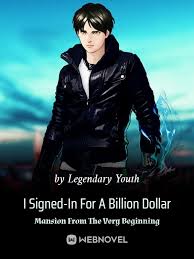
Lin Fan’s ordinary life shatters when he gains a supernatural Sign-in System that instantly grants him a billion-dollar mansion and access to godlike talents across countless fields, launching him into a life of absurd luxury and hidden power.
As he navigates high society, entertainment industries, and martial arts circles, his effortless mastery and wealth attract allies, rivals, and romantic interests, turning every mundane interaction into a spectacle of hidden strength and comedic excess.
What begins as a simple wish-fulfillment fantasy evolves into a sprawling journey where Lin Fan’s influence reshapes industries and destinies, all while maintaining the facade of a humble newcomer who just happened to sign in at the right place and time.
Why It Stands Out
1. The Ultimate Power Fantasy, Perfected
Unlike typical rags-to-riches tales that labor through struggle, this novel skips straight to the euphoric payoff—Lin Fan never grinds, never fails, never doubts. The Sign-in System delivers daily miracles: divine cooking skills, martial arts breakthroughs, artistic genius, all handed to him like birthday gifts. It’s not about earning power; it’s about wielding it with zero friction, creating a frictionless fantasy that’s deeply satisfying in its sheer audacity.
2. Genre-Blending Without Boundaries
It’s urban life meets xianxia logic, romance entangled with corporate warfare, slice-of-life moments punctuated by world-shaking auctions. One chapter has Lin Fan casually composing a chart-topping song; the next, he’s outbidding billionaires for a national treasure. This novel refuses to stay in its lane, mashing up tropes from martial arts epics, K-drama romances, and Hollywood success stories into a chaotic, addictive cocktail that never lets the reader settle into predictability.
3. Comedy Through Absurd Contrast
The humor isn’t slapstick—it’s structural. Lin Fan’s god-tier abilities clash hilariously with everyday situations: explaining to his mom why he bought a $6.4 million Rolls-Royce “for groceries,” or nonchalantly dropping millions to solve a friend’s minor problem. The supporting cast’s stunned reactions—celebrities, tycoons, martial arts masters—all serve as mirrors to the reader’s disbelief, making the absurdity feel grounded in human emotion even as the stakes defy reality.
Characters That Leave a Mark
There’s Xu Yang – a charismatic celebrity whose initial rivalry with Lin Fan melts into genuine friendship, often serving as the bewildered everyman who can’t fathom how someone so powerful remains so casually unimpressed by fame and fortune.
You’ll meet Su Xiaoyu, who shines as a top-tier actress and one of the story’s emotional anchors; her journey from professional skepticism to deep personal loyalty showcases the novel’s softer, romantic core amid all the extravagance.
And Lin Jingjing? They’re the one who brings artistic brilliance to the ensemble, a talented performer whose consistent presence from early chapters to the finale offers a rare thread of stability in Lin Fan’s ever-expanding orbit of influence.
The Flaws Fans Debate
Some readers criticize the protagonist’s overwhelming power as making conflicts feel weightless, since Lin Fan resolves every problem instantly with wealth or talent, removing narrative tension.
The romantic subplot is seen by a portion of the fanbase as underdeveloped, with multiple female leads orbiting Lin Fan without deep individual arcs, leading to accusations of harem-style tokenism.
A recurring complaint notes the repetitive structure—daily sign-ins leading to new abilities or assets—which, while comforting to some, feels formulaic and stagnant to others seeking evolving stakes.
Must-Experience Arcs
Ch. 1–50: The Billion-Dollar Dawn – Lin Fan awakens to the Sign-in System and immediately claims a luxury mansion, baffling real estate agents and setting the tone for his effortless rise; early chapters establish his godlike versatility through cooking contests, car auctions, and first encounters with key characters like Su Xiaoyu.
Ch. 200–300: The Entertainment Empire – Lin Fan dives into film and music, producing blockbusters and composing hits that dominate charts, all while Xu Yang and Lin Jingjing navigate the chaos of working with a man who treats billion-dollar projects like weekend hobbies.
Ch. 450–511: The Final Bid – In the closing stretch, Lin Fan’s influence peaks as he orchestrates global business maneuvers and martial arts showdowns, culminating in Su Xiaoyu’s emotional return and a finale that cements his legacy not just as a rich man, but as a cultural force reshaping multiple worlds.
Killer Quotes
“True wealth isn’t counted in bank accounts—it’s measured by how many lives you can lift without breaking a sweat.”
“Genius isn’t something you’re born with; it’s something you sign in for.”
“Comfort is the enemy of ambition—but I’ve already signed in for both.”
Cultural Impact
The novel amassed over 3.1 million views on Webnovel, becoming a staple in urban fantasy recommendation lists for its unapologetic power fantasy.
Fan art depicting Lin Fan lounging in his mansion while casually holding a golden sign-in tablet went viral on social media, spawning the meme “When you sign in and your rent is paid for eternity.”
Readers frequently compare it to “I Have a Mansion in the Post-apocalyptic World,” but praise this one for its modern setting and comedic timing, calling it “the ultimate comfort food novel for stressed office workers.”
Final Verdict
Start Here If You Want:
A guilt-free escape into a world where every problem dissolves with a snap of wealth and talent.
Pure comedic relief wrapped in luxury, where the hero never suffers and always wins with style.
A fast-paced, genre-hopping ride that delivers consistent wish-fulfillment without demanding emotional labor from the reader.
Study If You Love:
The mechanics of modern Chinese webnovel power fantasies and how they adapt xianxia tropes to urban settings.
Narrative structures that prioritize mood and atmosphere over traditional conflict-resolution arcs.
The cultural commentary hidden in absurdism—how extreme wealth is portrayed as both a tool and a personality trait in contemporary digital storytelling.
Avoid If You Prefer:
Stories with high stakes, moral ambiguity, or protagonists who face genuine failure or growth through hardship.
Deep character development in supporting casts, as most secondary figures exist to reflect Lin Fan’s glory.
Plausible realism or grounded economics, since the novel treats billions like pocket change and talent like a daily subscription service.