The Story in 3 Sentences
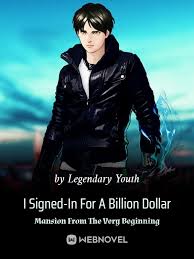
An ordinary university student named Chu Chen suddenly receives a mysterious system that grants him immense wealth through simple check-in missions and a Good-Luck card that effortlessly resolves any obstacle.
His newfound fortune and striking appearance draw public fascination and the affections of numerous beautiful women, yet he remains grounded by his integrity and uses his resources to aid friends and confront injustice.
Through episodic encounters and shifting social dynamics, the story explores materialism, human nature, and the paradoxes of power in a modern urban fantasy setting.
Why It Stands Out
1. The Ultimate Power Fantasy Without the Bloodshed
Unlike typical overpowered protagonists who dominate through violence or cultivation, Chu Chen’s strength lies in absurd wealth and uncanny luck—tools that solve problems with elegance rather than destruction. His victories come from buying buildings on a whim or casually revealing assets that humble arrogant elites, offering a clean, non-violent form of wish fulfillment rare in the genre.
2. A Mirror to Modern Materialism
The novel doesn’t just glorify riches—it dissects how people react to them. Friends become opportunistic, enemies crumble into sycophants, and romantic interests reveal their true motives. This sharp social commentary, wrapped in slice-of-life pacing, gives the story surprising depth beneath its comedic surface.
3. Luck as a Narrative Engine
The Good-Luck card isn’t just a gimmick; it’s the story’s heartbeat. It ensures Chu Chen never truly struggles, yet the narrative remains engaging because the tension shifts from survival to social navigation—how to remain kind in a world that only sees your wallet. This twist on the “system” trope keeps the plot fresh across hundreds of chapters.
Characters That Leave a Mark
There’s Mo Yuwan – once Chu Chen’s secretary and later revealed as a hidden heiress from a powerful family, she embodies the tension between independence and legacy, navigating her complex relationship with both Chu Chen and her scheming stepmother Huang Biyu .
You’ll meet Xiang Chuchen, who dramatically confesses her feelings in front of a crowd with roses and luxury cars, declaring her wealth as boldly as her affection—a moment that captures the novel’s blend of romance and opulence .
And Huang Biyu? They’re the one who represents old-money arrogance, using the influence of the prestigious Huang Family to belittle Mo Yuwan and challenge Chu Chen, only to be repeatedly humbled by his effortless superiority .
The Flaws Fans Debate
The protagonist’s lack of real struggle makes the story feel repetitive—every conflict dissolves with money or luck, removing narrative stakes.
Romantic subplots often rely on harem tropes, with multiple women falling for Chu Chen in predictable, underdeveloped arcs.
Critics note the novel prioritizes wish fulfillment over character growth, leaving supporting figures as static symbols of greed, loyalty, or vanity rather than fully fleshed individuals.
Must-Experience Arcs
Ch. 1–60: The System Awakens – Chu Chen receives the check-in system and Good-Luck card, transforming from a broke student into an overnight tycoon by completing absurdly simple tasks like “check in at a luxury hotel” or “buy a sports car,” setting the tone for his surreal rise.
Ch. 230–275: The Mo Family Revelation – Mo Yuwan’s true identity as a wealthy heiress is exposed, triggering a clash with her stepmother Huang Biyu and the influential Huang Family, forcing Chu Chen to navigate high-society politics with nothing but charm and bottomless funds.
Ch. 500–517: Grand Finale – With all rivals subdued and his empire secure, Chu Chen reflects on his journey, reaffirms his values, and solidifies his relationships, closing the story not with a battle, but with a quiet assertion of integrity in a world obsessed with status.
Killer Quotes
“Sorry, I was late because I just bought a building.”
“I have a showdown, I have ten buildings in the city center.”
“You should know, in this world, besides me, nobody can afford to ignore you.”
Cultural Impact
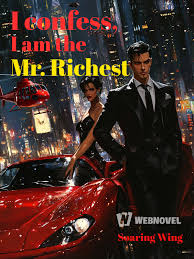
The line “I confess, I am the Mr. Richest” became a viral meme template for flexing achievements in online communities.
Readers on Webnovel and WuxiaWorld frequently joke about “needing a Good-Luck card” to survive real-life bills, turning the novel’s core mechanic into a cultural shorthand for effortless success.
Despite its niche genre, the novel maintained a consistent 8.9/10 rating across platforms, praised for its addictive, low-stakes escapism during stressful times .
Final Verdict
Start Here If You Want:
A guilt-free power fantasy where money solves everything and kindness still wins.
A lighthearted urban tale that blends romance, comedy, and social satire without heavy drama.
Over 500 chapters of consistent, low-conflict entertainment perfect for casual reading.
Study If You Love:
Narratives that use wealth as both plot device and social critique.
The evolution of the “system” trope in webnovels toward non-combat applications.
Explorations of integrity in hyper-materialistic environments.
Avoid If You Prefer:
Stories with high stakes, moral ambiguity, or protagonists who earn their success through hardship.
Complex character development or tightly plotted arcs with lasting consequences.
Realistic portrayals of economics or relationships—this is pure, polished wish fulfillment.