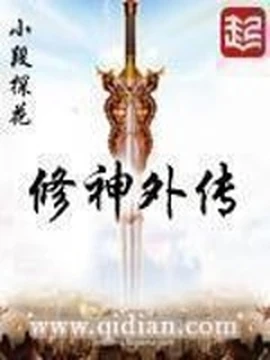
The Story in 3 Sentences
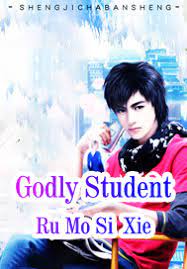
A humble peasant boy named Zhang Xiaohua begins his arduous journey not with celestial powers, but with the gritty reality of martial arts and the burden of hidden potential, setting his feet on a path paved with secrecy and slow-burning ambition.
The narrative takes a seismic shift as the protagonist, now known as Xiao Hua, awakens in the vast, politically charged Immortal Realm with amnesia, forcing him to rebuild his power from nothing while navigating celestial courts and ancient mysteries, effectively restarting his saga on a cosmic scale.
His direction arcs towards ultimate transcendence, moving from earthly struggles and familial bonds through divine politics and world-shaping feats, culminating in an ascension that leaves fundamental questions about his origins and destiny hauntingly unanswered, pointing towards an eternal, uncharted frontier.
Why It Stands Out
1. The Slow Burn That Forges a Universe
This isn’t a sprint to godhood; it’s a meticulously crafted marathon. The novel luxuriates in its world-building, allowing relationships, martial foundations, and the protagonist’s internal psychology to develop with a depth rarely seen in the genre. This deliberate pace, while taxing for some, creates a rich, immersive tapestry that makes the eventual leaps into the Immortal Realm feel earned and monumental, transforming the story from a simple power fantasy into an epic chronicle of existence.
2. The Great Reset: A Daring Narrative Gambit
Few novels dare to completely upend their established world and character dynamics. The transition from Volume 1’s grounded, character-driven drama to Volume 2’s amnesiac, cosmic reboot in the Immortal Realm is a jarring, bold stroke. It discards the comfort of familiar faces for a sprawling new pantheon and political landscape, demanding the reader’s patience but rewarding it with a sense of boundless, unexplored possibility and a protagonist reborn.
3. The Hidden God: Subverting the Cultivation Trope
Zhang Xiaohua’s defining trait is his self-imposed anonymity. His refusal to reveal his true cultivation level, even as he surpasses his masters and endures endless scorn, is a masterclass in dramatic irony and a profound subversion of the genre’s typical face-slapping tropes. This choice isn’t for cheap thrills; it’s a core character study in humility, strategy, and the isolating burden of power, making his victories deeply personal and his struggles uniquely frustrating.
Characters That Leave a Mark
There’s Shi Niu – the powerhouse of the Piaomiao Sect, a man whose external martial arts have reached a terrifying depth, capable of lifting thousands of jin with a single arm, embodying raw, unyielding strength and a surprisingly sharp mind beneath his rough exterior.
You’ll meet Qiu Tong, who serves as a quiet, observant strategist and confidante, often seen alongside Shi Niu, her intelligence and calm demeanor providing a crucial counterbalance to the brute force around her, guiding events from the shadows with quiet words.
And Immortal Emperor Gouchen? They’re the one who rules from a golden throne, a celestial sovereign whose avatar can expand to cosmic proportions, commanding the heavens and engaging in tense, whispered exchanges with the Empress Dongjin about cosmic threats like Yingkui, representing the immense, often inscrutable, power structures of the Immortal Realm.
The Flaws Fans Debate
The narrative reset between volumes is a major point of contention, feeling less like a twist and more like an abrupt cancellation of the first act’s emotional investment, forcing readers to start over with new worldbuilding that can feel like forced info-dumps.
The protagonist’s persistent secrecy, while a core character trait, becomes a source of immense frustration as it leads to endless, repetitive chapters of undeserved scolding and disrespect from those far beneath his true power, testing reader patience to its limits.
The ending is widely criticized for being profoundly unsatisfying, spending its final chapters on the mechanics of ascension while blatantly ignoring critical, long-standing plot threads and character arcs, particularly regarding the MC’s original family and the titular promise of godhood, leaving fans feeling cheated and demanding a sequel.
Must-Experience Arcs
Ch. 1–500: The Peasant’s Ascent – Follow Zhang Xiaohua’s grounded beginnings, mastering martial arts, navigating village life and early sect politics, and laying the secretive, painstaking foundation for his future power, all while enduring the consequences of his hidden strength.
Vol. 4–7: The Immortal Court’s Gambit – Witness Xiao Hua navigate the treacherous, awe-inspiring hierarchy of the Immortal Realm, clashing with celestial emperors like Gouchen, unraveling cosmic mysteries, and wielding power that can reshape heavens, as the story’s scale explodes into the divine.
Ch. 5200–5287: The Unfinished Ascension – Experience the controversial finale where Xiao Hua and his doppelgangers transcend to a higher realm, a sequence focused on the abstract process of ascension that deliberately sidesteps resolving the human and narrative threads that anchored the preceding thousands of chapters.
Killer Quotes
“When gods gather, lightning will strike and the earth will move. Immortals! Which of the numerous way to immortality should one follow?”
“Heaven has no mercy, but humans have emotions, and these emotions hinder the road to longevity!”
“Train the inner self to stay calm, train the external body to be resistant, then cross the three continents and four seas alone, and fight valiantly with demons and devils!”
Cultural Impact
It’s hailed by a dedicated fanbase as a modern classic, a novel so rich and immersive that it renders many other xianxia stories feel shallow and formulaic by comparison.
The novel’s immense length, reportedly spanning over 16 million characters, has become a meme in itself, symbolizing an almost mythical commitment for readers and translators alike.
Despite its flaws, it’s frequently recommended alongside titans like “Ze Tian Ji” for its unique, slow-burn approach and its ambitious, if imperfect, world-building that dares to completely reinvent itself mid-story.
Final Verdict
Start Here If You Want:
A cultivation epic that prioritizes slow, detailed world-building and character psychology over rapid power progression.
A story bold enough to completely reset its universe and protagonist, offering a second, even grander beginning.
A subversive take on the genre where the hero’s greatest strength is his ability to remain unseen and underestimated.
Study If You Love:
Analyzing how a novel can use a protagonist’s self-imposed limitation (secrecy) as its primary engine for both character development and narrative tension.
Exploring the literary device of a “hard reset” in serialized fiction and its impact on reader investment and thematic continuity.
Examining the depiction of celestial bureaucracy and divine politics as an extension of mortal power structures, rendered on a cosmic scale.
Avoid If You Prefer:
Fast-paced narratives with immediate gratification and constant, visible power escalation.
Stories with neatly tied-up endings that resolve all major character and plot arcs.
Protagonists who openly flaunt their power and deliver satisfying, immediate comeuppance to their detractors.