The Story in 3 Sentences
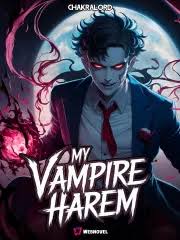
Ezra Matten’s life ends in a blood-soaked alley after a casino win turns fatal, only for two mysterious female vampires to offer him undeath as his only escape from oblivion.
He awakens as a rare male vampire bonded to powerful women, inherits a relic from the progenitor, and is unexpectedly thrust into a brutal succession war for the vampire throne.
Declaring himself not just a king but a god, Ezra carves a path of dominance through a crumbling hierarchy, reshaping vampire society with every challenge he overcomes.
Why It Stands Out
1. A Male Vampire in a Female-Dominated World
Most vampire fiction centers on male-dominated hierarchies or lone male predators, but this novel flips the script by placing Ezra in a society where male vampires are vanishingly rare and often powerless—making his rise both improbable and electrifying. His transformation isn’t just physical; it’s a rebellion against a matriarchal order that never expected a man to wield true power.
2. Harem with Narrative Weight
Unlike typical harem fantasies where love interests exist only for titillation, Ezra’s companions—particularly Olivia and Lilith—are deeply woven into the political and magical fabric of the story. They aren’t passive prizes; they’re strategists, warriors, and heirs in their own right, driving plot turns and power shifts that keep the narrative from devolving into repetitive wish-fulfillment.
3. Godhood as a Political Statement
The novel’s central mantra—“Why be a king when you can be a god?”—isn’t just edgy dialogue; it’s the thesis of Ezra’s entire arc. His ambition transcends mere rule; he seeks to dismantle the old vampire monarchy entirely and replace it with a new cosmic order. This elevates the story beyond palace intrigue into mythic territory, where power isn’t inherited but declared.
Characters That Leave a Mark
There’s Olivia – a poised, calculating vampire noble whose elegance masks a razor-sharp mind; she navigates court politics with grace while anchoring Ezra’s chaotic ascent with strategic foresight and soul-deep loyalty.
You’ll meet Lilith, who embodies raw, untamed power and ancient lineage; her bond with Ezra isn’t just romantic but symbiotic, fueling his transformation and challenging him to embrace the full scope of his potential.
And Lord Alucard? They’re the one who represents the old guard’s arrogance and decay; once feared as an immortal tyrant, he becomes the symbolic final obstacle Ezra must humiliate and surpass to prove that divinity belongs to the bold, not the ancient.
The Flaws Fans Debate
Many readers criticize Ezra’s lack of consistent intelligence or growth, noting that despite being a former lawyer, he repeatedly falls for obvious traps, requires constant rescue, and shows little strategic development even after hundreds of chapters.
The repetitive cycle of kidnapping, escape, and rescue becomes a narrative crutch—fans report fatigue from seeing the same scenarios replay with minimal variation or lasting consequence.
Several reviewers express discomfort with the romanticized portrayal of female characters who have deeply traumatic or promiscuous pasts, arguing that the narrative treats these histories as exotic rather than exploring their emotional or psychological impact with nuance.
Must-Experience Arcs
Ch. 36–40: The Accidental Prince – Ezra is formally recognized as a contender for the throne after acquiring the progenitor’s relic, navigating his first vampire court gathering where every smile hides a dagger and every alliance is temporary.
Ch. 135–140: Blood and Diplomacy – Olivia leads a high-stakes mission into rival covens, forcing Ezra to choose between mercy and dominance as war looms; this arc deepens the harem’s political roles and tests the limits of trust.
Ch. 350–355: Stand Down, City Lord – In the final confrontation, Ezra faces Lord Alucard not with brute force but with declared godhood, rewriting the rules of vampire existence and dissolving the monarchy in a single, thunderous declaration.
Killer Quotes
“Bow before my strength, Lord Alucard, for I am your god.”
“Why be a king when you can be a god?”
“I didn’t need an heir to keep the vampires in line in my absence. No. I needed an heir to guard the door to the abyss and keep it open, Ezra Matten.”
Cultural Impact
The line “Why be a king when you can be a god?” became a viral mantra in vampire fantasy circles, often quoted in fan art and TikTok edits celebrating overpowered protagonists.
Despite mixed critical reception, the novel maintained a loyal Webnovel readership, with daily chapter updates fostering a dedicated comment-section community that debated Ezra’s decisions in real time.
It sparked discourse on the evolution of harem tropes, with some fans praising its attempt to give female leads agency, while others critiqued its handling of trauma and consent within romantic subplots.
Final Verdict
Start Here If You Want:
A fast-paced vampire power fantasy with escalating stakes and a protagonist who declares himself divine.
A harem that actually influences the plot rather than just posing for romantic scenes.
Worldbuilding that blends aristocratic vampire politics with cosmic ambition and relic-based magic systems.
Study If You Love:
Deconstructions of gender roles in supernatural hierarchies, especially how rarity and power intersect in male vs. female vampire dynamics.
Narratives where romance and politics are inseparable, and intimate bonds directly shape geopolitical outcomes.
The rhetorical shift from monarchy to godhood as a literary device for exploring absolute power and its moral voids.
Avoid If You Prefer:
Protagonists who demonstrate consistent intelligence, caution, or learning from past mistakes.
Stories that avoid repetitive plot structures or minimize the “damsel in distress” trope—even when the damsel is male.
Romantic subplots that handle complex sexual histories with psychological depth rather than sensationalism.