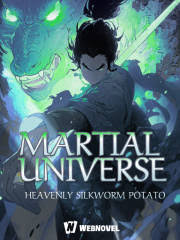
The Story in 3 Sentences
Banished from the prestigious Lin Clan after his father was humiliated and crippled by the prodigy Lin Langtian, young Lin Dong grows up in poverty but fueled by a burning desire for vengeance and restoration of his family’s honor.
His life changes forever when he discovers a mysterious stone talisman that grants him access to ancient cultivation secrets and sets him on a path far beyond personal revenge.
As his strength grows, Lin Dong confronts not only his clan’s oppressors but also an ancient demonic threat known as the Yimo, ultimately rising to become a savior of the Martial Universe itself.
Why It Stands Out
1. A Blueprint for the Modern Xuanhuan Hero
Martial Universe refines the underdog-to-overlord template by layering emotional stakes over explosive power progression. Unlike many peers where cultivation feels mechanical, Lin Dong’s journey is rooted in familial trauma, making every breakthrough feel earned and personal. The novel balances intimate drama with world-shaking conflicts, ensuring readers stay invested beyond flashy fight scenes.
2. Interwoven Legacies and Cameos
While standing firmly on its own, Martial Universe subtly nods to Heavenly Silkworm Potato’s larger narrative universe. Most notably, it features a cameo from Xiao Yan of Battle Through the Heavens near the end, hinting at a shared multiverse that rewards long-time fans. This connectivity adds depth without alienating newcomers, offering a satisfying Easter egg rather than forced crossover.
3. From Village Grudge to Cosmic Duty
What begins as a localized vendetta against a clan rival evolves into a battle for the survival of entire realms. The narrative escalates organically: first Qingyang Town, then the Great Yan Empire, then the Central Plains, and finally the Ancient Emblem Master’s legacy against the Yimo Emperor. This steady expansion mirrors Lin Dong’s internal growth—from a boy obsessed with revenge to a protector of all living things.
Characters That Leave a Mark
There’s Lin Diao – the snarky, ancient spirit sealed within the stone talisman who becomes Lin Dong’s mentor, strategist, and reluctant moral compass, often delivering dry wit amid life-or-death crises.
You’ll meet Ling Qingzhu, who starts as a cold and aloof genius from the Nine Heaven Tai Qing Sect but gradually reveals vulnerability, loyalty, and deep affection for Lin Dong, evolving into his first wife and a pillar of emotional stability.
And Lin Yan? They’re the one who begins as a loyal Flame Tiger companion, later achieving human form through Nirvana refinement, and stands beside Lin Dong as both brother-in-arms and unshakable ally through every major war.
The Flaws Fans Debate
Many readers criticize the novel’s middle section for excessive filler, particularly drawn-out tournament arcs filled with repetitive dialogue before actual combat begins.
The cultivation system, while initially engaging, becomes inconsistent—new techniques and artifacts introduced with fanfare are often abandoned chapters later without meaningful impact.
Some fans note Lin Dong’s personality shifts erratically post-midpoint, veering between noble hero and plot-armored protagonist who wins through narrative convenience rather than clever strategy.
Must-Experience Arcs
Ch. 1–80: Qingyang Town Arc – Lin Dong’s humble beginnings, discovery of the stone talisman, and first clashes with local powers set the foundation for his destiny and introduce core companions like Lin Diao.
Ch. 300–500: Hundred Dynasties Battle Arc – A high-stakes competition where Lin Dong faces elite young masters from across the continent, showcasing his tactical growth and cementing his reputation beyond his homeland.
Ch. 1100–1309: Yimo Emperor Confrontation Arc – The final war against the demonic Yimo Emperor, where Lin Dong unites ancient sects, awakens the legacy of the Emblem Master, and fulfills his role as the Martial Ancestor to save the world.
Killer Quotes
“Without effort, great success will not happen.”
“Destiny is not written in the stars—it is carved by the hands of those who refuse to kneel.”
“The strongest flame is not born from ease, but from the fiercest storm.”
Cultural Impact
Martial Universe became a gateway novel for many Western readers entering the xuanhuan genre, often recommended alongside Battle Through the Heavens for its familiar yet fresh take on cultivation tropes.
Its 2018 live-action adaptation sparked widespread discussion on social media, with fans debating casting choices and deviations from the source material, though the donghua version later gained praise for its action choreography.
The phrase “humiliated breakthrough faceslap” entered fan lexicon as shorthand for the novel’s recurring narrative rhythm, often meme’d to highlight both its addictive predictability and occasional fatigue.
Final Verdict
Start Here If You Want:
A classic underdog story with emotional depth and escalating stakes that never loses sight of its protagonist’s roots.
A cultivation journey that blends personal vengeance with world-saving heroism in a satisfyingly structured progression.
A nostalgic yet polished entry into the xuanhuan canon from one of the genre’s most influential authors.
Study If You Love:
Narrative architecture that mirrors character development—each arc reflects Lin Dong’s expanding worldview and maturity.
The interplay between fate and free will in Chinese fantasy, where ancient legacies choose heirs but true strength comes from willpower.
How modern webnovels use serialized structure to build long-term emotional investment through recurring allies, evolving rivalries, and delayed payoffs.
Avoid If You Prefer:
Tightly edited prose without extended filler or repetitive battle descriptions that prioritize word count over pacing.
Consistently grounded protagonists—Lin Dong’s later invincibility and plot armor may frustrate readers seeking vulnerability in power fantasies.
Stories that avoid harem tropes; while not excessive, the romantic subplots follow genre conventions that may feel dated or unnecessary to some.