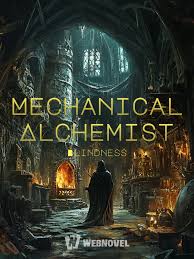
The Story in 3 Sentences
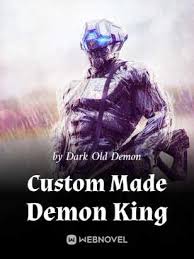
A transmigrated alchemist named Su Lun awakens in a perilous underground world brimming with cursed relics, black towers, and ancient gods, where survival hinges on mechanical ingenuity and alchemical mastery.
He quickly establishes himself as a puppeteer alchemist capable of turning anything he sees into a controllable construct, transforming solitude into overwhelming force.
As he delves deeper into catacombs and confronts mythical races, his journey evolves from mere survival to unraveling the secrets of a fractured reality shaped by forgotten civilizations and divine machinations.
Why It Stands Out
1. Alchemy Reimagined Through Gears and Curses
Instead of circles and clap-based transmutation, alchemy here fuses with steampunk mechanics and cursed implants, creating a system where knowledge, craftsmanship, and supernatural risk intertwine—making every creation feel both wondrous and dangerous.
2. The Underground as a Living Character
The subterranean setting isn’t just backdrop; it’s a labyrinthine entity teeming with sentient ruins, shifting catacombs, and relics that whisper madness, turning exploration into psychological and tactical warfare rather than simple dungeon crawling.
3. Power Without Pretense
Su Lun isn’t a naive hero—he’s calculating, ruthless when needed, and shaped by a past that refuses to stay buried, offering a protagonist whose strength feels earned through intellect and adaptation, not plot armor or sudden power-ups.
Characters That Leave a Mark
There’s Senjo – also known as Qian Tao, Qian Bao, or Olli in the same chapter due to translation chaos, she’s the fierce older sister figure from a street gang who offers loyalty and grit in a world that rarely gives either freely.
You’ll meet Lena, who despite being inconsistently named Rena, Leina, Leyna, or even Camile across translations, remains the wealthy girl Su Lun rescues early on, symbolizing the fragile humanity that still flickers beneath the novel’s mechanical brutality.
The Flaws Fans Debate
The translation suffers from severe name inconsistency, with major side characters referred to by multiple conflicting names within single chapters, breaking immersion and confusing even dedicated readers.
A noticeable shift in writing tone occurs around chapter 60, where the MC’s depth and the world’s atmospheric tension give way to more generic xianxia-style progression and simplified character dynamics.
Pacing issues plague mid-to-late arcs, with critical world-building revelations and battles often rushed into single chapters, diminishing emotional and narrative weight.
Must-Experience Arcs
Ch. 1–30: The Cursed Relic Gambit – Su Lun establishes his identity as a puppeteer alchemist in the black markets and lower districts of the underground city, turning scavenged debris into deadly constructs while surviving kidnappers and rival factions.
Ch. 200–250: The Black Tower Ascent – Venturing into one of the gargantuan obsidian spires, he deciphers ancient alchemical scripts and battles biomechanical guardians, uncovering ties between the towers and the vanished “Ancient Gods.”
Ch. 600–671: The Divine Forge Collapse – In the final confrontation, Su Lun orchestrates a symphony of puppet armies against celestial entities, using the very fabric of the underground world as both weapon and shield to rewrite reality’s broken rules.
Killer Quotes
“All that my eyes behold, becomes my puppet.”
“Alone, I am an army.”
“In this abyss, even silence has teeth.”
Cultural Impact
Readers consistently rank it among the best trial-read novels on Webnovel for its unique alchemy-steampunk blend, despite translation flaws.
Fan discussions often cite its early chapters as a masterclass in atmospheric world-building, with comparisons to Fullmetal Alchemist’s philosophical depth but grounded in a grittier, game-like progression system.
Memes circulate about the “Lena/Rena/Leina identity crisis,” turning the translation errors into a darkly humorous inside joke within the English-reading community.
Final Verdict
Start Here If You Want:
A fresh alchemical system that merges mechanics, curses, and puppetry into a cohesive and inventive power fantasy.
A subterranean world that feels alive, mysterious, and genuinely threatening—not just a series of levels to clear.
A protagonist who starts strong but evolves through intellect and adaptation, not sudden divine blessings or harem politics.
Study If You Love:
Narratives that blend game mechanics with metaphysical world-building, where every item and location carries layered history.
The intersection of steampunk aesthetics and supernatural horror in Eastern fantasy, offering a distinct alternative to standard cultivation tropes.
Stories where power is a craft—requiring study, failure, and ethical compromise—not just raw talent or destiny.
Avoid If You Prefer:
Consistent character naming and polished professional translation; the current English version suffers from machine-translated inconsistencies that disrupt continuity.
Slow-burn character development throughout; the novel’s mid-section leans into faster, more conventional progression that may disappoint early-world-building enthusiasts.
Clear-cut morality; Su Lun operates in moral gray zones, and the world rewards pragmatism over heroism, which may unsettle readers seeking traditional good-versus-evil frameworks.