The Story in 3 Sentences
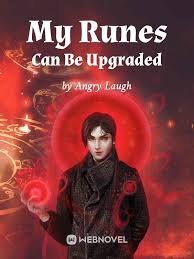
A down-on-his-luck summoner named Wu Wei stumbles upon a mysterious system that lets him upgrade runes—essentially transforming weak summons like the Yellow Turban Soldier into increasingly powerful entities through repetitive, grind-heavy tasks.
As he progresses from slaughtering wild boars to battling elite runic monsters and navigating treacherous political and academic hierarchies within a battle-focused world, Wu Wei’s cautious, people-pleasing nature clashes with the brutal demands of survival and ambition.
His journey evolves from simple rune optimization into a cosmic-scale struggle involving ancient legacies, divine artifacts like the Heavenly Book of Peace, and a final confrontation that redefines what it means to be the strongest demigod .
Why It Stands Out
1. The Grind as Narrative Engine
Unlike most system-based novels where power spikes come from plot convenience, this story leans into the monotony and obsession of incremental progress—turning the act of killing 5000 boars or consuming 10 runic pills into a psychological portrait of determination masked as tedium. The system doesn’t hand power; it demands obsession.
2. Summoner-Centric Worldbuilding
Rather than treating summons as side tools, the entire ecosystem revolves around Rune Summoners, their hierarchies, academies, and combat doctrines. Equipment, spells, and even social status are filtered through the lens of summon compatibility and rune quality, making the protagonist’s niche feel both limiting and deeply immersive .
3. Subversion of the “Cheat” Trope
While labeled a cheat novel, the system rarely offers shortcuts. Wu Wei’s “advantage” is merely the ability to see upgrade paths—everything else requires risk, resources, and relentless effort. This reframes the typical overpowered MC into someone whose real power is patience and adaptability, not raw dominance .
Characters That Leave a Mark
There’s Hu Kaiyun – a professor in the Rune Department whose protective instincts and academic rigor make her both a mentor and a moral anchor in Wu Wei’s chaotic ascent, often shielding him from institutional fallout while pushing him toward greater discipline .
You’ll meet Cheng Rushan, who emerges as a formidable rival with her own mysterious background and strategic brilliance, challenging Wu Wei not through brute force but through layered schemes and battlefield intellect that force him to evolve beyond his comfort zone .
And Li Ying? They’re the one who declares themselves an “in-name disciple of the great teacher” with theatrical flair, embodying the chaotic energy of the Taiping Road faction and serving as both comic relief and an unpredictable wildcard in high-stakes conflicts .
The Flaws Fans Debate
The protagonist’s personality is widely criticized as grating—readers describe him as a people-pleaser who lacks assertiveness, often manipulated by others despite his growing power, making his victories feel unearned or hollow .
Translation quality plummets after the free chapters, with inconsistent naming (e.g., “Yellow Turban Soldier” becoming “Ah Huang” or “yellow bandana”), erratic capitalization, and shifting terminology that breaks immersion and confuses the ranking and summon systems .
The story misleads with its title—there are no actual mystical runes in the traditional sense; the term is repurposed as generic nomenclature for loot, classes, and summons, disappointing readers expecting rune-based magic or inscription mechanics .
Must-Experience Arcs
Ch. 1–30: Yellow Turban Foundations – Wu Wei grinds through boar-slaying and basic rune collection to unlock his first meaningful upgrade, establishing the novel’s core loop of repetition, risk assessment, and cautious progression in a hostile academy environment.
Ch. 300–500: Divine Soldier Ascension – After acquiring higher-tier summons and confronting rival factions, Wu Wei integrates curse-based powers and spiritual talismans, navigating political intrigue in Yuehua City while balancing internal limitations and external threats .
Ch. 935–1252: Heavenly Book of Peace – The endgame unfolds across cosmic realms as Wu Wei deciphers the Middle and Final Volumes of an ancient divine text, culminating in “The Strongest Demigod” arc where rune evolution merges with godhood and existential legacy .
Killer Quotes
“It is true that my little days here are quite unresolved. This time, if I hit the streets again, I’m afraid I’ll starve to death.”
“Humanity is greedy! It is the nature to have Longwang Shu! Wu Wei is the same! Of course he would want to choose all if he could.”
Cultural Impact
The novel sparked memes about “5000 boar kills” as a symbol of absurd grind culture in xianxia and game-lit hybrids.
Despite its flaws, it maintained a loyal niche following on Webnovel, with readers praising its unique summoner focus even as they lamented translation inconsistencies.
Fan debates frequently cite it as a cautionary tale about misleading titles—“My Runes Can Be Upgraded” became shorthand for novels that rebrand generic systems with flashy but inaccurate terminology.
Final Verdict
Start Here If You Want:
A slow-burn progression fantasy where the system is a tool, not a crutch, and every power gain feels earned through obsessive repetition.
A summoner-centric RPG world that treats monster companions as the core of identity, combat, and social structure—not just sidekicks.
A flawed but persistent protagonist whose caution and social anxiety make him refreshingly human in a genre full of arrogant geniuses.
Study If You Love:
Narratives that explore the psychology of grinding and incremental mastery as a form of character development.
Worldbuilding where class restrictions (like being a Rune Summoner) create meaningful limitations that shape plot and strategy.
The tension between systemic potential and human limitation—how a “cheat” only works if the user has the discipline to exploit it.
Avoid If You Prefer:
Charismatic, assertive protagonists who dominate from the start—Wu Wei’s passivity and manipulation-prone nature frustrate many readers.
Consistent, polished translations—post-free-chapter quality drops significantly, with erratic naming and formatting that hinder comprehension.
Traditional rune magic or inscription-based systems—this novel uses “runes” as a reskinned loot-and-summon framework, not mystical symbols.