The Story in 3 Sentences
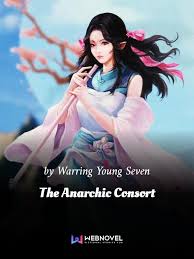
A 21st-century mercenary queen reincarnates into the body of Helian Wei Wei, a despised and betrayed noblewoman branded as a talentless waste in a xuanhuan world dominated by martial prowess and political intrigue.
Armed with modern tactical knowledge, an ancient manual, and unshakable resolve, she dismantles her enemies with ruthless efficiency while navigating a treacherous court filled with scheming nobles and fragile alliances.
Her path collides with Baili Jiajue, the enigmatic and dangerously possessive Third Highness, whose obsession with her blurs the lines between domination and devotion, forcing her to confront not only external threats but the suffocating weight of a love that demands surrender.
Why It Stands Out
1. Face-Slapping Symphony of Power Reversals
The novel weaponizes humiliation as narrative rhythm—every chapter delivers cathartic takedowns where the once-scorned Wei Wei exposes frauds, shatters reputations, and flips hierarchies with surgical precision. White lotuses wilt under her glare, arrogant elites choke on their arrogance, and justice arrives not through mercy but through merciless public reckoning.
2. The Black-Bellied Dance of Two Predators
Unlike typical domineering male leads, Baili Jiajue isn’t just powerful—he’s cunning, theatrical, and emotionally layered. His disguises, manipulations, and shameless flirtations create a romantic tension that’s equal parts dangerous and addictive. Their dynamic isn’t submission versus resistance; it’s two apex predators circling each other, testing limits, and slowly rewriting the rules of trust.
3. OP Everything, Zero Apologies
From overpowered artifacts to genius-level crafting skills and loyal magical beasts, the story embraces the “OP MC” trope with full confidence. Wei Wei doesn’t struggle to survive—she dominates. This unapologetic power fantasy, paired with comedic timing and sharp dialogue, makes the novel a guilt-free binge for readers craving competence porn wrapped in xuanhuan extravagance.
Characters That Leave a Mark
There’s Yun Qianyue – the legitimate daughter of the Yun Royal Family, whose anarchic spirit and bold defiance once shook the Heavenly Saint Dynasty before Wei Wei’s arrival reshaped the game entirely.
You’ll meet Huan Ming Xiang, who conducts himself with eccentric unpredictability, appearing and disappearing like a ghost, often disguised and always scheming from the shadows with motives as elusive as his identity.
And Baili Jiajue? They’re the one who leans into obsession with chilling charm, weaving cages of affection so beautifully gilded that even a mercenary queen hesitates before breaking free.
The Flaws Fans Debate
The translation has been heavily criticized for omitting entire chapters—especially intimate or “smutty” scenes—leaving plot holes and confusing character motivations, which many readers call a betrayal of the original work.
Numerous fans express discomfort with the recurring non-consensual advances by the male lead, including instances of sexual assault during unconsciousness, which the narrative often frames as romantic rather than problematic.
World-building remains shallow; despite Wei Wei’s background as a modern arms expert, the magical system and professions like “Armsmaster” lack coherent explanation, relying on hand-waving rather than immersive detail.
Must-Experience Arcs
Ch. 1–50: The Waste Reborn – Wei Wei awakens in her new body, dismantles her family’s betrayal, and begins her rise by exposing frauds and claiming her first artifacts, setting the tone for relentless comeuppance.
Ch. 400–500: The Disguise Games – Baili Jiajue infiltrates Wei Wei’s life through multiple identities, leading to hilarious misunderstandings and escalating tension as she unknowingly insults the prince to his face while he watches, amused and intrigued.
Ch. 1300–1376: Harmony After Marriage – The final arc resolves political wars, personal vendettas, and emotional barriers, culminating in a hard-won peace where both leads finally choose partnership over possession.
Killer Quotes
“Waste? I’ll show you what a real waste looks like—when your pride is ground to dust beneath my boots.”
“Love isn’t a cage. But if you insist on building one, make sure the bars are strong enough to hold me.”
“Mercy is for the weak. I am not weak. Therefore, I owe you nothing.”
Cultural Impact
The novel sparked widespread fan art and cosplay of Wei Wei and Baili Jiajue, especially scenes depicting their “black-bellied” banter and dramatic confrontations.
Readers frequently compare it to “National School Prince Is A Girl,” another hit by the same author, cementing Zhan Qishao’s reputation for crafting unapologetically strong female leads in over-the-top romantic fantasies.
Despite controversy, it amassed over 2 million views on Chinese platforms and maintained a 9.1/10 rating, proving its polarizing yet enduring appeal across global webnovel communities.
Final Verdict
Start Here If You Want:
A cathartic revenge fantasy where the underdog doesn’t just rise—she obliterates.
A romance built on mind games, disguises, and dangerously addictive chemistry.
Unapologetic power escalation with OP pets, artifacts, and a female lead who never apologizes for her strength.
Study If You Love:
Deconstructing gender dynamics in xuanhuan tropes through a modern feminist lens—even when the narrative stumbles.
The evolution of “strong female lead” archetypes in Chinese webnovels and their global reception.
How comedic timing and face-slapping tropes serve as social commentary on class, reputation, and performative morality.
Avoid If You Prefer:
Stories with consistent, respectful romantic consent and healthy relationship modeling.
Deep, systematic world-building with internally consistent magic or profession mechanics.
Translations that preserve the full narrative without moral censorship or chapter omissions.