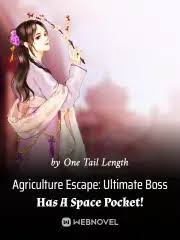
The Story in 3 Sentences
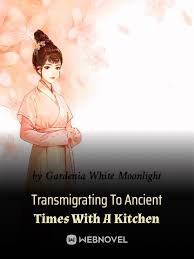
A formidable survivor from a brutal apocalyptic future, Bai Wutong, is thrust into a chaotic ancient world armed only with her wits and a miraculous space pocket filled with modern essentials.
Her mission shifts from mere survival to building a sanctuary of prosperity and safety, using her advanced knowledge to revolutionize agriculture, industry, and commerce in a time of famine and strife.
As she navigates complex relationships and political intrigue, her journey charts a course from isolated self-reliance toward forging a powerful, compassionate community that reshapes the very fabric of the era.
Why It Stands Out
1. The Apocalypse Farmer’s Toolkit
This isn’t just another transmigration tale; it’s a masterclass in practical world-building. Bai Wutong’s space pocket isn’t a magic cheat code but a carefully curated survival kit—complete with a washer, fridge, and TV—that forces her to be ingenious, not just powerful. Her solutions to ancient problems are grounded in real-world logic, making her triumphs feel earned and deeply satisfying.
2. Romance Woven into Resilience
The romantic subplot avoids the usual tropes of possessive male leads or instant devotion. Instead, it’s a slow-burn partnership built on mutual respect and shared trauma. He Xing sees her not as a damsel but as a deity of survival, and their bond grows from a foundation of psychological realism, adding genuine emotional weight to the narrative.
3. A Blueprint for a Better World
Beyond the personal drama, the novel functions as a hopeful manifesto for societal rebuilding. Bai Wutong doesn’t just hoard her advantages; she actively disseminates knowledge, creates jobs, and establishes systems of trade and welfare. This focus on collective uplift, rather than individual glory, gives the story a unique and inspiring moral core.
Characters That Leave a Mark
There’s Chu Tianbao – a martial arts genius whose initial amnesia masks a deep loyalty and a surprisingly gentle heart, becoming Bai Wutong’s steadfast protector and an anchor in her chaotic new life.
You’ll meet He Xing, who views the protagonist as his personal savior from the apocalypse; his devotion is intense but tempered by a desperate need for stability, making him a complex and compelling figure in her orbit.
And Sheng Huaixuan? They’re the one who brings intellectual curiosity and artistic flair to the group, often acting as a bridge between Bai Wutong’s modern ideas and the ancient world’s cultural sensibilities, designing everything from wallets to economic proposals with a creative spark.
The Flaws Fans Debate
Some readers find the pacing uneven, with long stretches dedicated to agricultural or economic details that can slow down the central narrative momentum.
The romance, while praised for its depth by many, is criticized by others for occasionally veering into overly idealized territory, where the male leads’ unwavering devotion can feel less like character development and more like plot convenience.
A recurring point of contention is the protagonist’s near-infallibility; her constant success in every venture, from farming to finance, can sometimes undermine the very real stakes of the apocalyptic and ancient settings.
Must-Experience Arcs
Ch. 1–50: The Famine’s Edge – Stranded in a world on the brink of starvation, Bai Wutong uses the last of her modern supplies to secure a foothold, her first acts of charity and trade planting the seeds of her future community.
Ch. 200–250: The Industrial Spark – With her settlement stable, she introduces revolutionary concepts like honeycomb coal and basic manufacturing, facing resistance from traditionalists while laying the groundwork for an economic renaissance.
Ch. 500–564: The Legacy of Peace – In the final chapters, the focus shifts from survival to legacy, as Bai Wutong’s systems of governance, education, and commerce become self-sustaining, proving that a kinder, more prosperous world is not just a dream but a blueprint she has successfully implemented.
Killer Quotes
“In a world that eats the weak, I will be the soil that lets them grow strong.”
“Survival isn’t about hoarding what you have; it’s about planting what you can give.”
“A pocket full of miracles is useless if your heart is empty of compassion.”
Cultural Impact
The novel has become a staple in online communities for fans of the “space pocket” and “ancient transmigration” subgenres, often cited as a gold standard for its practical approach to world-building.
Fan art depicting Bai Wutong’s space pocket as a cozy, modern apartment contrasted against a bleak ancient backdrop has gone viral on multiple platforms, symbolizing the core theme of hope and innovation.
Readers frequently share “Bai Wutong would fix it” memes in discussions about real-world problems, from supply chain issues to sustainable farming, a testament to the character’s perceived ingenuity and resourcefulness.
Final Verdict
Start Here If You Want:
A story where the ultimate power is not a sword, but a seed—and the knowledge of how to make it grow.
A romance that feels like a partnership forged in the fires of mutual survival, not just a plot device.
A satisfying, long-form narrative that rewards patience with a meticulously built world that feels both fantastical and strangely plausible.
Study If You Love:
The intersection of post-apocalyptic survival strategies and historical fiction, offering a unique lens on societal collapse and reconstruction.
Narratives that explore female agency through creation and community-building rather than just combat or political maneuvering.
The xianxia/webnovel tradition of the “cheat item” (the space pocket) being used for collective good, subverting the typical self-serving trope.
Avoid If You Prefer:
Fast-paced, action-driven plots with minimal exposition or world-building detail.
Stories where the protagonist faces significant, lasting failure or moral ambiguity.
Romance that is secondary to the main plot; here, the emotional relationships are deeply woven into the fabric of the protagonist’s mission and success.