The Story in 3 Sentences
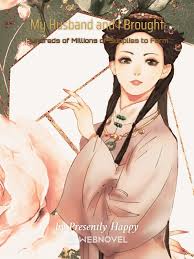
After a tragic car accident, the deeply devoted modern couple Zhou Ying and Gu Chengrui find themselves transmigrated together into a harsh historical setting where they must navigate poverty, familial hostility, and societal scorn.
Zhou Ying is branded a jinx and treated with contempt, while Gu Chengrui is thrust into a wealthy but cold and violent family that despises him, forcing the couple to rely solely on each other and their secret spatial storage filled with hundreds of millions of modern supplies.
Choosing independence over submission, they leave their toxic households behind to build a peaceful, self-sufficient life in the countryside, using their knowledge, resources, and unwavering partnership to transform hardship into prosperity and redefine what it means to thrive together.
Why It Stands Out
1. The Rare Duet of Transmigration
Unlike countless stories where only one spouse is reborn or the other becomes an obstacle, this novel centers on a genuinely loving, equal partnership that survives and thrives across lifetimes. Both Zhou Ying and Gu Chengrui arrive in the new world simultaneously, retaining their mutual affection and shared memories, which becomes their greatest asset against adversity. Their unity isn’t performative—it’s practical, emotional, and strategic, offering a refreshing take on romance in transmigration fiction where trust isn’t earned through trials but carried over as a foundational truth.
2. Spatial Storage as a Tool, Not a Crutch
While the couple possesses a near-limitless spatial ring stocked with modern goods—from medicine to kitchenware to farming tools—the narrative wisely avoids making it a deus ex machina. Instead, these supplies serve as enablers for their ingenuity. They don’t just consume; they adapt, teach, barter, and innovate. A pressure cooker becomes a marvel in a village kitchen; antibiotics save lives but require discretion; seeds from their stash kickstart sustainable agriculture. The story celebrates resourcefulness over raw power, turning hoarding into stewardship.
3. Quiet Revolution Through Daily Life
Rather than chasing thrones or martial supremacy, the protagonists wage a gentle but radical rebellion through domesticity. Their farm becomes a haven of dignity, fairness, and modern ethics in a rigid, often cruel society. By treating servants as family, valuing education for girls, and rejecting exploitative hierarchies, they enact social change not through speeches but through consistent, lived example. This focus on psychological realism and incremental progress gives the novel a grounded, almost therapeutic quality rare in the genre.
Characters That Leave a Mark
There’s Gu Chengye – Zhou Ying’s brother-in-law whose stoic exterior masks deep loyalty and evolving respect for the couple’s resilience, eventually becoming a quiet ally against their shared familial enemies.
You’ll meet Niu Fugui, who appears as a humble villager but plays a pivotal role in the community’s transformation, embodying the local wisdom and warmth that complements the protagonists’ modern knowledge.
And Da Hua? They’re the one who works alongside Zhou Ying in the tofu workshop, representing the everyday people whose lives are quietly uplifted by the couple’s presence and generosity.
The Flaws Fans Debate
Some readers find the pacing uneven, with prolonged stretches of domestic routine that, while cozy, occasionally stall narrative momentum.
Critics note that the antagonists—particularly the hostile in-laws—are often one-dimensionally cruel, lacking nuanced motivation beyond greed or superstition.
A recurring point of contention is the sheer convenience of the spatial storage, which, despite being used creatively, can sometimes undercut genuine tension when solutions feel too readily available.
Must-Experience Arcs
Ch. 1–50: The Transmigration and Rejection Arc – Stranded in hostile households with nothing but their bond and a hidden cache of supplies, Zhou Ying and Gu Chengrui endure public humiliation and familial neglect before making the bold decision to leave everything behind and start anew in the countryside.
Ch. 300–400: The Village Builder Arc – Settling into rural life, the couple establishes a self-sustaining homestead, introduces modern farming and medical practices, and slowly wins over skeptical neighbors, turning their isolated plot into a thriving micro-community.
Ch. 900–1024: Legacy and Peace Arc – With their family secure and their influence rippling through the region, the protagonists focus on education, long-term sustainability, and mentoring the next generation, culminating in a quiet but deeply satisfying conclusion that honors their journey from outcasts to pillars of a new society.
Killer Quotes
“With you, even poverty feels like abundance.”
“We didn’t come here to conquer. We came to live—and to live well, on our own terms.”
“A home isn’t built with bricks alone, but with the silence between two people who never need to explain why they stay.”
Cultural Impact
The novel has become a staple recommendation in transmigration romance circles, especially among readers tired of toxic or unequal marital dynamics in the genre.
Its “spatial storage + farming + couple goals” formula has inspired numerous fanfics and similar webnovel premises, cementing its influence on the “cozy transmigration” subgenre.
On Webnovel, it maintains a high rating of 4.6 with over 2.5 million views, and readers frequently praise its “healing” and “wholesome” tone in reviews.
Final Verdict
Start Here If You Want:
A transmigration story where love is a given, not a prize to be won.
A slow-burn narrative that finds epic meaning in planting seeds, cooking meals, and building trust.
A fantasy of self-reliance where modern knowledge meets historical constraints without losing its human heart.
Study If You Love:
Narratives that explore how micro-communities can model alternative social structures.
The literary use of spatial storage as a metaphor for preparedness, memory, and cultural preservation.
Josei-focused storytelling that prioritizes emotional security, partnership equality, and psychological resilience over external drama.
Avoid If You Prefer:
Fast-paced action or high-stakes political intrigue as central drivers.
Stories where the romantic lead must “earn” their partner’s affection through suffering or grand gestures.
Plots that rely on constant external threats; this novel’s conflicts are largely interpersonal and systemic, not catastrophic.