The Story in 3 Sentences
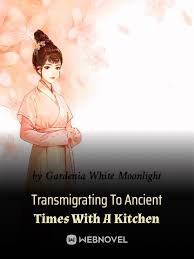
When a gas tank explosion kills her in the modern world, Jian Qingqing wakes up in ancient times inside the body of a starving girl who had just died, surrounded by a destitute family and a leaky hut.
She discovers her modern kitchen has transmigrated with her, stocked with supplies and tools, and uses this advantage to revolutionize farming, salt refinement, and local infrastructure, inadvertently lifting an entire nation out of poverty.
As her influence grows and she seeks a quiet life with a compliant husband, she’s relentlessly pursued by Ming Zhiyan—the Emperor’s feared and lethal nephew—who insists he’s “nice and obedient,” forcing her to confront love, power, and legacy in a world she never meant to reshape.
Why It Stands Out
1. A Kitchen That Changed a Kingdom
Unlike typical transmigration tales where protagonists wield martial arts or magic, Jian Qingqing’s greatest asset is a fully equipped modern kitchen. This grounded, domestic tool becomes the engine of agricultural innovation, economic reform, and social uplift. Her victories aren’t won with swords but with stir-fries, high-yield seeds, and refined salt—turning survival into sovereignty one meal at a time.
2. Romance Without the Usual Scheming
In a genre saturated with palace intrigue and backstabbing consorts, this novel refreshingly sidesteps excessive political machinations. The drama stems from practical challenges—building homes, feeding villages, navigating local bureaucracy—while the romance simmers slowly between a pragmatic farm girl and a terrifyingly competent nobleman who masks his intensity with playful submission.
3. The Female Lead Who Refuses to Be a Hero
Even as emperors weep and nations chant her name, Jian Qingqing insists, “I just like to grow crops. I didn’t do anything!” This humble deflection isn’t false modesty—it’s core to her character. She never seeks fame, power, or revolution; she simply wants her family fed and safe. That quiet determination, not grand ambition, makes her transformation of the world feel both miraculous and believable.
Characters That Leave a Mark
There’s Ming Zhiyan – the Emperor’s nephew, a man whose reputation for brutality precedes him, rumored to have killed so many that even concubines gifted by princesses don’t survive long in his care, yet who softens only in Jian Qingqing’s presence, calling himself “nice and obedient” with wolfish charm.
You’ll meet Jian Dalang, who transforms from a skeptical older brother into Jian Qingqing’s most loyal supporter, trusting her vision completely once he witnesses her methods turn barren land into bounty.
And Xiao Lang? They’re the one who represents the fragile hope of the Jian family’s next generation—a child whose survival once seemed impossible but who thrives under Qingqing’s care, symbolizing the future she’s quietly building.
The Flaws Fans Debate
Some readers express discomfort with the age gap, noting that while Jian Qingqing is mentally an adult, her transmigrated body is that of an 11-year-old, making her eventual romantic involvement with the much older Ming Zhiyan feel ethically unsettling.
Critics point out that the story demands suspension of disbelief, as Qingqing’s sudden expertise in agriculture, chemistry, and economics is loosely justified by a vague “herb gatherer” backstory that doesn’t fully account for her modern knowledge.
Multiple fans mention that the ending feels rushed, with major character arcs and geopolitical developments wrapped up too abruptly, leaving emotional and narrative threads unresolved despite the novel’s 500+ chapters.
Must-Experience Arcs
Ch. 1–50: The Starving Hearth – Jian Qingqing awakens in a rain-soaked hovel, uses her kitchen’s supplies to feed her family, plants her first miracle crops, and begins transforming her village from famine to function, all while evading suspicion about her impossible knowledge.
Ch. 150–250: Salt and Sovereignty – After refining coarse salt into edible fine salt, Qingqing attracts imperial attention; Ming Zhiyan arrives as county magistrate, their uneasy alliance begins, and her innovations spark regional economic shifts that challenge entrenched power structures.
Ch. 450–507: The Unified World – With nations stabilized through her agricultural reforms, Qingqing faces the paradox of global fame; the final chapters depict her reluctant acceptance of legacy, her marriage to Ming Zhiyan, and a bittersweet transition from doer to symbol.
Killer Quotes
“I just like to grow crops. I didn’t do anything!”
“Miss Jian is really my lucky star!”
“All of this is due to Miss Jian’s hard work!”
Cultural Impact
Fans on Webnovel and Reddit have dubbed it “the anti-scheming transmigration novel,” praising its focus on productivity over palace politics.
The phrase “I’m nice and obedient” became a meme among readers, often used ironically to describe dominant love interests in other xianxia and historical romance stories.
Despite never being officially licensed for wide release, the novel maintains a cult following, with readers actively sharing raw translations and urging publishers to pick it up.
Final Verdict
Start Here If You Want:
A feel-good transmigration story where success comes from hard work, not bloodshed.
A romance that develops through mutual respect, not forced proximity or toxic power plays.
A protagonist who changes the world without ever wanting to be a hero.
Study If You Love:
Narratives that reframe domestic labor as revolutionary action.
The subversion of the “chosen one” trope through humble, practical competence.
Explorations of how modern knowledge disrupts pre-industrial societies without relying on violence or mysticism.
Avoid If You Prefer:
Strict historical realism or logical consistency in transmigration mechanics.
Romances with age-appropriate physical timelines.
Slow-burn conclusions that meticulously tie up every subplot.