The Story in 3 Sentences
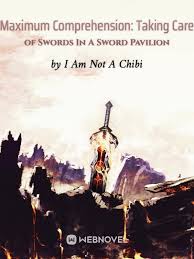
Han Muye, reborn into a cultivation world with unmatched comprehension, becomes the humble caretaker of a pavilion housing over 100,000 swords, quietly absorbing their techniques and Sword Qi through routine cleaning.
Over sixty years, his silent accumulation transforms not only himself but also shapes the fates of those who cross his path—a future Sword Deity, a demonic clan leader, and an enlightened swordsman—all unknowingly guided by his presence.
When celestial invaders threaten the mortal realm, Han Muye rises at last, commanding the full might of the pavilion’s swords, his will piercing the heavens as he challenges the gods themselves.
Why It Stands Out
1. The Quiet Architect of Legends
Unlike typical xianxia protagonists who seek glory early, Han Muye builds power through patience and service. His role as a sword caretaker flips the genre’s usual power fantasy, turning maintenance into mastery and humility into invincibility.
2. A Living Archive of Sword Dao
Each sword in the pavilion carries the legacy of its original wielder, and Han Muye doesn’t just collect techniques—he internalizes philosophies, emotions, and wills. This transforms him into a walking convergence of countless sword paths, making his eventual ascent feel earned and mythic.
3. Time as a Narrative Weapon
The novel spans decades without rushing, using the passage of time to show ripple effects. Disciples grow into legends, enemies become allies, and the world evolves—all while Han Muye remains in the pavilion, making his eventual emergence feel like history itself rising to meet a crisis.
Characters That Leave a Mark
There’s Mu Wan – a figure tied to the demonic clan whose initial attempt to steal a sword ends in failure, yet her encounter with Han Muye plants the seed for her transformation into a formidable leader who later allies with the mortal world against the Celestial invasion .
You’ll meet Su Xing, who appears in the extended lore as a credible secondary presence, though detailed English accounts of his role remain sparse; fan wikis list him among key supporting figures connected to the sword sect’s internal dynamics .
And Huang Six? They’re the one who, having spent over seven years in the Sword Pavilion, shares cultivation world knowledge with Han Muye, acting as an early bridge between the caretaker’s isolation and the wider realm .
The Flaws Fans Debate
Many readers criticize the novel’s slow early pacing, with the first 40 chapters offering little plot progression beyond repetitive descriptions of sword-cleaning and vague power accumulation.
Some fans point to inconsistent chapter quality, especially around chapters 180–190, where copy-pasted content and editorial errors severely disrupt readability.
Others argue that despite the synopsis promising a low-key, quiet cultivator, the story eventually shifts toward conventional xianxia tropes—rapid power reveals, sect heir status, and external validation—undermining its initial uniqueness.
Must-Experience Arcs
Ch. 1–60: The Keeper’s Solitude – Han Muye begins his quiet life in the Sword Pavilion, learning foundational sword intents from Qinghe, Ziyan, and Shanyue swords, establishing the core mechanic of comprehension through care.
Ch. 500–800: Disciples of the Pavillion – Former visitors, now powerful cultivators, return seeking guidance; their arcs reflect Han Muye’s unseen influence as the world begins to recognize the pavilion’s hidden authority.
Ch. 2000–2351: The Celestial Confrontation – With the mortal realm under siege, Han Muye steps out at last, unleashing the collective will of 100,000 swords in a final stand that redefines what it means to be a guardian of the Dao.
Killer Quotes
“Today, I, Han Muye, will traverse the sky. I want to see who among the gods dares to invade this mortal world”
“100,000 swords followed him as he emerged from the pavilion. His Sword Qi could be sensed from 30,000 miles away, and his Sword Will pierced through the realms.”
Cultural Impact
Readers on Webnovel consistently rank it among the top trial-read novels for its fresh take on the overpowered MC trope, praising its departure from system-based narratives .
Despite translation and editing issues, fans have created memes around “just wipe the swords and become immortal,” highlighting the absurd yet satisfying power progression .
The novel has sparked discussions in xianxia communities about “quiet cultivation” as a subgenre, influencing newer works to explore non-combative paths to strength .
Final Verdict
Start Here If You Want:
A protagonist whose power grows through service, not slaughter.
A cultivation story where time and patience are the true cheat skills.
An epic payoff where decades of buildup culminate in a single, sky-rending declaration.
Study If You Love:
Narratives that treat knowledge and legacy as forms of power.
Worldbuilding where artifacts carry emotional and philosophical weight.
The slow-burn transformation of a background role into the axis of world fate.
Avoid If You Prefer:
Fast-paced action from chapter one.
Clear, immediate explanations of power systems.
Stories that avoid repetitive early chapters or editorial inconsistencies.