The Story in 3 Sentences
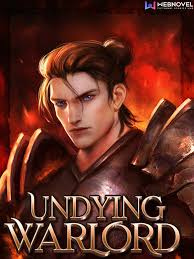
Dilan, a thrill-seeking twenty-one-year-old disillusioned with mundane life on Earth, is struck by lightning during a storm on New Year’s Eve and pierced by an ancient tree, triggering a global transformation known as the Primordial Ascension that floods the world with mythical mana and spawns monsters, zombies, and interdimensional Gates.
He awakens with an unkillable resilience and a system-like “Log of the Ancient” that allows him to grow stronger through combat, forcing him to navigate a brutal new reality where survival demands both brutality and strategy.
As he carves a path through collapsing civilizations and emerging warlord factions, Dilan evolves from a lone adrenaline junkie into a mythic, undying force—balancing vengeance, leadership, and the slow unraveling of cosmic truths behind the Ascension itself.
Why It Stands Out
1. System Meets Soul
Unlike many system-based apocalypse novels that drown in repetitive grind mechanics, Undying Warlord layers its progression with psychological depth and moral ambiguity. Dilan’s growth isn’t just about stats—it’s about how pain reshapes identity, and how immortality forces one to redefine purpose when death no longer serves as a boundary.
2. Controlled Chaos with Narrative Discipline
Despite the genre’s tendency toward bloated arcs and filler battles, author HideousGrain maintains tight pacing. Early chapters focus on visceral survival, mid-game shifts to faction politics and kingdom-building, and the late game escalates into multiversal stakes—all without losing the core thread of Dilan’s personal evolution .
3. Anti-Harem, Anti-Pandering Integrity
In a landscape saturated with romantic subplots and wish-fulfillment tropes, the novel boldly delays romance until chapter 250 at the earliest and explicitly rejects harem structures. This commitment to genre purity—focusing on action, strategy, and existential stakes—has earned it respect among readers tired of formulaic tropes .
Characters That Leave a Mark
There’s Sheriff Jenny – the sharp-eyed archer whose tactical mind and loyalty anchor one of the first survivor enclaves Dilan encounters, proving that leadership in chaos isn’t about power but precision and trust .
You’ll meet Mayor Clerens, who balances pragmatism with compassion as he guides a fragile community through monster surges and internal dissent, embodying the fragile hope of civilization’s remnants in a world gone feral .
And Hunter Jared? They’re the one who wields wilderness expertise like a second skin, bridging the gap between urban survivors and the mutated wilds, often serving as Dilan’s reluctant but invaluable scout during early territorial expansions .
The Flaws Fans Debate
Some readers criticize Dilan’s early decisions—particularly his choice to rejoin survivors who betrayed and robbed him—as inconsistent with his otherwise ruthless persona, calling it a narrative convenience that undermines his agency .
The prolonged stay in a single town during the first 100+ chapters frustrated fans eager for world exploration, with complaints that repetitive monster-farming slowed momentum despite solid writing quality .
A recurring critique notes the overemphasis on sexual violence as a moral benchmark—characters frequently reference consequences for rapists, but other societal evils like exploitation or corruption receive less narrative attention, creating an uneven ethical framework .
Must-Experience Arcs
Ch. 1–40: The Primordial Storm – Dilan’s near-death awakening, the first zombie outbreaks, and his brutal initiation into the new world order, where every kill grants experience and every choice carries lethal weight.
Ch. 150–220: The Iron Enclave – After securing a foothold in a fortified town, Dilan establishes protocols, trains survivors, and faces internal coups and external monster hordes, transitioning from lone warrior to warlord.
Ch. 600–700: Veiluris Ascendant – The scope explodes beyond Earth as Dilan confronts Primordya Veiluris and other cosmic entities tied to the Ascension’s origin, revealing that the apocalypse was merely the first tremor of a multiversal reckoning .
Killer Quotes
“Pain is not the enemy. It is the only teacher who never lies.”
“To become undying is not to escape death—but to outlive every reason you once had to fear it.”
“Monsters don’t break civilizations. Men who refuse to change do.”
Cultural Impact
Undying Warlord developed a cult following on Webnovel, praised for its lean prose and refusal to indulge in genre clichés, with fans often comparing its tone to a grittier, system-infused version of The Last of Us meets Solo Leveling .
The phrase “Protocol of the Undying” became a meme in comment sections, symbolizing Dilan’s uncompromising justice code—often quoted by readers when discussing moral boundaries in apocalypse fiction .
Despite modest mainstream visibility, the novel’s completion at 751+ chapters and consistent 4.5+ rating reflect a deeply engaged core audience that values narrative discipline over sensationalism .
Final Verdict
Start Here If You Want:
A relentless, adrenaline-fueled apocalypse where the protagonist’s immortality is both gift and curse.
A system-based progression that never forgets to ask why power matters.
A completed epic with zero harem distractions and a clear, escalating narrative arc from street-level survival to cosmic war.
Study If You Love:
Explorations of how trauma reshapes morality in post-collapse societies.
The intersection of game-like mechanics with literary character development.
World-building that evolves organically—from localized chaos to multiversal mythology—without info-dumping.
Avoid If You Prefer:
Fast global exploration; the story lingers deliberately in early zones to build tension and character bonds.
Traditional romance or emotional subplots in the first half; intimacy is deferred for thematic focus.
Protagonists who avoid moral compromise; Dilan’s choices are often brutal, pragmatic, and debated even by allies.