The Story in 3 Sentences
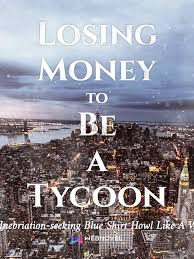
Reborn into the past as a university freshman, Pei Qian gains a mysterious system that rewards him only when he loses money, prompting him to launch deliberately terrible business ventures—starting with awful video games—in a desperate bid to shed wealth.
Despite his best efforts to fail, his employees and partners consistently misinterpret his half-hearted sabotage as visionary genius, turning every flop into a runaway success and inflating his fortune against his will.
Trapped in a cycle of unintended triumphs across gaming, film, tech, and real estate, Pei Qian becomes a celebrated tycoon while inwardly screaming in frustration, forever chasing the elusive dream of financial ruin.
Why It Stands Out
1. The Comedy of Catastrophic Success
At its core, the novel flips the standard rags-to-riches trope on its head: the protagonist isn’t striving for wealth but actively trying to escape it. This ironic reversal fuels a relentless stream of situational humor where every attempt to create a bad game, overpay employees, or waste capital backfires spectacularly, making failure impossible and success absurdly inevitable.
2. Business Satire Disguised as Slice-of-Life
Beneath the slapstick lies sharp commentary on modern entrepreneurship, corporate culture, and market irrationality. The novel cleverly mirrors real-world phenomena—like viral hits born from glitches or ethical companies outperforming greedy rivals—while maintaining a light, accessible tone that never lectures but always amuses.
3. The Misunderstanding Engine
The entire plot runs on a single, brilliantly sustained joke: everyone around Pei Qian sees benevolence, strategy, and altruism in his actions, while readers know he’s just trying to burn cash. This dramatic irony never grows stale because the cast reacts with genuine admiration, turning the protagonist’s despair into a masterclass in comedic timing across 1600+ chapters.
Characters That Leave a Mark
There’s Ma Yang – a passionate and idealistic game developer who joins Pei Qian’s fledgling studio early on, interpreting the boss’s bizarre demands as revolutionary design philosophy and pouring his soul into projects meant to fail, ultimately becoming a creative powerhouse within the company .
You’ll meet Xin Hai Lu, who left a toxic corporate environment to become Pei Qian’s trusted assistant and later rises to senior vice president; her competence and loyalty anchor the chaotic business empire, even as she remains unaware that her boss’s “generosity” is just a ploy to lose money .
And Bao Xu? They’re the one who went from living in internet cafes as a hardcore gamer to becoming a key figure in Tengda’s gaming division after Pei Qian “rescued” him—not out of kindness, but because hiring a known slacker seemed like a surefire way to waste payroll—only for Bao Xu to thrive and innovate beyond expectations .
The Flaws Fans Debate
Some readers argue the premise wears thin over 1600+ chapters, with repetitive cycles of “try to fail → accidentally succeed” becoming predictable despite creative variations.
Critics point to underdeveloped side characters, noting that while figures like Xin Hai Lu and Ma Yang have roles, their personal arcs rarely evolve beyond serving the central joke .
A vocal minority finds the novel’s occasional nationalist overtones simplistic or forced, particularly in arcs involving cultural exports or domestic industry triumphs .
Must-Experience Arcs
Ch. 1–50: The Crappy Game Gambit – Pei Qian launches his first intentionally terrible mobile game, “Ghost Fighting,” expecting total failure, but players adore its absurdity, turning it into an unexpected hit and setting the tone for his cursed success.
Ch. 400–500: The Ethical Tech Uprising – Attempting to drain funds by overpaying staff and giving away profits, Pei Qian inadvertently builds a worker’s paradise that attracts top talent and sparks industry-wide admiration, forcing competitors to rethink exploitative norms.
Ch. 1500–1674: Empire of Unwanted Glory – Now overseeing a sprawling conglomerate, Pei Qian tries to sabotage his own legacy by investing in doomed sectors, only to witness his “failed” ventures in film, education, and green energy become national benchmarks of innovation and social good.
Killer Quotes
“I really just want to lose money! T_T”
“Best boss ever, prodigy of the business world, genius creator, visionary of the century.”
“All employees would like to express their sincere gratitude to all investors! We must live up to Mr. Pei’s expectations and become bigger!”
Cultural Impact
The novel became a cult favorite in Chinese web fiction circles for its original take on the system-based rebirth genre, inspiring memes about “trying to fail but becoming a legend instead.”
Its unique premise sparked discussions about ethical capitalism, with fans jokingly citing Pei Qian as the “anti-Elon Musk” — a billionaire who gives everything away yet can’t stop accumulating wealth.
Adaptations and fan translations helped it gain traction in English-speaking communities, where it’s often recommended as a palate cleanser from darker xianxia or grimdark isekai stories.
Final Verdict
Start Here If You Want:
A hilarious, low-stakes comedy where business failures magically become wins and the protagonist suffers through prosperity.
A refreshing alternative to power-fantasy tropes, offering laughter instead of leveling up.
A surprisingly thoughtful take on workplace ethics, disguised as a gag-driven slice-of-life saga.
Study If You Love:
Narrative structures built entirely on sustained irony and dramatic misunderstanding.
Satirical explorations of late-stage capitalism through the lens of absurdism and wish-fulfillment.
Long-form storytelling that maintains a single comedic premise across thousands of chapters without collapsing into monotony.
Avoid If You Prefer:
Fast-paced plots with high stakes, life-or-death conflicts, or romantic drama as central drivers.
Deep character studies or emotional arcs; this is comedy-first, with development serving the joke.
Stories that respect genre boundaries—this novel gleefully mashes business simulation, workplace sitcom, and light sci-fi into one chaotic, cheerful mess.