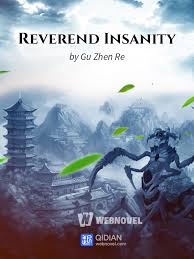
The Story in 3 Sentences
A ruthless cultivator named Fang Yuan is reborn into his younger self with full memories of past lives, determined to achieve immortality by any means necessary, unshackled by morality or emotion.
He embraces the Devil Path in a world where Gu insects embody natural laws and power, manipulating allies and enemies alike while navigating a fractured realm of five distinct regions.
As he climbs the cultivation ladder through cold calculation and existential resolve, the story evolves beyond personal ambition into a cosmic struggle over fate, legacy, and the very structure of reality.
Why It Stands Out
1. The Anti-Hero Without Apology
Unlike typical “evil” protagonists who perform cruelty for spectacle, Fang Yuan’s amorality is methodical and philosophical—he isn’t evil for shock value but because compassion is inefficient in a universe governed by survival. His pragmatism feels unnervingly logical, not cartoonish, making his journey a chilling mirror to ambition stripped of sentiment .
2. Gu Insects as Living Laws
The novel’s magic system replaces generic qi with Gu insects—tangible manifestations of concepts like moonlight, strength, or endurance—that can be bred, fused, and cultivated independently. This mechanic turns cultivation into a layered science of resource management and biological engineering, offering fresh strategic depth rarely seen in xianxia .
3. A World That Breathes Through Its Factions
Divided into five culturally distinct regions, the setting avoids monolithic fantasy tropes by giving each territory unique customs, power structures, and philosophical leanings. This worldbuilding isn’t backdrop—it actively shapes conflicts, alliances, and the very definition of “path” in cultivation .
Characters That Leave a Mark
There’s Gu Yue Bo – the stern yet pragmatic clan head who initially mentors Fang Yuan under the guise of familial duty, unaware he’s grooming a serpent who sees loyalty as temporary leverage .
You’ll meet Flower Wine Monk, who roamed as a notorious Rank Five demonic cultivator famed for his debauchery and brute strength, only to become one of Fang Yuan’s earliest high-stakes conquests—a symbol of how even feared villains are mere stepping stones .
And Bai Ning Bing? They’re the one who engages Fang Yuan in existential dialogue, challenging his nihilism not with morality but with competing visions of selfhood and legacy, making their interactions less about good versus evil and more about two voids reflecting each other .
The Flaws Fans Debate
The prose often suffers from clunky translation and repetitive internal monologues that can slow pacing, especially in mid-arcs where philosophical musings outweigh action .
Some readers argue the story’s relentless cynicism becomes emotionally exhausting, lacking even fleeting moments of warmth or redemption to provide contrast or relief .
Critics note that while the world is vast, secondary characters sometimes serve only as tactical obstacles or ideological foils, reducing their depth to utility rather than humanity .
Must-Experience Arcs
Ch. 1–199: A Demon’s Nature Doesn’t Change – Fang Yuan’s rebirth and early maneuvering within the Gu Yue clan establish his cold calculus, culminating in his first major betrayal and escape into the wider world .
Ch. 500–900: The Northern Wastelands Gambit – navigating a harsh, lawless region, Fang Yuan builds his first independent power base, experiments with Gu fusion on a grand scale, and confronts rival demonic sects in a war of attrition and deception.
Ch. 2000–2334+: The Final Ascension – as cosmic paths like Information, Dream, and Space emerge, Fang Yuan transcends mortal concerns, battling primordial entities and rewriting reality’s rules in a climax that merges metaphysics with cultivation .
Killer Quotes
“Fools are everywhere restrained by emotions and morals. They deserve to be stupidly trampled upon.”
“Because it has no legs, only wings, thus it has no choice but to fly. When it lands, that signifies its destruction.”
“Not wanting to be trampled on, there are two ways: either become the one who tramples, or vanish before the foot descends.”
Cultural Impact
Fang Yuan became a meme archetype for “unrepentant rationality,” spawning countless edits, quote cards, and debates about whether his philosophy is liberating or terrifying .
The phrase “I would rather let the world down than be let down by it” is widely attributed to him in fan circles, even if paraphrased, symbolizing the novel’s defiant individualism .
Despite being officially banned in its home country, Reverend Insanity gained a cult global following, with fan translations sustaining its legacy and inspiring similar “true evil MC” narratives in Western web fiction .
Final Verdict
Start Here If You Want:
A protagonist who never wavers, never apologizes, and never pretends—pure ambition incarnate.
A magic system that feels like alchemy meets evolutionary biology, where power is grown, not just gathered.
A story that dares to ask whether immortality is worth anything if you’ve erased everything that once made you human.
Study If You Love:
Existential themes wrapped in martial fantasy, where every battle is also a debate about fate, free will, and the cost of self-determination.
Narratives that deconstruct heroism by showing how moral frameworks often serve the powerful, not the truth.
Worldbuilding that treats culture, geography, and ideology as active forces in shaping destiny, not just scenery.
Avoid If You Prefer:
Stories with emotional warmth, redemptive arcs, or clear moral anchors—this novel offers none.
Prose that flows smoothly; the translation’s roughness can be jarring for readers sensitive to style.
Cast ensembles where side characters feel fully alive; here, most exist to test or serve the MC’s vision.