The Story in 3 Sentences
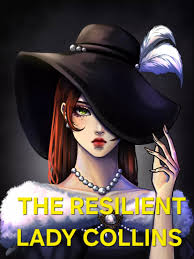
Scarlet Collins’s world shatters when her divorce from Jack Humphrey becomes public, turning her into the town’s favorite target for gossip despite his infidelity.
She endures the cruelty of society’s judgment with icy composure, branded as emotionally untouchable while secretly shouldering the weight of her family’s future.
Her path shifts unexpectedly when she meets Ian Kingsley, the illegitimate son of Lord Kingsley, sparking a relationship that defies class, scandal, and expectation.
Why It Stands Out
1. A Heiress with Armor, Not Tears
Unlike the typical wronged wife trope, Scarlet doesn’t crumble—she recalibrates. Her resilience isn’t performative strength but a quiet, strategic fortitude rooted in legacy and necessity. She channels the spirit of her great-grandfather Edgar Collins, a figure fans recognize from the author’s prior works, and embodies a lineage of unyielding women who refuse to be defined by betrayal.
2. Romance Without Rescue
Ian Kingsley isn’t a white knight; he’s a man shaped by illegitimacy and societal exclusion, making his bond with Scarlet one of equals, not savior and saved. Their connection grows through mutual understanding of being misjudged—she by wealth and coldness, he by birth and stigma. This dynamic sidesteps damsel-in-distress clichés and instead builds intimacy through shared defiance.
3. Gossip as a Weapon, Not Just Backdrop
The novel treats public opinion as an active antagonist. Townspeople’s whispers aren’t ambient noise—they’re psychological warfare that Scarlet must navigate daily. This focus on social reputation as a battlefield gives the story a sharp, almost Austen-esque tension, updated for a modern audience that understands the brutality of viral judgment.
Characters That Leave a Mark
There’s Jack Humphrey – the ex-husband whose affairs are an open secret yet who still expects Scarlet’s loyalty and silence, embodying the hypocrisy of elite masculinity.
You’ll meet Alana – a young girl under Scarlet’s care whose presence reveals the protagonist’s hidden tenderness and reinforces her motivation to rebuild not just for herself, but for those who depend on her.
And Ian Kingsley? They’re the one who refuses to let Scarlet’s icy exterior become her prison, seeing her not as the town’s “black ice” heiress but as a woman worthy of warmth, trust, and partnership on her own terms.
The Flaws Fans Debate
Some readers feel the pacing drags in the middle chapters, where emotional introspection outweighs plot momentum.
A portion of the fanbase critiques the lack of deeper exploration into Ian’s backstory, wishing for more chapters from his perspective to balance Scarlet’s dominance in the narrative.
Others note that the villainy of secondary antagonists—particularly those spreading rumors—can feel one-dimensional, serving more as narrative obstacles than fully fleshed characters.
Must-Experience Arcs
Ch. 1–25: The Fall of the Heiress – Scarlet’s divorce becomes public, gossip consumes the town, and she’s forced to confront both financial strain and social exile while maintaining a stoic facade.
Ch. 80–110: The Kingsley Gambit – Scarlet and Ian’s relationship deepens amid societal resistance, culminating in a confrontation with Lord Kingsley’s family that tests their loyalty and exposes buried truths about Ian’s parentage.
Ch. 220–274: Legacy Reclaimed – Scarlet fully steps into her role as heir to the Collins name, using her business acumen and moral clarity to outmaneuver old enemies, secure her family’s future, and choose love on her own uncompromising terms.
Killer Quotes
“Let them talk. My silence is my shield, and my actions will be my verdict.”
“They called my heart black ice, but ice melts only when the sun is worth trusting.”
“I am not rebuilding my life to prove them wrong. I am rebuilding it because I owe myself a future they never believed I deserved.”
Cultural Impact
Fans frequently compare Scarlet to iconic strong-willed heroines like Elizabeth Bennet and Lady Whistledown, blending Regency-era sharpness with modern emotional intelligence.
The phrase “heart made of black ice” became a popular caption on fan art and social media, symbolizing elegant resilience in the face of public scrutiny.
Readers of Violet_167’s previous works actively track references to Edgar Collins, treating The Resilient Lady Collins as a spiritual successor that expands a beloved fictional dynasty.
The novel’s emphasis on female autonomy and class critique sparked numerous discussion threads on Webnovel forums, with readers praising its rejection of passive femininity.
Memes depicting Scarlet side-eyeing gossiping townsfolk while sipping tea went viral in romance reader circles, cementing her as a meme-worthy icon of unbothered excellence.
Final Verdict
Start Here If You Want:
A fiercely intelligent heroine who weaponizes composure instead of tears.
A slow-burn romance built on mutual respect, not rescue.
A story where reputation is a battlefield and legacy is both burden and birthright.
Study If You Love:
Narratives that dissect class, gender, and public perception through intimate character drama.
Female protagonists whose strength lies in strategy, silence, and selective vulnerability.
Interconnected literary universes where family legacy echoes across generations and novels.
Avoid If You Prefer:
Fast-paced action or high-stakes external conflict over emotional and social tension.
Traditional romance structures where the male lead drives the plot or “fixes” the heroine.
Stories that offer clear-cut villains; here, the real antagonist is often society itself, making moral lines deliberately blurred.