The Story in 3 Sentences
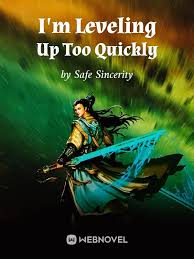
An ordinary young man named Li Che transmigrates into a world of martial cultivation and finds himself inexplicably leveling up at an uncontrollable, breakneck pace despite his desire for a quiet, uneventful life.
This rapid, involuntary ascension thrusts him into the center of cosmic conflicts, divine politics, and ancient prophecies he never asked to be part of.
As his power spirals beyond comprehension, Li Che must navigate a reality where even gods fear his potential while trying to hold onto his humanity and original wish for peace.
Why It Stands Out
1. The Anti-Power Fantasy That Can’t Stop Powering Up
Unlike typical cultivation stories where the protagonist strives for strength through blood, sweat, and sacrifice, “I’m Leveling Up Too Quickly” flips the script by making power a curse rather than a goal. Li Che doesn’t want to break through realms—he just wants to marry, have kids, and live quietly—but the universe keeps dumping godlike abilities into his lap anyway. This ironic tension between desire and destiny fuels both comedy and existential dread throughout the narrative.
2. A Cultivation World with Bureaucratic Gods and Systemic Absurdity
The novel builds a xuanhuan cosmos where divine hierarchies operate like corporate ladders and cosmic laws feel like glitchy software. Immortal clans file complaints, heavenly tribunals hold hearings, and even fate itself seems to run on outdated code. This satirical layer gives the story a unique flavor—less about raw martial glory, more about surviving the red tape of omnipotence.
3. Relentless Pacing as a Narrative Device
While many web novels suffer from filler or stagnation, this one weaponizes its speed. The protagonist’s uncontrollable growth isn’t just a plot point—it’s the engine of the entire story. Every chapter reinforces the central joke: the harder Li Che tries to slow down, the faster he ascends. This creates a self-sustaining loop of absurd escalation that keeps readers hooked through sheer momentum.
Characters That Leave a Mark
There’s Zhu Wuyang – a sharp-witted cultivator from Earth who becomes an unlikely confidant and occasional rival to the protagonist, navigating the chaotic cultivation world with pragmatism and dry humor.
You’ll meet Chang’an, who appears as a mysterious figure tied to ancient cosmic records and longevity secrets, offering cryptic guidance that often shapes pivotal turning points in the celestial bureaucracy Li Che stumbles through.
And Zhu Wuyan? They’re the one who emerges as a formidable peer within the Zhu clan lineage, embodying the traditional cultivation elite whose ambitions clash with Li Che’s accidental dominance, adding tension through legacy and expectation rather than outright villainy.
The Flaws Fans Debate
Some readers criticize the novel for prioritizing comedic escalation over emotional depth, leaving character relationships feeling underdeveloped despite the epic scale.
The relentless power progression, while central to the premise, can make conflicts feel weightless—since Li Che inevitably overpowers any obstacle without meaningful struggle.
A portion of the fanbase notes that the satire of cultivation tropes occasionally veers into repetition, with similar “I didn’t ask for this power” scenarios recurring across hundreds of chapters without significant evolution.
Must-Experience Arcs
Ch. 1–50: Flawless Dao Foundation – Li Che awakens in a cultivation world and immediately begins breaking through realms against his will, setting up the core irony as he tries to live a normal life while his body ascends like a runaway train.
Ch. 400–500: The Three Thousand Major Worlds – Li Che’s influence expands beyond mortal sects into cosmic governance, where he’s dragged into disputes among immortal clans and forced to mediate divine succession crises he barely understands.
Ch. 900–1064: Fate Destroying Emperor – In the final stretch, Li Che confronts the architects of fate itself, challenging the very system that caused his uncontrollable growth, culminating in a resolution that redefines what it means to be “ordinary” in a universe built on hierarchy.
Killer Quotes
“I’ve thought of every possible solution, tried every possible method, worked till I forgot to eat and sleep… just to break through slowly.”
“Why am I still leveling up so quickly? If I continue like this, even my own father—the emperor—might kill me out of jealousy.”
“Power isn’t what I sought. Peace was. But the heavens won’t let a quiet man stay quiet.”
Cultural Impact
The novel became a meme staple in xianxia communities, with fans joking about “Li Che syndrome” to describe any situation where success happens too easily despite zero effort.
On Webnovel, it amassed over 2.3 million views and consistently ranked in genre-specific charts, praised for its fresh take on the overpowered protagonist trope.
Readers often compare it to “Solo Leveling” in reverse—where one protagonist earns every ounce of power, the other can’t escape it, sparking frequent crossover discussions and fan art contrasting their journeys.
Final Verdict
Start Here If You Want:
A hilarious subversion of the cultivation genre where the hero’s greatest enemy is his own unstoppable growth.
Fast-paced, bingeable chapters that thrive on absurd escalation and cosmic irony.
A protagonist who genuinely doesn’t want to be special—but can’t help reshaping reality by existing.
Study If You Love:
Narrative structures that use repetition as satire, turning genre conventions into running gags with philosophical undertones.
World-building that blends traditional Chinese cosmology with bureaucratic and systemic humor.
The intersection of fate, free will, and systemic absurdity in Eastern fantasy frameworks.
Avoid If You Prefer:
Stories with grounded stakes or protagonists who earn their power through visible struggle.
Deep character development or romantic subplots that evolve meaningfully over time.
Slow-burn world exploration; this novel accelerates from day one and never taps the brakes.