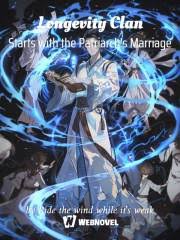
The Story in 3 Sentences
After transmigrating into a fantasy world and struggling for over a hundred years as a mediocre cultivator, Han Li had nearly given up on his path to immortality .
His life takes a dramatic turn when he descends the mountain to take a wife, only to discover that marriage and family-building are the true keys to unlocking his latent power and securing his legacy .
From a forgotten elder on the brink of death, he rises to become the patriarch of an eternal clan so formidable that even Immortal Emperors are obliterated with a mere snap of his fingers, reshaping the cosmos through lineage rather than lone-wolf ascension .
Why It Stands Out
1. The Clan as the Ultimate Cultivation Vessel
Unlike traditional xianxia tales fixated on solitary immortality, this novel flips the script by making the family unit the engine of power. Han Li’s strength doesn’t just grow from pills and peril—it multiplies through heirs, alliances, and the collective qi of a thriving bloodline. The clan isn’t background lore; it’s the protagonist’s cultivation dantian made flesh, expanding with every marriage, birth, and strategic adoption.
2. Harem as Worldbuilding, Not Just Wish Fulfillment
While the harem element is undeniably present, it transcends mere fan service by serving a structural purpose. Each concubine or wife brings not just beauty but political ties, unique talents, or hidden lineages that feed into the clan’s evolution. The narrative treats marriage as a foundational act of statecraft in the cultivation world, where dowries are cultivation manuals and wedding vows double as mutual defense pacts.
3. The Quiet Revolution of “Lying Flat” Power
In a genre obsessed with grinding through blood-soaked trials, Han Li’s realization that he can “rise to power just by lying flat” feels subversive . His power surge comes not from desperate gambles but from embracing stability, reproduction, and long-term planning. This anti-grind philosophy resonates with modern readers weary of endless struggle narratives, offering a fantasy where legacy, not just level, defines success.
Characters That Leave a Mark
There’s Mu Peiling – she boldly lied about being taken as Han Li’s concubine to escape an arranged marriage she despised, turning deception into a lifeline and eventually earning her place through loyalty rather than coercion .
You’ll meet Liu Yuexin, who at eighteen hailed from a minor family in Lingjun City with stunning grace and genuine cultivation talent, becoming one of the earliest and most devoted pillars of the Han household .
And Zhou Zhiruo? They’re the one who, as a daughter of the Zhou Manor, helped bridge her family’s influence with the Han clan’s rising power, playing a key role in early diplomatic and marital alliances that cemented the patriarch’s foothold in elite society .
The Flaws Fans Debate
The harem grows so large and repetitive that individual relationships lose emotional weight, reducing many concubines to interchangeable names in a roster rather than fully realized characters.
The pacing suffers in the middle chapters, where administrative details of clan management and repeated marriage ceremonies slow the narrative momentum that began with such promise.
The ending is widely criticized as abrupt, with some readers claiming the entire conclusion was rushed into a single chapter, leaving major plot threads and character arcs unresolved .
Must-Experience Arcs
Ch. 1–50: The Patriarch’s Descent – Han Li, aged and disillusioned, leaves his mountain retreat to marry, only to awaken his true potential through familial bonds and discover that his bloodline carries dormant power waiting to be activated.
Ch. 200–300: Forging the Eternal Clan – The Han family expands rapidly through strategic marriages and births, facing external threats from rival clans and internal tensions as descendants compete for recognition, all while Han Li establishes systems to ensure perpetual growth.
Ch. 700–802: The Finger Flick Heard Across Realms – Now a cosmic-level patriarch, Han Li confronts interdimensional invaders and Immortal Emperors, demonstrating that his clan’s collective strength renders even the mightiest solo cultivators obsolete, culminating in a finale that redefines power in the multiverse.
Killer Quotes
“He could rise to power just by lying flat, so why bother with arduous cultivation and endless fighting?”
“Indulging in pleasure would only waste time, resulting in nothing in the end.”
Cultural Impact
The novel sparked memes about “marrying your way to immortality,” with fans joking that the true cultivation manual is a wedding registry.
It became a reference point in discussions about “clan-building” as a subgenre, often compared to titles like Rebuilding the Immortal Family and Clan Immortal.
Despite mixed reviews, it amassed over 276,000 monthly views on major platforms, indicating strong niche appeal among readers tired of lone-wolf protagonists .
Final Verdict
Start Here If You Want:
A fresh take on xianxia where legacy trumps loneliness and family is the ultimate cheat code.
A power fantasy that rewards stability, strategy, and succession over constant combat.
A completed 800+ chapter epic that delivers a full arc from obscurity to cosmic dominance.
Study If You Love:
Narratives that use harem structures to explore social and political dynamics in fantasy settings.
The evolution of the “patriarch” archetype from weak elder to multiversal linchpin.
Stories where institutional growth (the clan) becomes the true protagonist alongside the individual.
Avoid If You Prefer:
Deeply personal, character-driven romances with emotional intimacy over political unions.
Tight pacing without repetitive ceremonial or administrative interludes.
Endings that meticulously tie up every subplot, as the conclusion here is widely seen as rushed and unsatisfying .