The Story in 3 Sentences
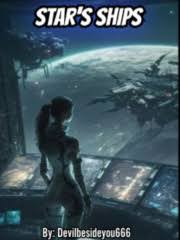
Facing a completely limitless future, Bai Mei Xing decided to forge a new path for herself, choosing autonomy over predetermined fate even when confronted with overwhelming odds .
Her journey shifts from solitary survival to commanding a found-family crew aboard her evolving starship, navigating political intrigue, alien encounters, and internal betrayals across the galaxy .
The narrative steers toward a defiant redefinition of power, legacy, and belonging, as Xing transforms from an outcast into a force that reshapes cosmic hierarchies on her own uncompromising terms .
Why It Stands Out
1. A Captain Who Writes Her Own Compass
Star’s Ships rejects the trope of the chosen one in favor of a protagonist who carves legitimacy through wit, resilience, and moral ambiguity. Bai Mei Xing doesn’t wait for destiny—she hijacks it, retrofitting derelict vessels and broken alliances into instruments of her will. Her leadership isn’t born of prophecy but forged in the vacuum of space, where every decision carries weight and consequence.
2. Found Family in the Void
Unlike many space operas that rely on military hierarchy or lone-wolf heroics, this novel thrives on the messy, tender dynamics of a crew assembled from misfits, exiles, and artificial intelligences. Their loyalty isn’t automatic; it’s earned through shared trauma, dark humor, and the quiet understanding that home isn’t a planet—it’s the ship that refuses to leave you behind .
3. Sci-Fi with Emotional Ballast
Beneath its R18 tags and action-driven surface lies a story deeply invested in psychological realism. Characters grapple with identity, displacement, and the ethics of survival in a universe that offers no safety nets. The prose balances technical detail with raw introspection, making every jump to hyperspace feel as emotionally charged as it is narratively necessary .
Characters That Leave a Mark
There’s Jun Li – a combat specialist whose reconstructed body hides layers of trauma and unwavering devotion, often stepping between Xing and danger without hesitation .
You’ll meet Aurelia, who serves as co-captain with a strategic mind sharpened by loss, her calm demeanor masking a fierce protectiveness over the ship’s fragile ecosystem of trust .
And Sim? They’re the one who anchors the crew’s chaos with dry wit and tactical brilliance, another co-captain whose loyalty is expressed not in grand declarations but in flawless course corrections during impossible odds .
The Flaws Fans Debate
Some readers feel the ending resolves the central conflict too abruptly, with major antagonists dispatched in just a few paragraphs after hundreds of chapters of buildup .
A recurring critique notes that certain villains remain underdeveloped, leaning into archetypal “pitiful fools” rather than complex adversaries, which slightly undermines the story’s otherwise nuanced moral landscape .
Others mention that key emotional beats—like Xing’s unspoken feelings toward a departing ally—are left frustratingly unresolved, creating narrative gaps that fan speculation tries to fill .
Must-Experience Arcs
Ch. 1–60: Derelict Dawn – Xing salvages her first ship from a graveyard orbit, assembling a skeleton crew while evading bounty hunters and corporate enforcers, establishing the novel’s gritty, resourceful tone.
Ch. 120–180: Fractured Alliances – Internal betrayals and first contact with a non-humanoid species test the crew’s unity, forcing moral choices that redefine their mission and each other’s roles.
Ch. 250–291: The Offering – In the final stretch, Xing confronts the architects of her exile, weaponizing her ship’s evolved AI and crew’s loyalty in a high-stakes gambit that rewrites galactic power structures .
Killer Quotes
“If you free me, I can fly it myself,” came the instant reply. “Good,” I said, a smile making its way onto my face .
As someone who has had an extremely successful career in anthropology back on my home planet, I was well aware of sexual dimorphism within the species .
Facing a completely limitless future, Bai Mei Xing decided to forge a new path for herself. But she would live her life on her terms, even if she was facing a 7 .
Cultural Impact
Over one million readers have engaged with the story on Webnovel, with consistent weekly updates fueling active comment threads dissecting ship dynamics and lore .
Fans frequently praise its subversion of reverse harem expectations, noting the absence of gratuitous romance in favor of genuine interpersonal bonds, a rarity in the genre .
The novel has inspired niche fan art and speculative timelines, particularly around the AI’s evolution and the ambiguous fate of secondary factions, keeping discussion alive post-completion .
Final Verdict
Start Here If You Want:
A fiercely independent female lead who builds power from scraps, not birthright.
A spacefaring narrative that prioritizes crew chemistry over galactic conquest.
Sci-fi that blends action with psychological depth and moral complexity.
Study If You Love:
Narratives exploring autonomy in post-human contexts, where identity is fluid and constructed.
The literary tradition of the “ship as character,” updated with AI consciousness and found-family dynamics.
Stories that use genre conventions to interrogate loyalty, exile, and the cost of freedom.
Avoid If You Prefer:
Tightly plotted, fast-paced resolutions; the ending’s brevity may disappoint those seeking elaborate closure.
Deeply fleshed-out antagonists; some villains serve more as obstacles than fully realized characters.
Strict adherence to hard sci-fi; the novel leans into speculative and emotional logic over technical rigor.