The Story in 3 Sentences
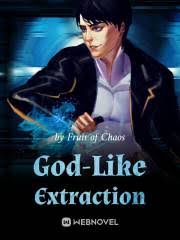
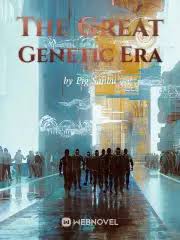
A young man awakens in a future world where human potential is unlocked through genetic evolution, forced to navigate a society obsessed with genetic scores and elite bloodlines.
He discovers a rare ability to perceive and manipulate his own genetic pathways, setting him apart from peers and drawing the attention of powerful factions vying for control over humanity’s biological future.
As interstellar conflicts erupt and ancient genetic secrets resurface, he must decide whether to uplift his species or dominate it, all while confronting the ethical abyss of playing god with human evolution.
Why It Stands Out
1. Genetic Cultivation Meets Cosmic Scale
Unlike traditional xianxia where power comes from qi and elixirs, this novel builds its entire progression system around genetic mutation, base points, and biological transcendence. The fusion of sci-fi jargon with cultivation tropes creates a fresh framework where enlightenment isn’t spiritual—it’s encoded in DNA. Battles aren’t just about strength but about optimizing gene expression, activating dormant traits, and rewriting one’s biological destiny in real time.
2. A World Built on Meritocratic Illusion
The setting presents a chillingly plausible future where college entrance exams are replaced by Genetic Admission Scores that dictate your entire life trajectory. This dystopian meritocracy feels eerily resonant, blending social commentary with high-stakes drama. Schools become genetic boot camps, families strategize bloodline purity, and national pride hinges on collective genetic excellence—making every personal victory feel politically charged.
3. Quiet Nationalism Wrapped in Sci-Fi Allegory
Beneath the surface of space battles and gene-splicing lies a persistent undercurrent of cultural identity, where the protagonist’s faction—often coded as Huaxia—rises against alien and rival human civilizations. While controversial, this narrative thread taps into real-world anxieties about technological sovereignty and civilizational competition, giving the story an emotional weight that transcends typical power-fantasy tropes.
Characters That Leave a Mark
There’s Tang Ting – the melancholic yet loyal friend whose struggle to activate speed-related Genetic Base Points becomes a running motif of human limitation and perseverance; his self-deprecating humor and physical presence ground the story in relatable vulnerability.
You’ll meet Xu Tui, who emerges as a fierce rival and later ally, embodying the raw ambition of a generation raised on genetic determinism; his journey from hot-headed underdog to disciplined warrior reflects the novel’s core tension between innate potential and earned mastery.
And Wen Shaowen? They’re the one who harbors hidden agendas beneath a veneer of mentorship, their ill intentions toward the protagonist revealing the treacherous politics within elite genetic institutions where trust is as mutable as DNA itself.
The Flaws Fans Debate
Many readers praise the early world-building but criticize the novel’s sharp turn toward hyper-nationalism and xenophobic rhetoric in later chapters, with some alien species portrayed through derogatory stereotypes that undermine the sci-fi premise.
The pacing suffers from repetitive training arcs where the protagonist unlocks yet another genetic ability with minimal narrative consequence, leading to accusations of “power creep without purpose.”
Fan communities frequently debate whether the story’s ideological messaging overshadows its character development, with some arguing that the protagonist’s moral compass becomes indistinguishable from state propaganda after the 1000-chapter mark.
Must-Experience Arcs
Ch. 1–50: Genetic Awakening – description. The protagonist enters a future academy where students are ranked by genetic potential, quickly distinguishing himself through an anomalous ability to visualize and direct his own gene activation; this arc establishes the rules of the world, introduces key allies like Tang Ting, and sets up the central conflict between individual will and biological determinism.
Ch. 1000–1100: The Huoyuan Crucible – description. Amid interstellar warfare, the protagonist ventures into a volatile genetic forge-world where fire-based gene mutations are refined; here, he confronts Xu Tui in a trial of elemental mastery and begins to grasp the cosmic scale of genetic evolution, learning that entire civilizations rise and fall based on their ability to adapt at the molecular level.
Ch. 2000–2370: The Heavenly Court Schism – description. In the final saga, factions within the human-led Heavenly Court fracture over the ethics of genetic godhood; the protagonist must navigate betrayals, awaken ancient gene-lineages tied to Earth’s forgotten past, and ultimately choose whether to preserve free will or impose a unified genetic destiny on all sentient life.
Killer Quotes
“Old Tang, you activated speed-related Genetic Base Points. What’s the direction of those Base Points?”
“Scoring well in the college admission exams is merely receiving an entrance ticket to the genetic exams.”
“Genetics is not just about the genes we inherit, but how we use them.”
Cultural Impact
The novel sparked widespread discussion on Webnovel forums about the ethics of genetic elitism, with fans drawing parallels to real-world debates on CRISPR and bioengineering.
Memes featuring “Old Tang” and his melancholic reactions to genetic failures became viral inside xianxia-adjacent communities, symbolizing the universal struggle against innate limitations.
Despite controversy, it maintained a loyal readership for over 2300 chapters, influencing a wave of “gene-cultivation” hybrids that blend sci-fi with traditional Eastern fantasy tropes.
Final Verdict
Start Here If You Want:
A sci-fi xianxia hybrid that reimagines cultivation through the lens of genetic engineering and biological transcendence.
A protagonist who evolves not through meditation but through conscious manipulation of his own DNA, offering a fresh take on self-mastery.
High-stakes world-building where national pride, interstellar war, and personal growth intersect in a future shaped by genetic destiny.
Study If You Love:
Narratives that explore the tension between determinism and free will in technologically advanced societies.
The adaptation of traditional Eastern cultivation structures into futuristic, scientifically flavored frameworks.
Long-form webnovels that evolve ideologically over time, reflecting both authorial intent and shifting cultural currents.
Avoid If You Prefer:
Stories free from nationalist or ethnocentric undertones, especially in interstellar conflict scenarios.
Tightly plotted narratives without repetitive power-up cycles or sprawling side characters.
Neutral or globally inclusive sci-fi that avoids framing civilizational advancement through genetic or cultural superiority.