The Story in 3 Sentences
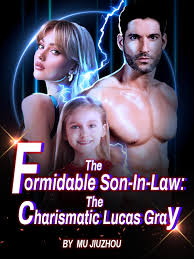
Lucas Gray vanishes without a word, leaving behind his wife and an unknown future, driven by a desire to prove himself worthy through six years of brutal transformation into the legendary “God of War.”
Upon his return, he discovers he has a daughter and confronts a life where his family and in-laws still see him as powerless, forcing him to navigate humiliation while concealing his true might.
Determined to reclaim his place and protect those he loves, Lucas embarks on a path of quiet dominance, strategic revelation, and unshakable loyalty, reshaping the fates of everyone around him.
Why It Stands Out
1. The God of War Wears Sweatpants
Unlike typical return-of-the-king tropes where power is flaunted immediately, Lucas Gray’s restraint—enduring slights while holding unimaginable authority—creates a slow-burn tension that hooks readers through emotional friction rather than just explosive action.
2. A Melodrama Machine with Military Precision
The novel blends urban family drama with xuanhuan-level power fantasy, layering corporate intrigue, secret identities, and elite military lore over a foundation of classic son-in-law humiliation, making it a hybrid that appeals to both romance and power-wish audiences.
3. Western Skin, Eastern Bones
Though set in a vaguely Americanized world with names like Lucas Gray and the Steeles, the story’s core mechanics—clan politics, face culture, and hierarchical respect—remain deeply rooted in Chinese webnovel tradition, creating a dissonant but oddly addictive cultural remix that fans either love or loathe.
Characters That Leave a Mark
There’s Karen Steele – the sharp-tongued wife whose initial coldness masks years of abandonment wounds and maternal ferocity, making her both antagonist and emotional anchor in Lucas’s redemption arc.
You’ll meet Anna Croft, who appears as a prophetic figure tangled in deception, using spiritual authority to manipulate events while hiding her own fragile agenda beneath a veil of mysticism.
And Trevor? They’re the one who embodies the entitled rival—confident in his social standing until Lucas’s quiet presence unravels every assumption about power, legacy, and worth.
The Flaws Fans Debate
The pacing drags relentlessly, with repetitive cycles of misunderstanding and delayed identity reveals that stretch a 300-chapter story into 1394 chapters of recycled tension.
Cultural inaccuracies break immersion—guns described as rare in the U.S., business deals resolved through vague “cooperations,” and dialogue that sounds like feudal China transplanted into suburban America.
The protagonist’s passivity borders on self-sabotage; despite being a war hero and CEO, Lucas often absorbs abuse without retaliation, making his “formidability” feel more like narrative assertion than demonstrated behavior.
Must-Experience Arcs
Ch. 1–45: The Silent Return – Lucas reenters civilian life unrecognized, meets his daughter for the first time, and endures daily scorn from the Steele household while gathering intelligence and testing loyalties.
Ch. 420–480: The Dempsey Gambit – As the Dempsey family challenges the Steeles’ influence, Lucas intervenes covertly, using both corporate maneuvering and martial prowess to dismantle their scheme without revealing his hand.
Ch. 1350–1394: The Final Chapter of Happiness – With all enemies subdued and truths laid bare, Lucas secures his family’s legacy, reconciles with Karen, and steps into public acknowledgment—not as a conqueror, but as a guardian who chose love over glory.
Killer Quotes
“In this lifetime, I’ll bring you the greatest honor and glory!”
“Power isn’t shown in how loudly you speak, but in how quietly the world obeys.”
Cultural Impact
The novel exemplifies the global spread of the Chinese “son-in-law” subgenre, joining titles like The Strongest Son-in-Law and God Level Crazy Son-in-Law in dominating Webnovel’s urban fantasy charts.
Fan forums are split between those addicted to its “one more chapter” loop and critics who call it “IQ-draining comfort food” for its formulaic drama.
Memes mocking the “MC takes 200 chapters to say he owns the building” trope frequently reference Lucas Gray as a prime example of delayed gratification taken to absurd extremes.
Final Verdict
Start Here If You Want:
A classic underdog fantasy where dignity is earned through patience, not violence.
A father-daughter emotional core wrapped in corporate-military spectacle.
The satisfaction of watching every doubter eat their words—eventually.
Study If You Love:
The evolution of Chinese webnovel tropes in Westernized settings and how cultural translation reshapes narrative logic.
The psychology of concealed identity as both narrative device and emotional metaphor for unrecognized worth.
The mechanics of serialized storytelling designed for daily micro-engagement over long-form coherence.
Avoid If You Prefer:
Fast-paced plots with minimal filler or repetitive social confrontations.
Realistic modern settings with culturally consistent dialogue and behavior.
Protagonists who assert their power early and decisively rather than through prolonged self-effacement.